Decide whether to go
Darkness changes the preparation, not your obligation to exercise. Choose a familiar route with pedestrian access and check local conditions before leaving. If the surface, lighting or return journey is unsuitable, choose daylight or an indoor backup. A missed walk does not require a harder session later.
Separate seeing from being seen
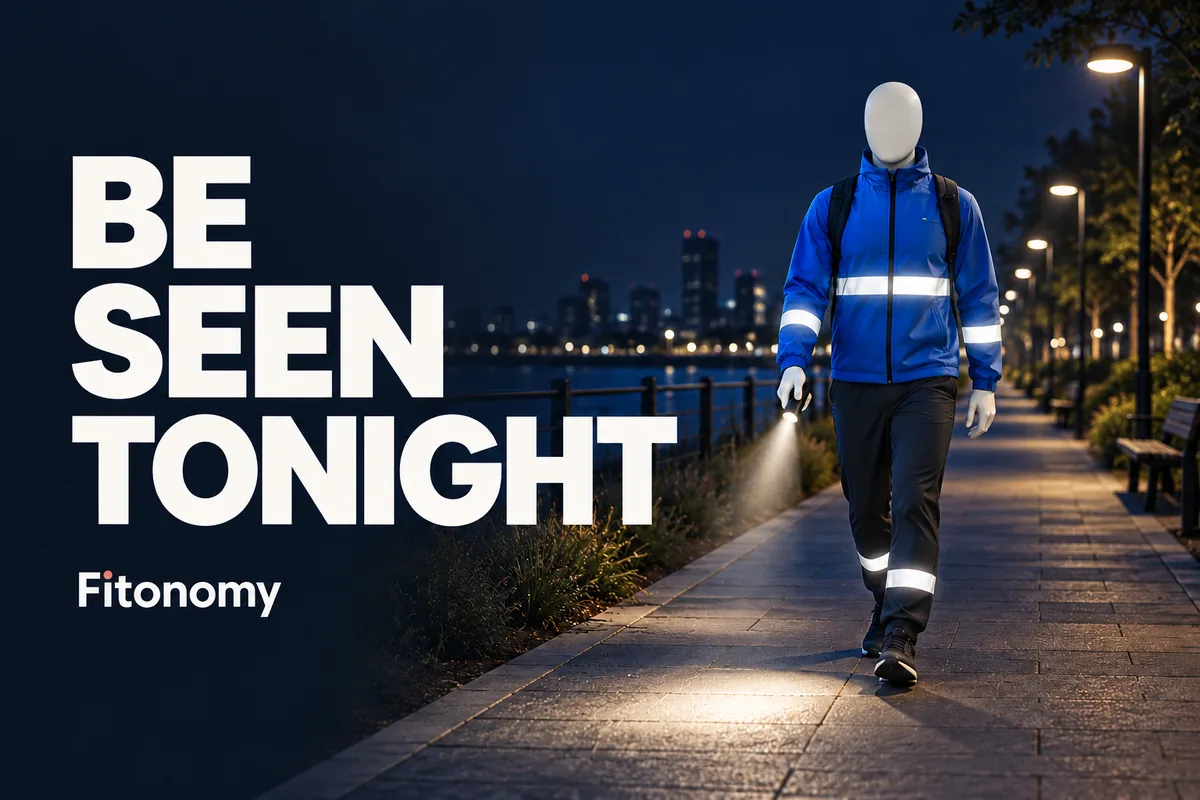
A light helps you see the path, while reflective material helps others notice you when light reaches it. UK pedestrian guidance distinguishes bright clothing in poor daylight from reflective material in darkness. Check that bands are visible rather than covered by a bag. Neither a light nor reflective clothing guarantees that a driver has seen you.
Choose the route before the walk
Prefer a pedestrian path separated from traffic and crossings you can assess clearly. RoSPA recommends designated paths and crossing points. Check the return route too, including any closing gates. Follow local signs and rules; road layouts differ between countries. Skip a section that requires entering traffic or negotiating a surface you cannot see clearly.
Keep attention at crossings
Put away messages and keep your attention on your surroundings. Stop in a suitable place if you need your phone. Check that your light works before leaving and aim it at the path without dazzling others. Canadian visibility advice notes that seeing traffic does not mean drivers can see you. Wait rather than assuming visibility or priority makes a crossing safe.
Make the next attempt practical
Afterward, note one useful detail such as a poorly lit section or a more suitable departure time. Use an after dinner cue only when the route works. The everyday activity guide helps you choose another option. This is preparation guidance, not route certification or a safety guarantee.