Identify the rice first
Choose dry brown rice, not white rice, instant rice or an already cooked pouch. Read the packet’s preparation and allergy information. Decide how the batch fits your meal before measuring; the balanced meal guide can help. One ingredient does not guarantee a training or health result.
Measure one complete method
Wash your hands and follow the packet’s rinsing directions. As one named example, Oregon State Food Hero uses one cup of dry brown rice with two and a quarter cups of water. Use the same volume measure for both; these are not equal food weights or a prescribed portion. Follow your own packet if different.
Simmer gently with a lid
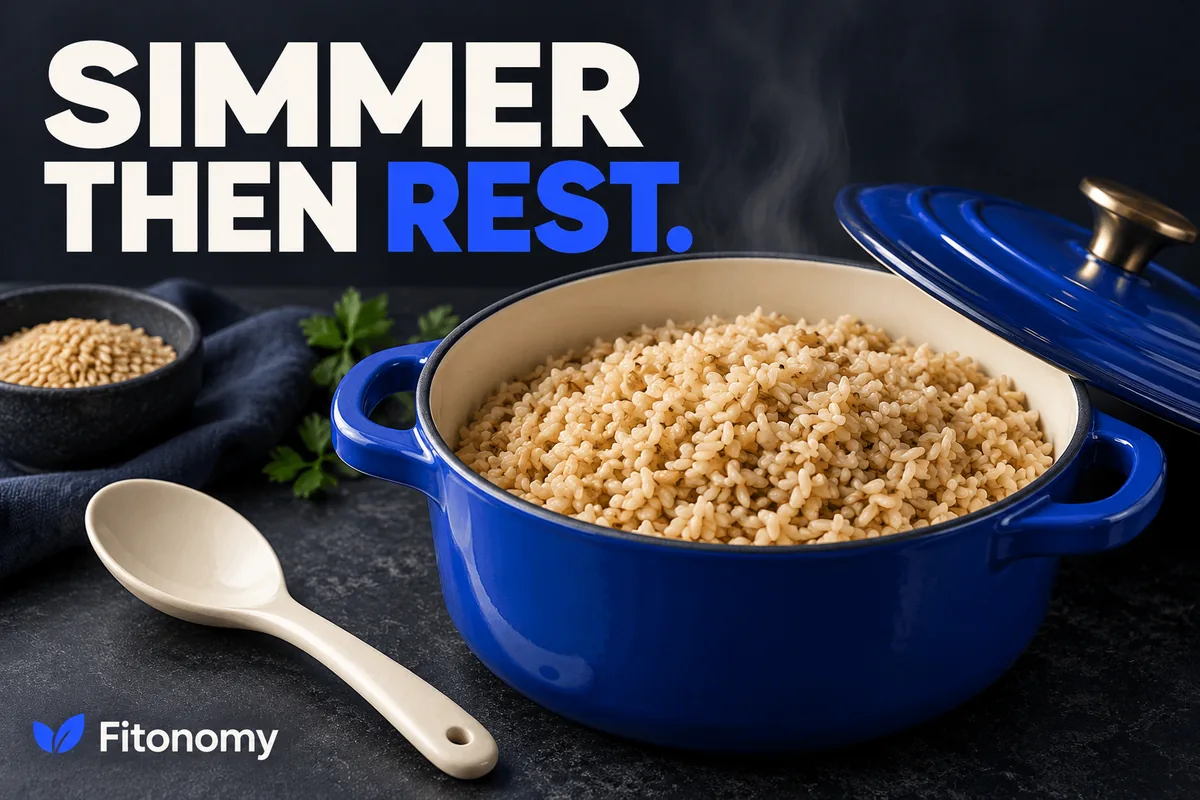
For that example, bring the water to a boil in a saucepan, add the rice, reduce the heat to low and cover. Simmer for thirty five to forty minutes. Attend the pan and keep hands clear of hot liquid and steam. This absorption method is not a draining method, rice cooker setting or pressure cooker conversion.
Rest before serving
Turn off the heat and let the rice stand for five to ten minutes before serving, as that recipe directs. Handle the hot lid carefully. Check the cooked texture and follow the packet if more cooking is needed rather than treating a timer as a guarantee. The quinoa saucepan method has different timings; do not combine the two recipes.
Handle leftovers as rice
Plan spare portions before eating. The FSA rice advice says to cool rice quickly, ideally within one hour, and not leave it in the cooking pan to cool. Divide into smaller portions, refrigerate and use within twenty four hours. The rice cooling and reheating guide covers the once only reheating rule. Follow local guidance too. Note the packet and texture for next time; Fitonomy does not assess food safety.