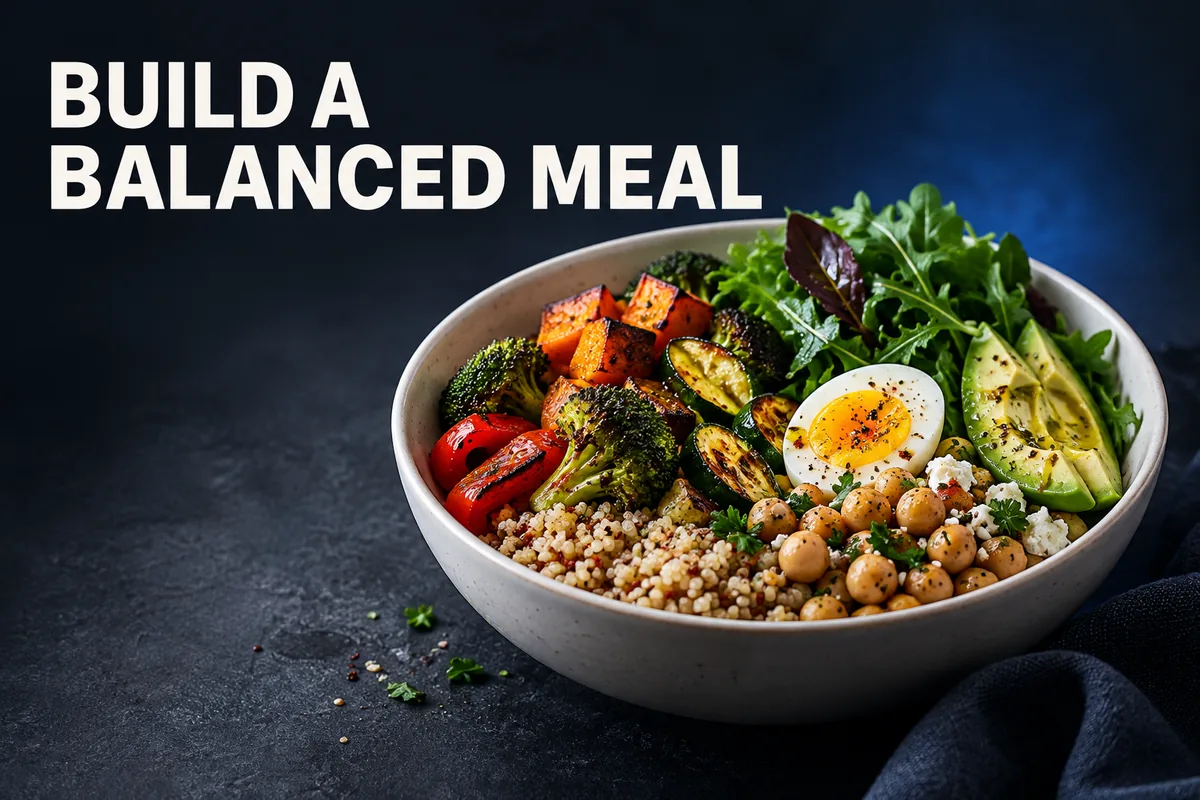
A balanced meal can begin with the food you already eat. A visual guide helps you notice variety without turning dinner into a calculation.
Start with a familiar meal
Choose a lunch or dinner you could make this week. Notice what is already there before adding anything. You do not need to rebuild every meal at once.
Look for useful food groups
Ask whether the meal has a vegetable or fruit, a protein food, and a grain or starchy food that fits your appetite. Beans, eggs, fish, tofu and lentils are possible proteins. Whole grains are one useful side. The Harvard visual plate guide describes approximate food group balance, not a prescribed number of calories or servings. The CDC food guide also emphasizes variety and personal preferences.
Build a bowl or mixed dish
Try rice with vegetables and beans, or a soup with vegetables, lentils and bread. A plate diagram can still guide a bowl, soup or shared dishes. Choose foods you enjoy and can buy. The ingredients need not sit in separate sections.
Adjust for your situation
Appetite and needs differ across people and days. Add a little more of a filling food when a meal feels too small, or save food for later when it feels too large. Allergies, prescribed diets and eating concerns call for individual advice. A visual guide is not a medical plan.
Plan one next meal
Choose one missing food group for tomorrow's meal and make that ingredient easy to find. The no cook lunch guide offers a portable example. The fiber food guide helps with another small food choice. You can use Fitonomy meal planning to organize meals beside workouts.
Keep the guide flexible
Look across several meals rather than judging one plate. This pattern does not guarantee a change in weight, health or training performance. Keep what works, vary foods when possible, and use the next meal as another chance to choose. Fitonomy's meal planner feature can provide structure without making every meal identical.
When dinner is still hours away, Choose an After Workout Snack When Dinner Is Later helps decide whether an ordinary bridge snack is useful.
If dinner is a complete supermarket pack rather than food on your plate, compare two prepared meals using the actual serving and food mix.
If this meal needs oil for cooking or dressing, choose a bottle for that use rather than judging only its front label.
If your grain choice is pearl barley, check the type and saucepan method before adding it to this meal.