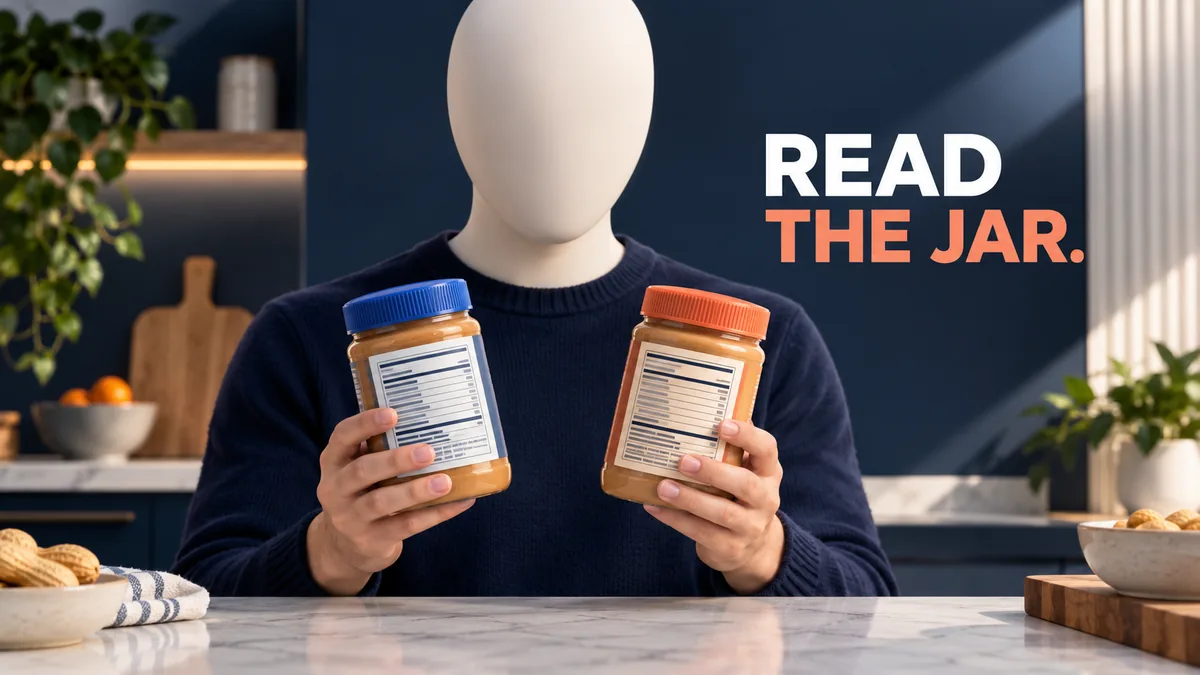
Start with two jars you would eat
Pick two ordinary peanut butter jars that suit your tastes and budget. Turn them around instead of choosing from a front claim. If peanuts or another ingredient are unsafe for you, follow your individual advice and the package information before considering either jar. This is a shopping comparison, not an allergy assessment.
Match the food amount
Find the serving size or the amount per 100 grams on each panel. Compare the same weight of spread. A larger printed serving can make every number look larger even when the foods are similar. The FDA label guide explains that a labeled serving is a reference, not a recommendation for how much to eat.
Read the ingredients
Check what appears after peanuts, such as salt, sugar or added oils, if those matter to you. On United States packaged labels, ingredients generally appear in descending order by weight, as the FDA ingredients guide explains. Rules and names vary by country, so read the actual local package rather than assuming every panel uses the same format.
Check the values and allergens
Compare sugars or added sugars only when both labels show the same measure and food amount. A United States panel may list added sugars separately while another market may show only total sugars. Read the full ingredient and allergen information, especially if you have an allergy. The FDA allergy label guide describes United States declarations; local rules and personal advice take priority.
Choose for the meal you plan
Taste, texture, price, storage and the food you will eat with the spread also count. The bread label guide helps if bread is part of that meal, while the yogurt label guide covers a different jar or tub choice. Fitonomy meal planning can help place ordinary foods alongside training. No single peanut butter jar is best for everyone.