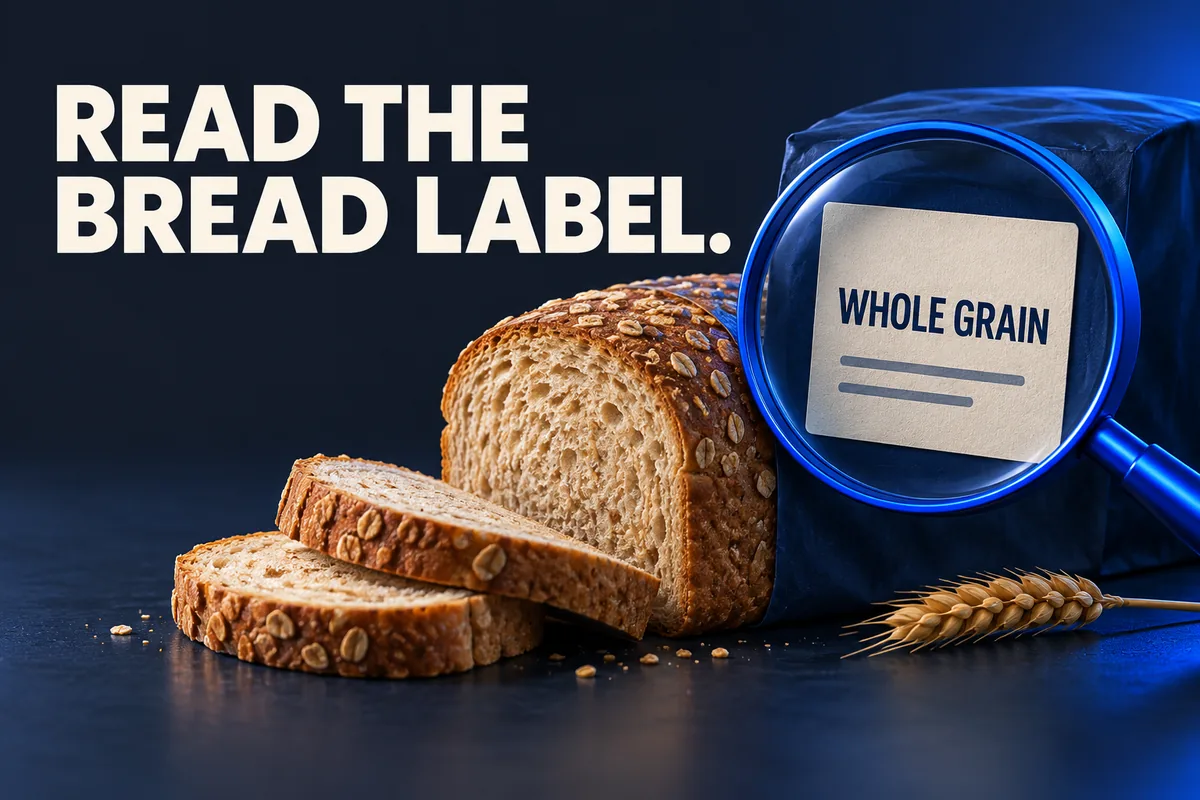
Turn the package around
Start with two breads you could actually buy and enjoy. Read the ingredient list before judging the colour, seeds on top or front claim. Put price, taste and the meal you plan to make beside the label. This is a shopping method, not a rule that every meal needs the same bread.
Find the grain wording
Look for an ingredient explicitly described as whole grain, with the grain named. Whole grains retain the bran, germ and endosperm. Health Canada explains the distinction and notes that multigrain does not necessarily mean whole grain. Read the grain ingredients near the beginning as well as later ones. A whole grain somewhere in the list does not establish that all the flour is whole grain.
Keep local terms distinct
Ingredient wording depends on the market where the bread is sold. Health Canada notes that Canadian whole wheat flour may have some germ removed, so even 100% whole wheat bread there may not be whole grain. Do not turn a translated package name into a universal guarantee. If a claim is unclear, check the maker's information or local food guidance rather than inventing a percentage from ingredient order.
Compare equal amounts
Check whether the nutrition panel uses a serving, a slice or 100 grams. The NHS label guide describes UK values per 100 grams and sometimes per portion. The FDA serving guide explains that a US serving is not a personal eating recommendation. Compare the same amount of bread, then consider the portion you will eat. Fibre, salt or sodium and sugars are separate checks; none alone proves whole grain content. Do not compare salt and sodium figures as if they were identical.
Choose for a real meal
Imagine the bread in tomorrow's toast or sandwich. Read ingredients and local allergen information for your needs. Whole grain does not mean free from allergens or necessarily free from gluten. Follow prescribed dietary restrictions. The balanced meal guide helps place bread alongside other foods, while adding fibre gradually is a separate everyday choice. No loaf guarantees a weight or workout result.
Repeat a simple shopping check
Write one useful note: grain wording checked, equal amounts compared, and a portion that suits the meal. Add a bread you like to your meal based grocery list. Recheck when the recipe or package changes. You can use Fitonomy meal planning to organize meals beside training without treating an app entry as proof of a package's ingredients.
Cereal packages need their own comparison: the cereal label guide checks equal food weight before judging a number on the box.