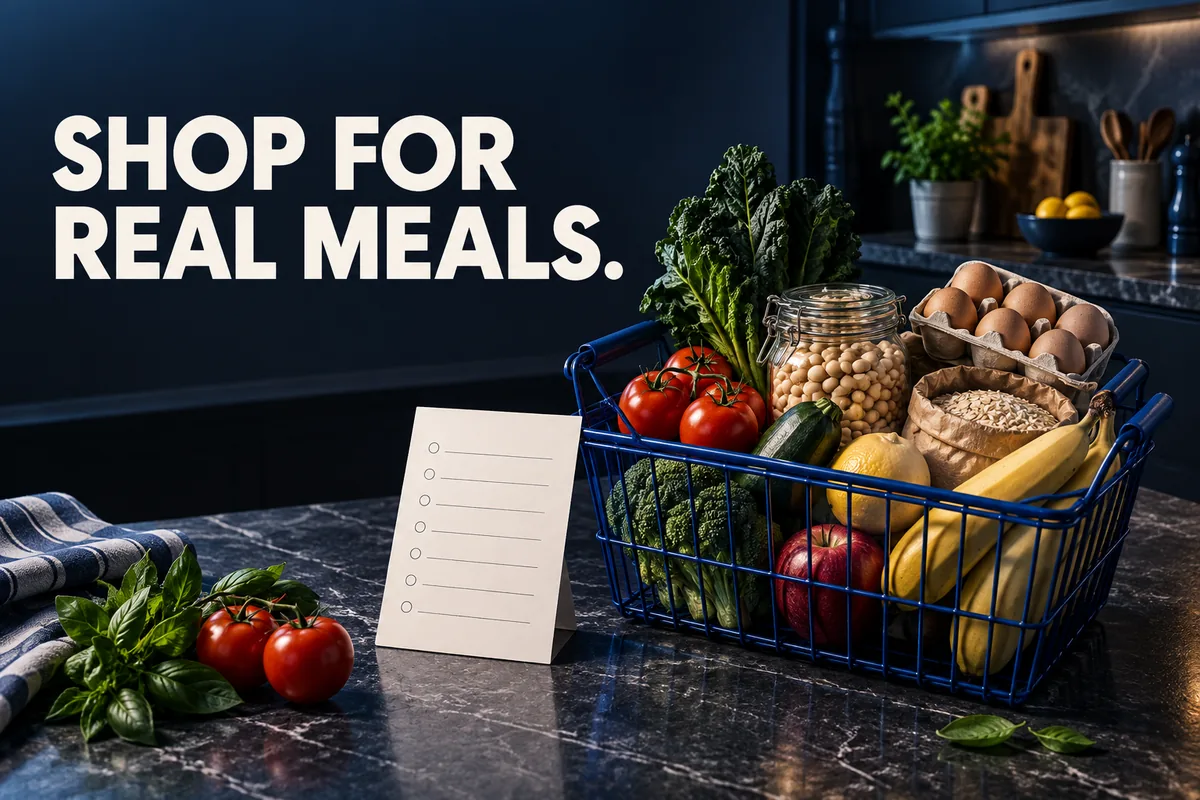
A useful shopping list begins with meals you will actually make. It does not need a rigid training diet or a fixed amount for everyone. Start with your own schedule, preferences and food needs.
Choose two or three meals first
Pick one breakfast and one lunch or dinner that you would happily repeat. Add an easy backup for a busy day. Count how many times you expect to eat each meal before your next shopping trip. You can vary the flavors without planning every plate in advance.
Check the kitchen before adding items
Look in the refrigerator, freezer and cupboard. Write down what you already have, then list only the missing items and an amount that fits your household. The EPA shopping worksheet recommends shopping your kitchen first and connecting quantities to planned meals.
Build a flexible list
Choose a protein food such as eggs, beans, lentils, tofu or yogurt. Add vegetables and fruit that you enjoy, whether fresh, frozen or canned. Choose a grain or other familiar starch such as oats, rice, bread or potatoes. Add a few flavors you already use. The CDC meal guidance describes these ordinary food options, without prescribing one shopping basket for everyone.
Make several meals from the same basket
For example, eggs, toast and fruit can make breakfast. Beans, rice and vegetables can make lunch. Yogurt, oats and fruit can make another simple meal or snack. Swap foods for your culture, allergies, budget and appetite. These are combinations to adapt, not a prescribed meal plan.
Keep the next trip practical
Buy amounts you can use before the next shop. Keep a flexible backup such as frozen vegetables or canned beans if it suits you. Review what remained unused before writing the next list. USDA Nutrition.gov offers weekly meal and shopping planners if you want a template.
Connect food planning with training
Fitonomy offers meal planning alongside workouts. It does not make this grocery list for you. For a breakfast pattern, read Build a Protein Breakfast Without Protein Powder. For a smaller eating occasion around training, read Choose a Pre Workout Snack From Ordinary Foods. Use your own dietary guidance if you have a medical condition or prescribed plan.
When a busy day leaves no time to cook, use the no cook lunch guide to assemble and store one meal safely.
For one food change at a time, see the guide to adding fiber to everyday meals.
When choosing foods for this basket, use the protein food cost comparison to check current unit prices and portions.
After checking what is already in the kitchen, try a lunch from safely stored dinner components.
When a vegetable goes on this list, compare frozen and canned options using the ingredients, equal label amounts and preparation your meal needs.
When bread goes on this list, check whole grain wording and compare equal label amounts before choosing a loaf for your planned meal.
When your planned ingredients are unavailable, choosing a prepared meal can be a practical shopping backup.
When fresh produce goes on your list, the produce preparation guide explains what to wash before peeling or cutting.
When oil is missing from your kitchen, compare the bottle and planned use before adding it to this list.
A cold refrigerator reading does not explain a package date. Before choosing an ingredient, read its date words and opening instructions.