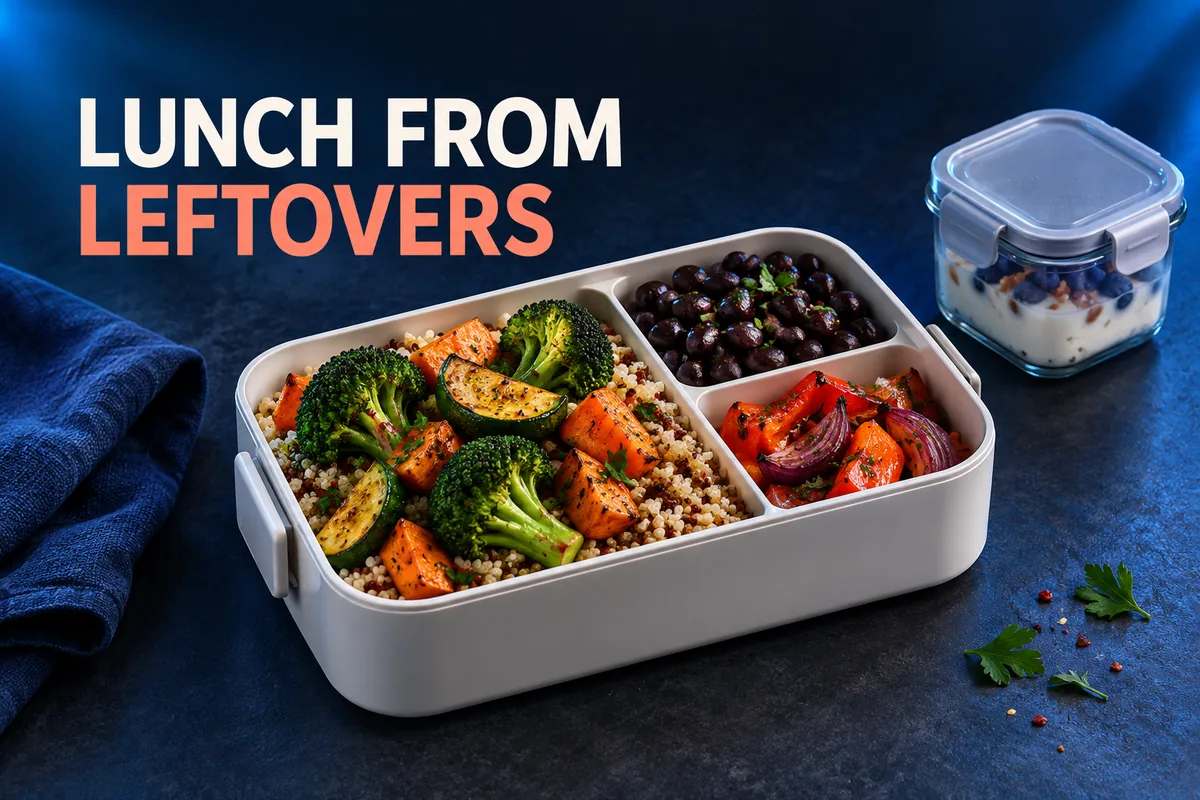
Choose one extra component
While making dinner, cook a little more of an ingredient you already use, such as grains, beans or vegetables. An extra component is easier to reuse than a second complete recipe. The UK Sports Institute food preparation guide suggests preparing extra portions for later meals. Pick something you will actually want for lunch.
Store dinner food safely
Move the portion into a clean container and refrigerate it promptly rather than leaving it on the counter. Mark when it was cooked. Health Canada leftover guidance explains safe storage and reheating; follow your local authority for the food and the time available. If safe storage is uncertain, do not pack it.
Give it a new lunch role
Use cooked vegetables and grains as the base of a bowl, put beans into a wrap, or add a cooked component to a salad. Canada’s food guide offers these kinds of leftover combinations. Add other familiar foods according to appetite and preference. A different sauce or texture can make the same ingredient feel like a new meal.
Plan the journey to lunch
Decide whether lunch will stay chilled and whether you will reheat it. Pack perishable food in a way that keeps it cold until eating, and follow local reheating advice. If that is not practical, use the no cook lunch guide for a different plan rather than carrying a cooked meal without safe storage.
Fit lunch into your day
An active day does not demand one perfect lunch or a prescribed amount of food. Choose a meal that fits the time, access to storage and your appetite. The Fitonomy meal planner can help you organize meals, but it does not turn leftovers into a recipe automatically. Keep the plan flexible if the day changes.
Make the next lunch easier
Look at what remains before shopping. The grocery list guide helps you fill genuine gaps, while the balanced meal guide gives a broader way to assemble familiar foods. Reuse a cooked ingredient only while it has been stored safely. Never use smell alone as a safety test.
Once your dinner component is safely chilled, arrange the lunch bag for transport rather than relying on the container alone to keep it cold.
If a planned component is still frozen, use the safe thawing method guide before assembling lunch, rather than leaving it on the counter.
If rice is your lunch base, check its cooling and reheating steps instead of applying a general leftover storage window.
Before putting leftovers into storage, clean permitted fridge shelves with a cold food plan and do not leave the meal warm while washing.