Plan the whole journey
Before choosing the meal, check when you will leave, travel and eat, and whether a refrigerator is available on arrival. A gym stop or another errand changes that journey. The no cook lunch guide helps choose ingredients; this guide deals with carrying food that needs refrigeration. An insulated bag alone does not establish safe storage for a whole day.
Begin with chilled food
Use clean hands, a clean bag and closed containers. Keep prepared cold food refrigerated until departure. Food Standards Scotland advises starting with chilled food and keeping the cooler closed. If you are using dinner components, follow the leftover lunch guide first. Packing does not correct earlier unsafe handling.
Place frozen cold sources
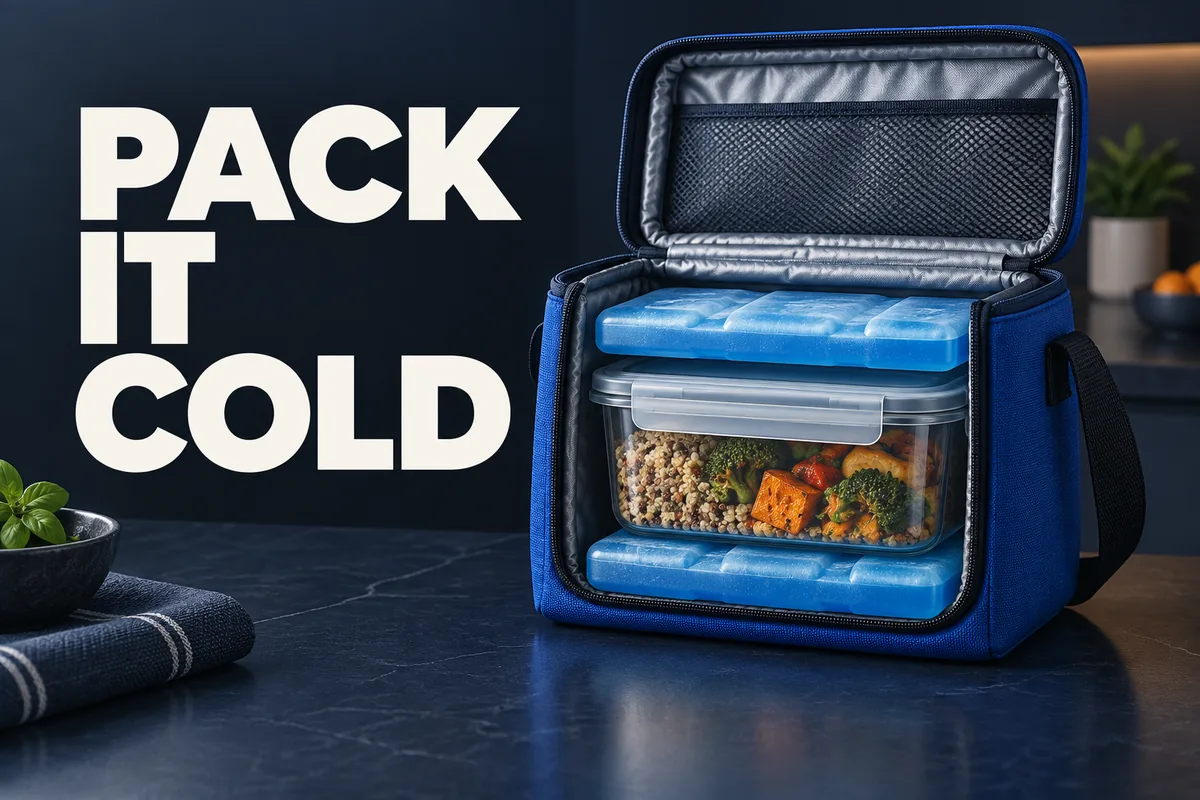
Freeze your packs beforehand and leave space for them around the meal. USDA lunch guidance recommends at least two cold sources, placed above and below perishables. Two frozen gel packs are one option. Choose packs that fit the bag and container; squeezing in a warm meal box is not a substitute for chilling it first. Follow the equipment instructions.
Use the fridge on arrival
Put perishable food in the refrigerator when you reach your destination. USDA advises opening an insulated bag if it stays inside the fridge so cold air can circulate. During travel, keep the bag closed and avoid repeatedly opening it for drinks. The FDA transport guidance explains why separate drink access can help limit warm air entering the food cooler.
Choose a workable fallback
If you cannot keep the meal cold, change the plan: use foods whose labels allow storage without refrigeration until opening, or obtain a meal near eating time. Follow package instructions and local food safety advice, including time and temperature limits. Do not assume that a cold pack makes every lunch safe indefinitely. Use your grocery list and Fitonomy to plan practical choices, not to determine food safety.