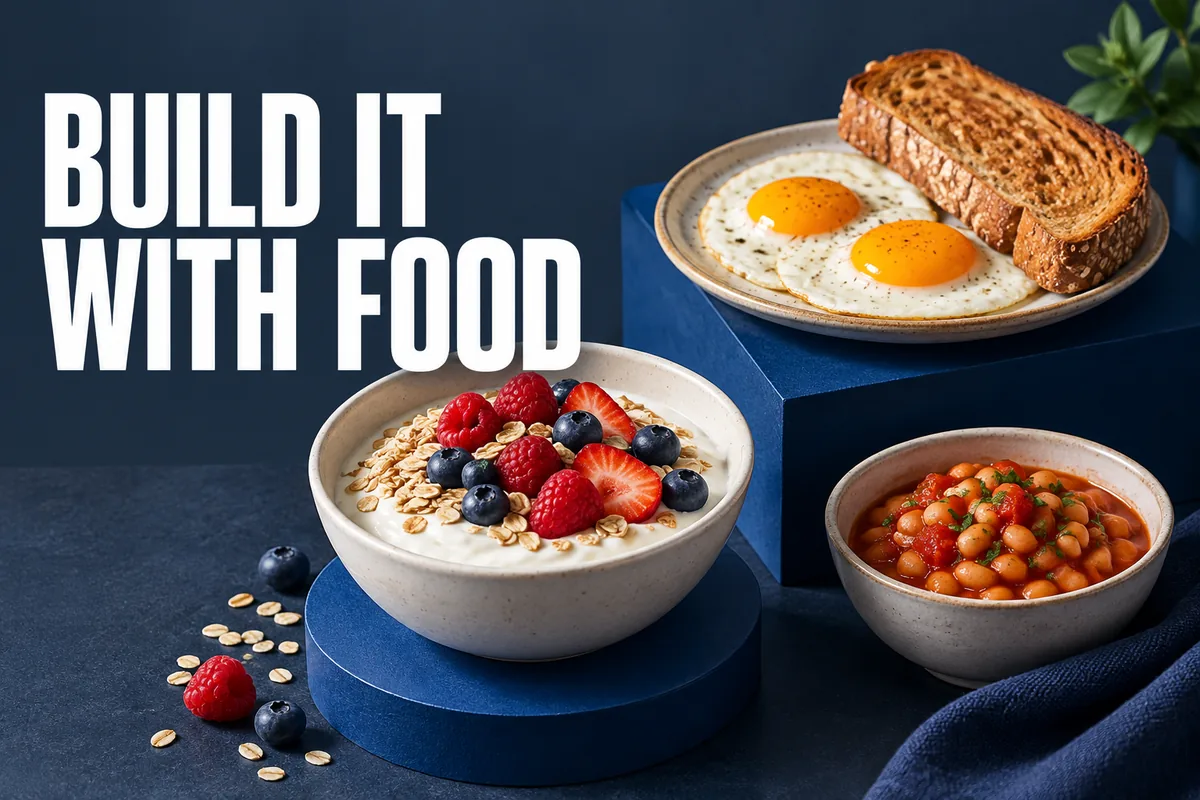
A protein breakfast does not need a tub of powder or one perfect recipe. Start with a familiar food that contributes protein, add something that makes the meal practical and enjoyable, then add fruit or vegetables when that fits. The result should be a breakfast you can repeat, not a contest for the largest number.
Begin with one protein anchor
Choose one food you already like and can buy regularly. Eggs, beans, lentils, fish, meat and tofu can serve as an anchor. Yoghurt, milk and suitable alternatives can also contribute. The NHS Eatwell Guide places these foods within a varied overall diet and notes that balance can be considered across a day or week.
Your anchor can be warm or cold. It can also come from the previous evening. Beans on toast, plain yoghurt with oats, egg with bread, tofu with rice, or fish with potatoes are all patterns rather than fixed recipes. Check allergens and storage instructions for the foods you choose.
Add a companion and something fresh
Add a food that makes the meal work for your morning. Bread, oats, rice, potatoes or another familiar grain can make it more substantial. Fruit or vegetables can add variety. You do not have to force every food group into one bowl. What matters is how the breakfast fits with the rest of your day.
Keep preparation realistic. A meal you can make in five minutes may be more useful on workdays than a recipe you only prepare once. Save one quick version and one version for mornings with more time.
Use four flexible patterns
For a no cook option, combine plain yoghurt or a suitable fortified alternative with oats, fruit and seeds. For a warm option, pair eggs or tofu with bread and tomatoes. For a savoury option, use beans or lentils with toast, rice or potatoes. For leftovers, use a modest portion of last night's fish, chicken, tofu or beans with a familiar side.
These examples do not carry a universal protein amount. Products, portions and recipes differ. Choose the pattern first, then read the actual package or recipe if you need the numbers.
Swap one part at a time
If you do not eat eggs, use beans, tofu, yoghurt, fish or another suitable anchor. If you avoid dairy, choose a product that meets your needs and check its label because plant based alternatives vary widely. A nut or seed food may help some people, but it is unsafe for anyone with the relevant allergy.
Do not assume a food is equivalent because it looks similar. Taste, price, preparation, allergens and the rest of its nutrients all matter. Keep a swap only if it makes the breakfast easier for you to repeat.
Read the label for your real portion
Packaged foods list protein alongside other nutrients, but the stated portion may differ from the amount you eat. The NHS label guide explains this distinction. Use our protein label comparison when two products use different serving sizes.
Write down the food, the amount and any added ingredients. Do not copy a number from a front label while ignoring the serving. If you follow a prescribed diet or need help with allergies, use advice that is specific to you.
Save a breakfast you can repeat
Fitonomy describes meal planning and macro tracking in its nutrition features. Record the version you actually ate rather than the version you intended to make. Keep your meal planning beside a realistic weekly workout plan so both routines reflect your schedule.
Use this quick card: anchor, companion, fruit or vegetables, real portion, and one swap for a busy morning. Build two breakfasts with it this week. A short list of reliable choices is more useful than collecting recipes you never make.