Identify the oats first
Read the packet for ordinary rolled or old fashioned oats. Instant sachets, quick oats and steel cut oats have different instructions. The maker preparation guide separates these types. This article covers a saucepan breakfast, not an overnight soak or a microwave conversion. Keep your packet nearby and follow personal dietary or allergy advice.
Measure for the product you have
One Quaker old fashioned example uses half a US measuring cup of dry oats and one US cup of water or milk. Those are volumes, not equal food weights. Use your packet if it gives different amounts. Measure before heating so you can watch the pan. A brand example is not a required breakfast portion for every person.
Cook one clear method
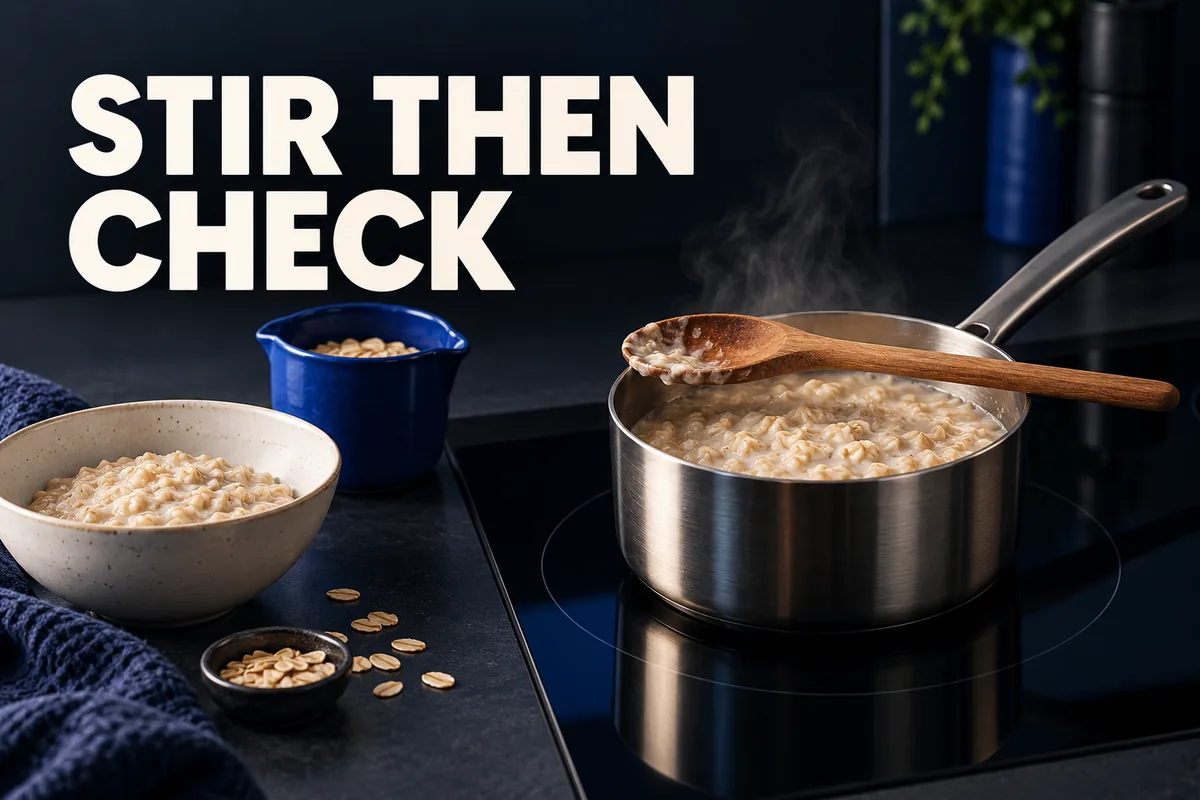
For that example, bring the liquid to a boil, stir in the oats and cook over medium heat for about five minutes, stirring occasionally. Keep the pan attended and manage the heat if liquid rises. Do not apply this timer to every oat type. The named old fashioned product is a specific starting point, not a recommendation to buy one brand.
Check before serving
Check that the oats have softened and the texture suits your meal. Follow the packet if more cooking is needed instead of stopping only because a timer rang. Turn off the heat and serve carefully, protecting yourself from hot contents and the pan. Avoid reaching across a hot hob for the bowl or toppings.
Build a breakfast you can repeat
Choose familiar companions such as fruit and a suitable yogurt, or another food you enjoy. The breakfast assembly guide offers flexible combinations; the cereal label guide addresses a different task. Record the packet and texture you liked. Use the balanced meal guide for wider meal context. No bowl guarantees a training result.
For cut oat groats rather than flakes, use the separate steel cut oat saucepan method and follow your product packet.