Check the oat type first
Steel cut oats are cut groats, not rolled flakes. This method is for traditional steel cut oats. Quick cooking versions can need different water and time, as Quaker’s product instructions show. Give your packet priority. For flattened flakes use our rolled oat method.
Measure one complete recipe
Oregon State University Food Hero gives a specific example: 1 cup dry steel cut oats and 3 cups water. Use the same measuring cup for both volumes. This is a recipe batch, not a required serving size. Do not combine its water amount with the timing from a different oat product. Choose a saucepan with room for bubbling.
Simmer gently and check
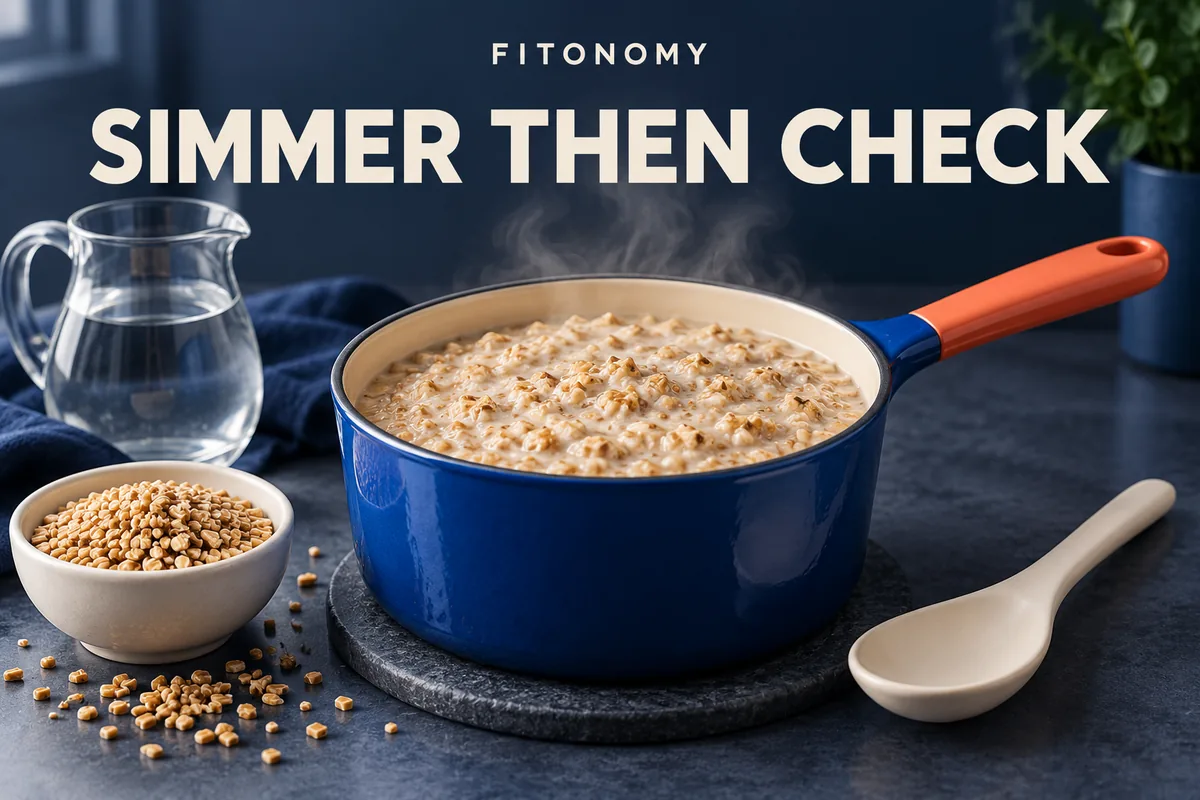
Bring the water to a boil, stir in the oats and reduce the heat to a low simmer. In the Food Hero method, cook uncovered for 15 to 20 minutes, stirring occasionally. Keep hands away from hot splashes. Turn off the heat and let the oats stand for 2 minutes. Taste a cooled spoonful. If still firmer than you like, continue gently with a little water as needed and check again; do not chase a universal timer.
Build a bowl that suits you
Add fruit and a food you enjoy for protein, such as yogurt or a suitable soy alternative. Check allergy information; people who need to avoid gluten should choose oats specifically suitable for their needs and follow personal advice. Our cereal label guide helps compare products. Use the everyday meal guide for meal ideas or quinoa cooking instructions for another grain.
Cool leftovers with a plan
Divide extra porridge into smaller portions so it cools promptly. UK Food Standards Agency guidance advises refrigerating cooked leftovers within 1 to 2 hours and eating within 48 hours or freezing. Follow the rules where you live and the packet’s storage instructions. Fitonomy can support your wider food and training routine; this bowl does not promise a particular fitness result.
For cornmeal instead of oats, follow the polenta saucepan method and keep its stirring and texture checks separate.