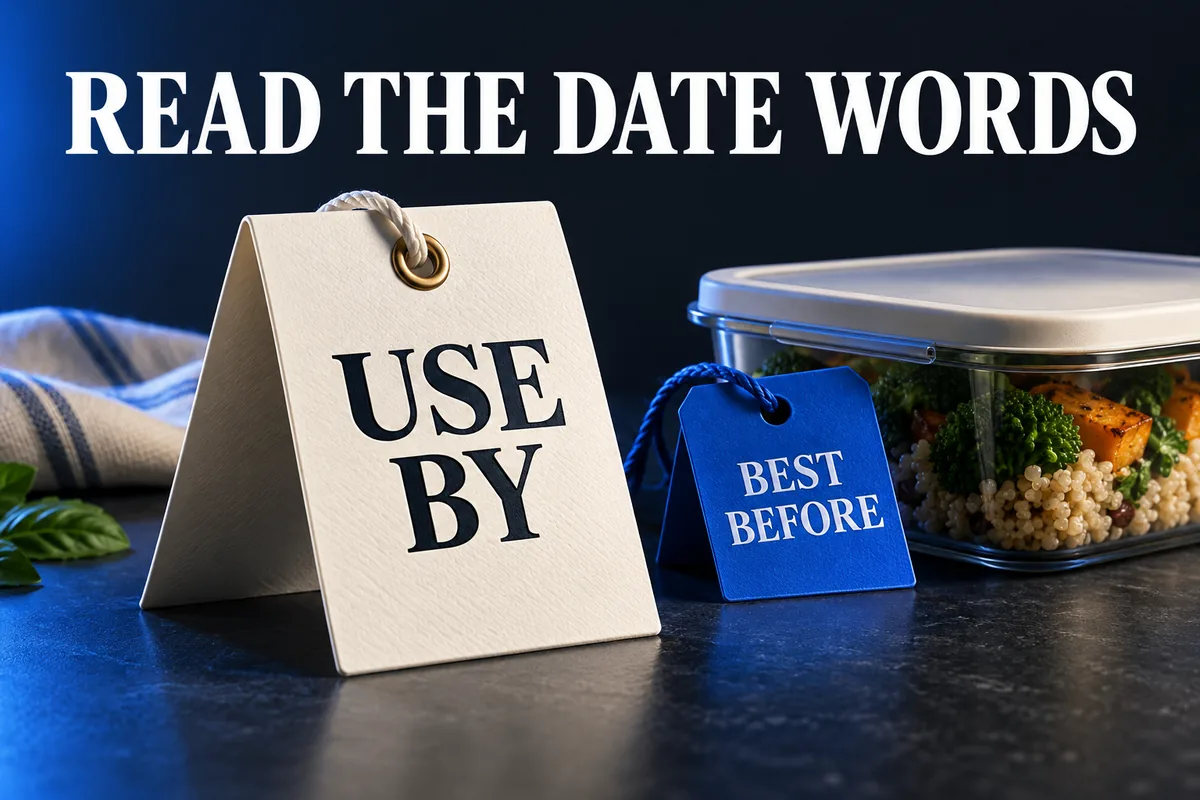
Read the words first
Find the wording beside the date, not just the numbers. Check the actual package and local food authority guidance. Terms differ between countries. This guide uses United Kingdom and European Union examples, not a worldwide rule. Health Canada also explains why date labels need their local context.
Separate safety from quality
In the UK, Food Standards Scotland describes use by as a safety date and best before as a quality date. EFSA explains the same distinction for EU consumers. Do not eat food past a use by safety deadline even if it smells normal. A quality date is not proof that any particular food is safe.
Check storage and opening
Read refrigeration, freezing and instructions after opening. Health Canada notes that best before information concerns an unopened product; opening can change its keeping time. If a package says to use it within a stated period after opening, record when you opened it and follow that instruction alongside any applicable safety date. A normal smell cannot establish safe handling.
Plan a meal before the deadline
While checking the kitchen for your shopping list, choose an ingredient you can use within its instructions. If freezing is allowed, follow the package and local guidance before the relevant safety deadline. Do not use freezing to rescue food of uncertain safety. Choose another ingredient when timing or storage does not work.
Keep the checks separate
The fridge temperature check concerns cold storage, while thawing guidance concerns preparation from frozen. Neither replaces reading the label. Return to balanced meal building for food combinations. Fitonomy supports fitness planning; it does not certify food safety. If safety is uncertain, do not eat the food and seek local advice.