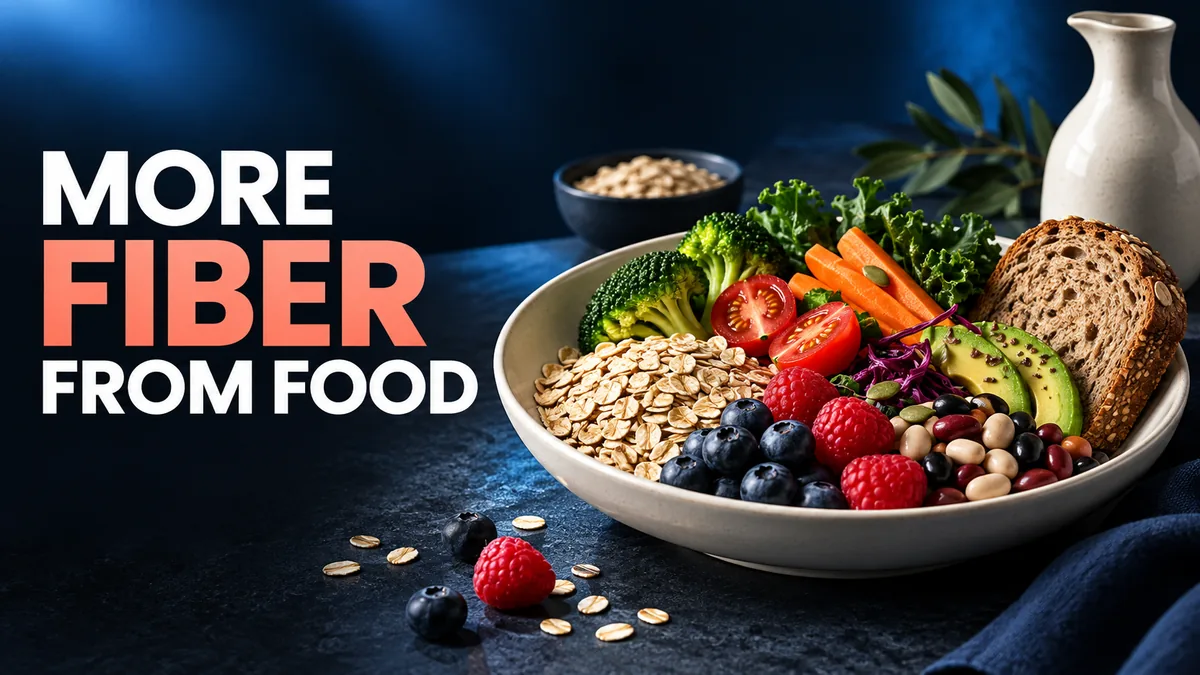
Adding fiber does not require an entirely new diet. The American Heart Association guide lists fruit, vegetables, whole grains, beans, nuts and seeds. Choose one food you enjoy and fit it into a meal you already make.
Begin with the meal you already eat
Look at a normal day of meals. Which meal is easiest to adjust without extra cooking or expense? Keep the foods that already work for you and add one fiber containing option. There is no need to redesign breakfast, lunch and dinner at once.
Find fiber in ordinary foods
Oats, beans, lentils, whole grain bread, vegetables, fruit, nuts and seeds are everyday possibilities. The CDC tips give examples such as oatmeal with berries or beans in salad. Whole grain bread differs from bread that is merely brown in color, so check the ingredients if that matters to your choice.
Make one breakfast change
If you usually eat cereal, try oats or add berries and a few seeds. If you eat toast, choose a whole grain version you like or add fruit beside it. The goal is one repeatable food choice, not a special performance breakfast or an exact gram target.
Change lunch or dinner once
At lunch, a few beans can join a familiar salad or wrap. At dinner, add vegetables to a dish you already enjoy or try a whole grain side. Keep allergies, budget and food storage in mind. You can start with just one meal and leave the others as they are.
Increase gradually
The NIH guide advises increasing fiber gradually so your body can adjust. Notice comfort and appetite without treating a reaction as a diagnosis. Drink as you normally need and seek individual advice if you have a digestive condition, prescribed diet or persistent symptoms. More fiber does not guarantee a training result.
Keep the choice flexible
Use the grocery list guide to buy a few flexible foods. The no cook lunch guide shows one portable meal and the weekly meal planner guide helps organize choices. The official Fitonomy meal planner supports planning, but it does not determine a personal fiber need.
If vegetables are your next fiber choice, check their package and preparation before choosing a frozen bag or a can.
If bread is your next fibre choice, read the grain ingredients on its label rather than relying on colour or a multigrain name.
If breakfast includes cereal, the cereal box comparison helps check serving weight and available fiber information before choosing.
If you choose canned beans as one familiar food, the canned bean meal guide helps turn that choice into an ordinary meal.
If lentils are your fibre choice, choose whole or split texture and follow their packet rather than using canned bean preparation directions.
For another familiar fibre choice, prepare pearl barley with its own cooking instructions, without calling it a whole grain or gluten free food.