Start with one meal
Choose a meal you already enjoy, perhaps rice and vegetables, soup or a wrap. Ask whether beans would fit its taste and texture before buying a special ingredient. The American Heart Association bean guide shows several ordinary ways to use beans. You need a useful addition to this meal, not a perfect meal plan or a promise about training results.
Read the can in front of you
Check the bean type, ingredients, amount and any preparation instructions on the actual package. Cans vary, so compare the label information that your country provides instead of assuming every product has the same salt or serving basis. The vegetable package guide explains how to compare packaged ingredients for a real meal. Keep allergies and personal dietary advice in mind.
Decide about the liquid
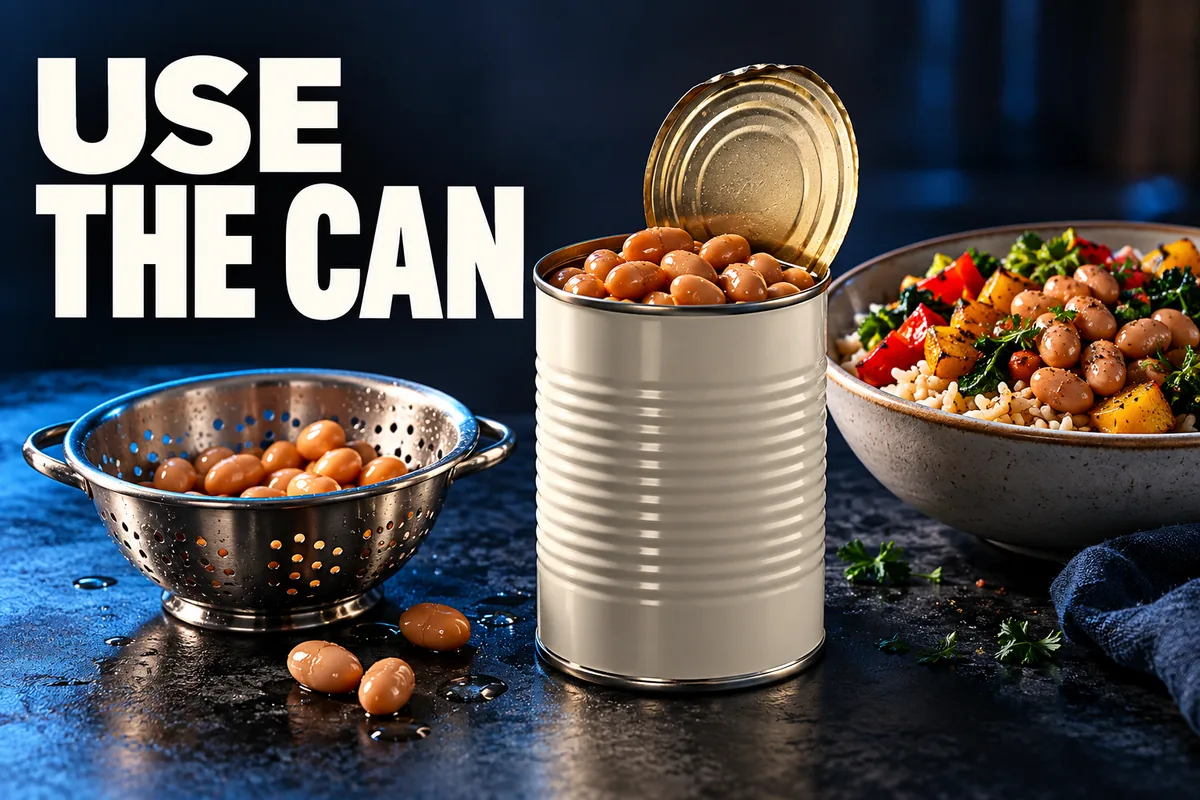
If you want a less salty choice, look for a no salt added or lower sodium product where available. Draining and rinsing beans in a colander can also remove some sodium, as the American Heart Association sodium guide advises. The amount removed varies by product and method, so do not treat rinsing as a precise calculation. If a recipe uses the can liquid, decide deliberately and follow the product directions.
Give beans a role
Put drained beans beside rice and vegetables, into a soup, or into a wrap you already make. Choose a portion that fits your appetite and the rest of the meal rather than following a universal number. The balanced meal guide helps you combine familiar foods without counting every gram. A bean dish need not be labeled as a special fitness meal to be useful.
Handle the opened food
Use a clean utensil and follow the package instructions for heating, serving and storing what remains. If you cannot store an opened product as directed, choose an amount you can use now instead of guessing how long it is safe. The American Heart Association canned food guide treats canned options as convenient ingredients, while the specific can remains your source for preparation directions.
Keep the choice flexible
Notice whether you like the meal and whether the beans were convenient at your price and available time. Next time, change the bean variety, the side dish or the seasoning if that helps. The everyday fiber guide offers other familiar food choices. Beans are one option among many, and no single can determines your health or exercise progress.
If you serve the beans in soup, the soup bowl label guide shows how to count sodium for the broth and the amount eaten.
If your next ingredient is dried rather than precooked, the dried lentil preparation guide explains sorting and texture before cooking.
Commercial cans differ from raw dried beans. If your ingredient is dried red kidney beans, read why soaking must be followed by a sustained boil rather than applying this canned food preparation.
Canned beans are already processed. When starting with dried chickpeas, see how to soak and simmer chickpeas and do not serve them merely soaked.