Identify the ingredient
Start with a packet of dried chickpeas, also called garbanzo beans. They are not the already processed beans in the canned bean guide. Choose a meal role, such as a bowl or soup, before making a large batch. Follow allergies and personal dietary advice. The lentil method does not automatically apply.
Sort rinse and plan the soak
Remove small stones or debris and rinse in a strainer. The NDSU guide gives a traditional refrigerated soak of six to eight hours or overnight, with plenty of water. Use your packet's amounts and a suitable covered container with room for expansion. This is one long soak example, not a combination with hot or quick soaking. Soaked chickpeas still need cooking.
Drain and cook in fresh liquid
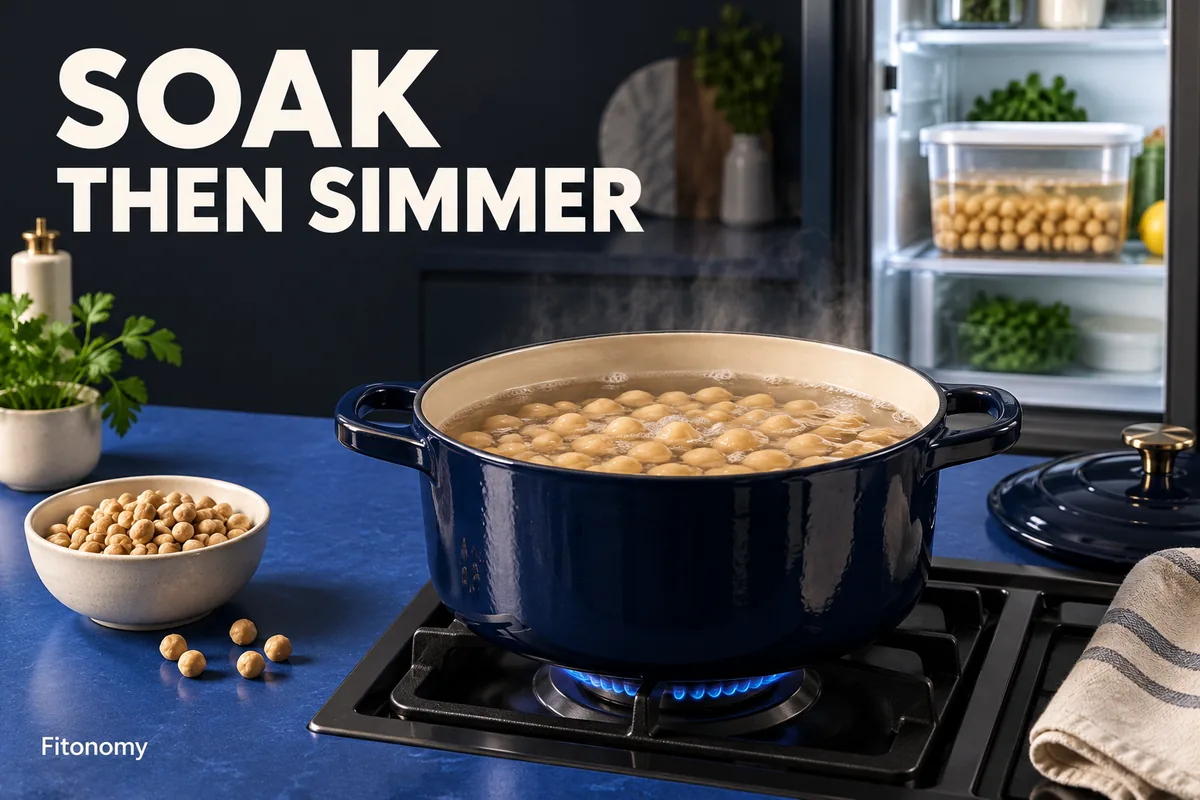
Drain the soak water, rinse and add fresh cooking liquid as the packet directs. The Harvard preparation guide describes bringing the liquid to a boil, then reducing to a simmer. Follow one complete method for your ingredient and pot. Do not invent a pressure cooker conversion or use the separate kidney bean procedure as a chickpea timer.
Check tenderness beyond the clock
Published timings differ. NDSU describes about one and a half to two hours of simmering; that is an example, not a universal finish time. Check that the cooked chickpeas reach the tender texture your dish requires. If still firm, continue cooking and maintain sufficient liquid as the method directs. A timer ending does not make a hard batch ready.
Give the cooked batch a role
Add cooked chickpeas to a familiar soup, salad or bowl using the balanced meal guide. They provide protein and fibre, without guaranteeing a training result. Refrigerate food for later promptly in covered containers and follow local storage guidance; the FDA advice explains storage limits. Note the packet and texture you liked. Fitonomy helps plan fitness, not assess food safety.