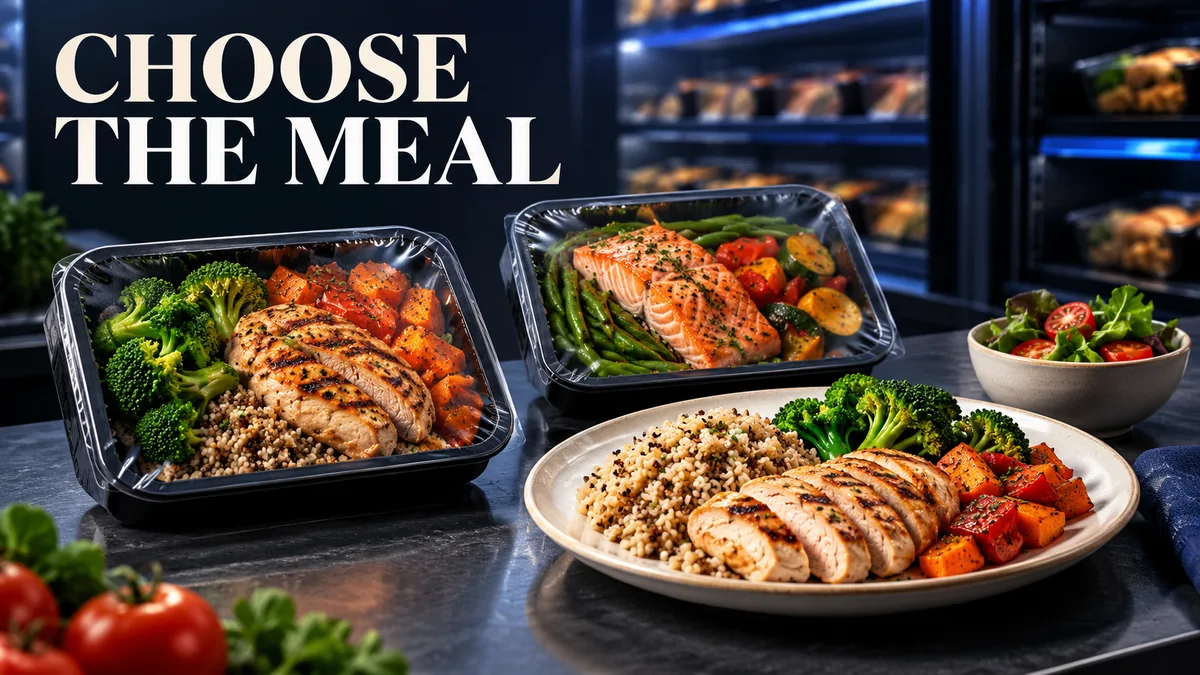
Start with the meal you actually need
Choose two packaged meals you would happily eat for lunch or dinner. Your appetite, time, budget, allergies and access to heating matter more than an athlete label. A prepared meal can be one convenient part of an ordinary eating pattern. If you need a prescribed diet, use personal advice rather than a general shopping guide.
Compare what you will really eat
Check whether the label describes the whole pack or one of several servings. Compare the same amount across both meals, then consider the amount you expect to eat. The NHS guide to food labels warns that a labeled portion may differ from your own. Do not declare one pack better merely because its printed portion is smaller.
Look at the food mix
Notice whether the meal includes a vegetable or fruit, a protein food and a grain or other familiar starch. A mixed dish need not show these in separate piles. The FDA food group and label guide considers nutrient information alongside food variety. Our balanced meal guide helps when the food is already on your plate.
Read the local label without a rigid target
When comparing similar packs, look at their stated fat, saturated fat, sugars and salt or sodium on a matching basis. UK packages commonly show salt while US packages show sodium, so do not compare those numbers directly. Ingredients and allergens deserve a check too. No single nutrient number determines whether a meal suits you.
Make one useful adjustment
If the chosen pack is small or light on produce, add a side you enjoy, such as fruit, salad or plain frozen vegetables, if your schedule and storage allow. The Ohio State ready meal guide discusses ordinary sides and serving size. For planning ingredients rather than buying a complete meal, use our training grocery list. Fitonomy meal planning can organize meals around workouts but does not compare supermarket labels for you.