Start with the meal and use
Are you dressing a salad or cooking vegetables? Choose for that task, your budget and taste. You do not need several expensive bottles. The BHF cooking guide distinguishes oils for cooking from flavourful drizzling choices. Follow the actual bottle directions rather than a universal temperature chart.
Compare the fat information
Most oils contain a mixture of fats. The NHS fat guide lists olive and rapeseed oils as sources of unsaturated fats, while coconut and palm oils are higher in saturated fat. Plant origin alone does not settle the choice. Compare saturated fat on the same label amount, not two different serving sizes.
Read the whole bottle
Check ingredients, intended use and storage. Local oil names and label formats vary. A bottle described as light may refer to flavour or colour, not fewer calories. Respect allergens and your personal dietary advice. The food label guide helps you look beyond front claims.
Choose the amount deliberately
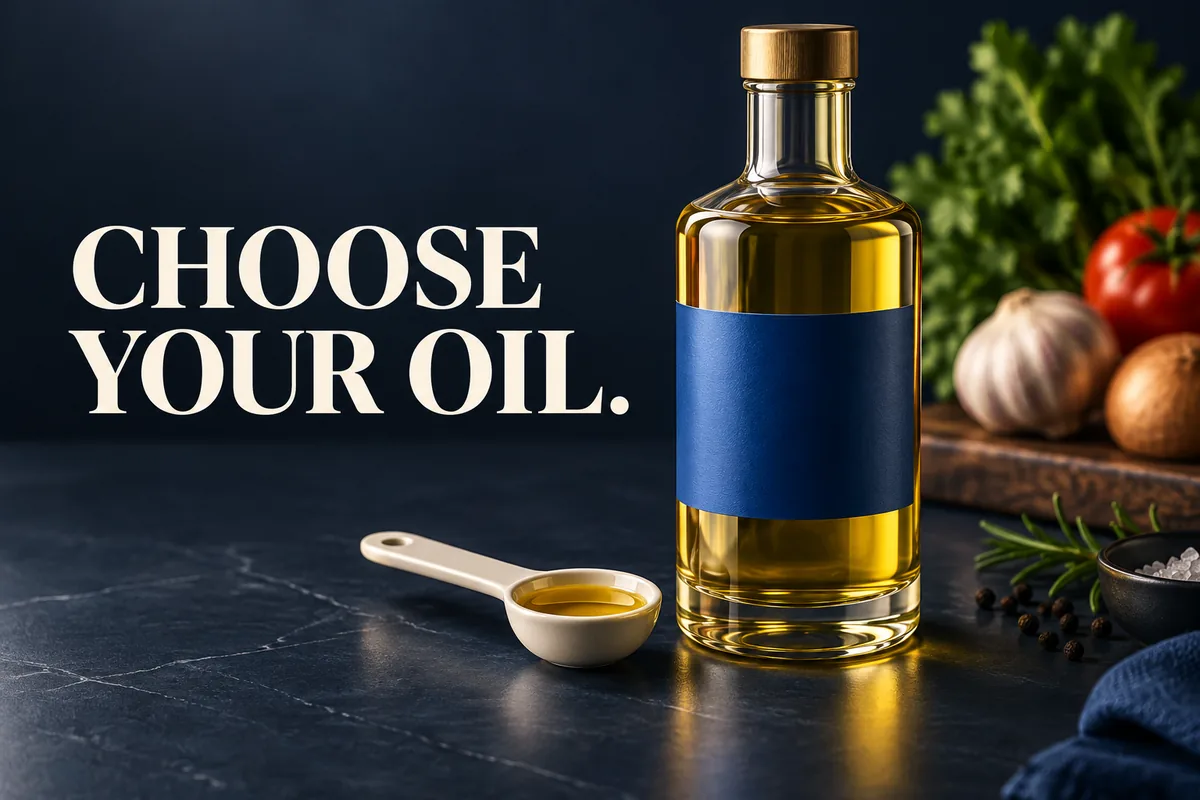
The NHS practical guide suggests measuring oil rather than pouring without noticing. Use a spoon to see what goes into your recipe; this is not a prescribed serving. Choose an amount that fits the meal and your guidance. No oil guarantees weight loss or training results.
Keep the meal flexible
Use the balanced meal guide for the rest of the dish. Add only a useful missing bottle to your grocery list, and check vegetable preparation separately. Fitonomy can support meal planning alongside exercise; the actual package remains your guide to this ingredient.