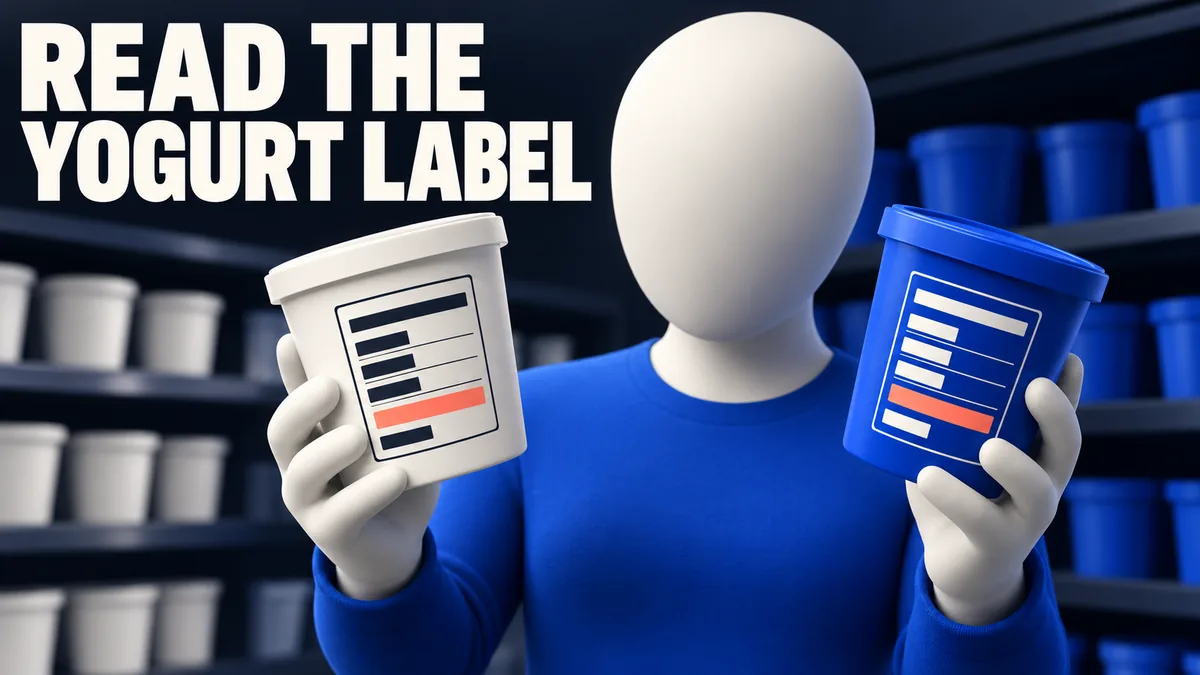
Start with two real choices
Pick two yogurts you can buy and would enjoy. Plain and flavored are useful examples, but there is no universal winning tub. Read the back panel rather than a front promise. The cereal label guide uses the same habit of checking the reference amount.
Match the food amount
Find whether each label reports a serving or 100 grams. The FDA label guide says a serving is a reference, not an instruction to eat that amount. Compare equal food weights, using the 100 gram column where both packages provide one. Otherwise calculate carefully or note that the printed serving figures are not directly comparable.
Understand the sugar line
Total sugar includes naturally occurring milk sugar as well as any added sugar. The Academy yogurt guide explains why plain dairy yogurt can show sugar with no sweetener added. A US panel may name added sugars separately. Other markets may show only total sugars, as the NHS sugar guide explains. Read the actual local label and ingredients rather than calling all sugar added.
Check your other priorities
If protein matters to your meal, compare it at the same food amount, not just the larger number on one front label. The protein label guide shows that calculation. Calcium, fat and energy may also matter to you, but no single number makes a yogurt best for everyone.
Read ingredients and allergens
Check whether the base is dairy, fortified soy or another ingredient, and whether sweeteners or fruit are listed. Follow the package allergen information and any personal dietary advice. A plant based label does not automatically match the protein or calcium of dairy yogurt.
Choose the portion you will eat
Consider taste, price, storage and the amount you will actually use. The panel describes its stated quantity, not necessarily the full tub or a bowl with toppings. The balanced meal guide can help place yogurt alongside other foods. This comparison supports a practical choice, not a guaranteed training or health result.
If peanut butter is part of your bowl, the peanut butter label guide shows a separate jar comparison before you add it.
If your breakfast also includes a drink, compare plant drink labels at the same volume rather than assuming each carton has the same protein or calcium.