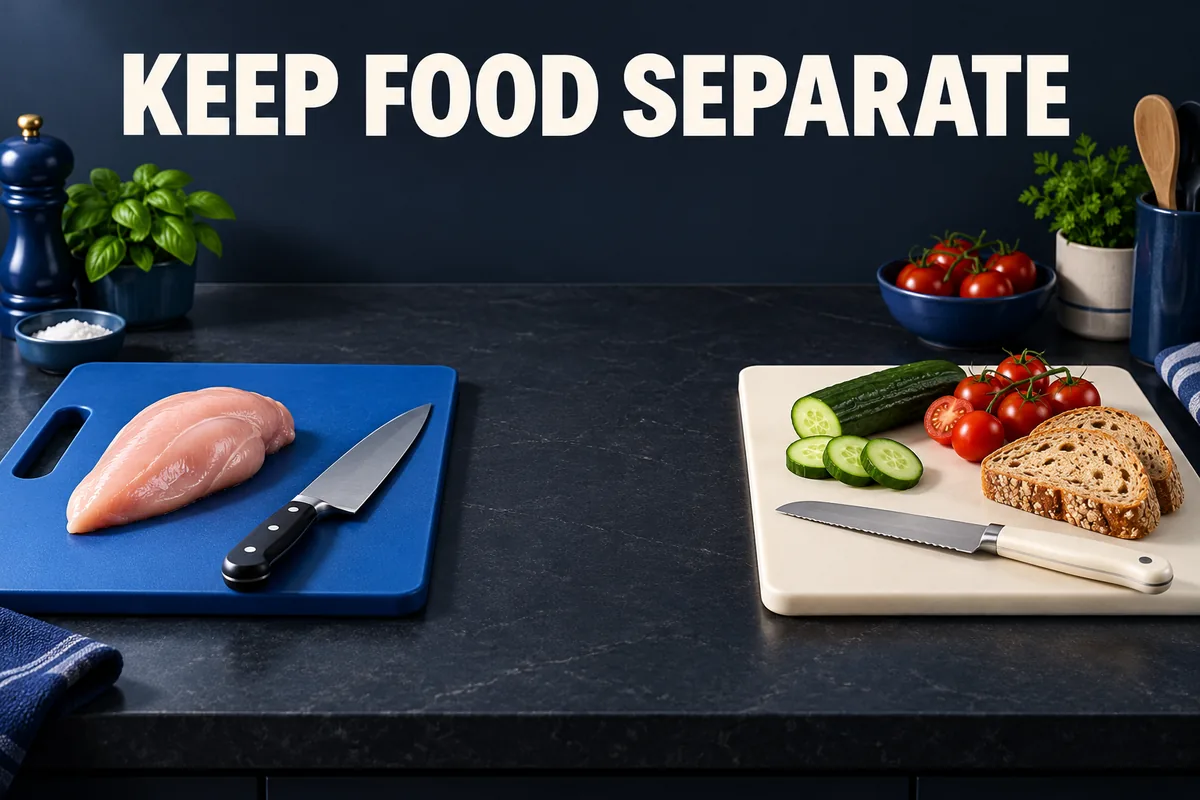
Assign two clean boards
Before cutting, decide which food will be cooked and which will be served without further cooking. The CDC food safety guide recommends one board for raw meat, poultry and seafood and a different board for produce, bread and other food that will not be cooked. Choose an easy household label or colour reminder; there is no required colour scheme here.
Keep the cutting task separate
For chicken with a salad, keep the chicken board and its knife away from the clean salad surface. Place each board securely and leave working space. Do not transfer raw juices with a knife, plate or hand. Follow the produce washing guide before preparing the salad. A separate board does not replace washing your hands.
Clean before changing tasks
Wash hands with soap and water after handling raw food. Wash boards, utensils and counters with hot soapy water after each food item, following CDC guidance. Turning a board over or wiping it is not a cleaning substitute. Follow the board maker and local guidance for any suitable food contact sanitizer, including its label instructions. Do not improvise chemical mixtures.
Dry and inspect the boards
The University of Maine board guide describes complete drying with airflow and replacing boards with cracks or deep grooves that prevent effective cleaning. Follow the maker’s dishwasher instructions and avoid stacking wet boards. No material or colour makes a board automatically clean.
Use the plan for everyday meals
Set out the two clean boards before starting, then decide where used utensils will go. Keep thawing food separate from cutting preparation. Use the balanced meal guide for meal composition and Fitonomy for fitness planning. This kitchen workflow is one part of food safety, not a guarantee against illness.
After handling raw food, wash every hand surface and dry cleanly before returning to ingredients on the other board.