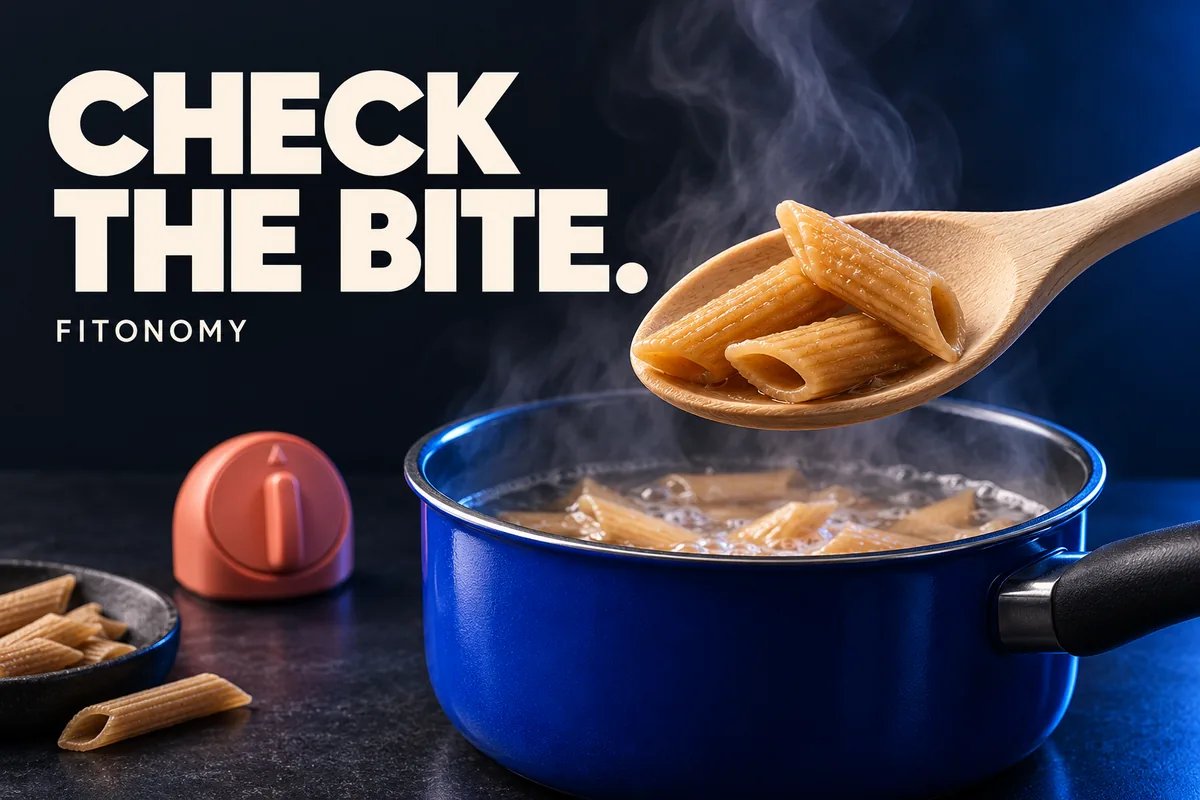
Identify the dry pasta
Choose dry pasta made with whole wheat or whole grain flour, rather than a cooked pouch or fresh pasta. Iowa State guidance recommends checking the first ingredient. Follow wheat allergy and gluten restrictions; boiling does not remove them. Decide how the pasta fits your meal using the balanced meal guide.
Prepare one packet method
Read the actual packet for water, timing and any special instructions. Shapes and products differ, so there is no single correct cooking time. Set out a large suitable pot, a spoon and a stable colander before heating. Keep the draining area clear and choose an amount you can handle safely. The bulgur method is a different preparation.
Boil and stir gently
Following your packet, bring the water to a boil, add the pasta carefully and stir. Stir again as it starts cooking and occasionally as needed to prevent sticking. Mississippi State instructions describe this sequence. Attend the pot, manage the heat to prevent overflow and keep hands and face clear of steam. Do not copy a covered rice absorption method.
Check before draining
Use the packet timer as a prompt to check texture. Lift out a piece with a utensil, let it cool enough to taste safely, and check whether it is cooked through with the firmness you prefer. If still too firm, continue cooking and check again. Drain carefully in the stable colander without holding your face over the steam. Serve with familiar vegetables and canned beans if they suit the dish.
Plan the spare portions
For leftovers, FSA guidance advises dividing food into smaller portions, cooling and refrigerating within one to two hours, and eating it within forty eight hours or freezing it. Follow packaging and local guidance. Note the pasta shape, packet and texture for next time. Fitonomy can support meal planning alongside exercise; one ingredient does not guarantee a training or health result.