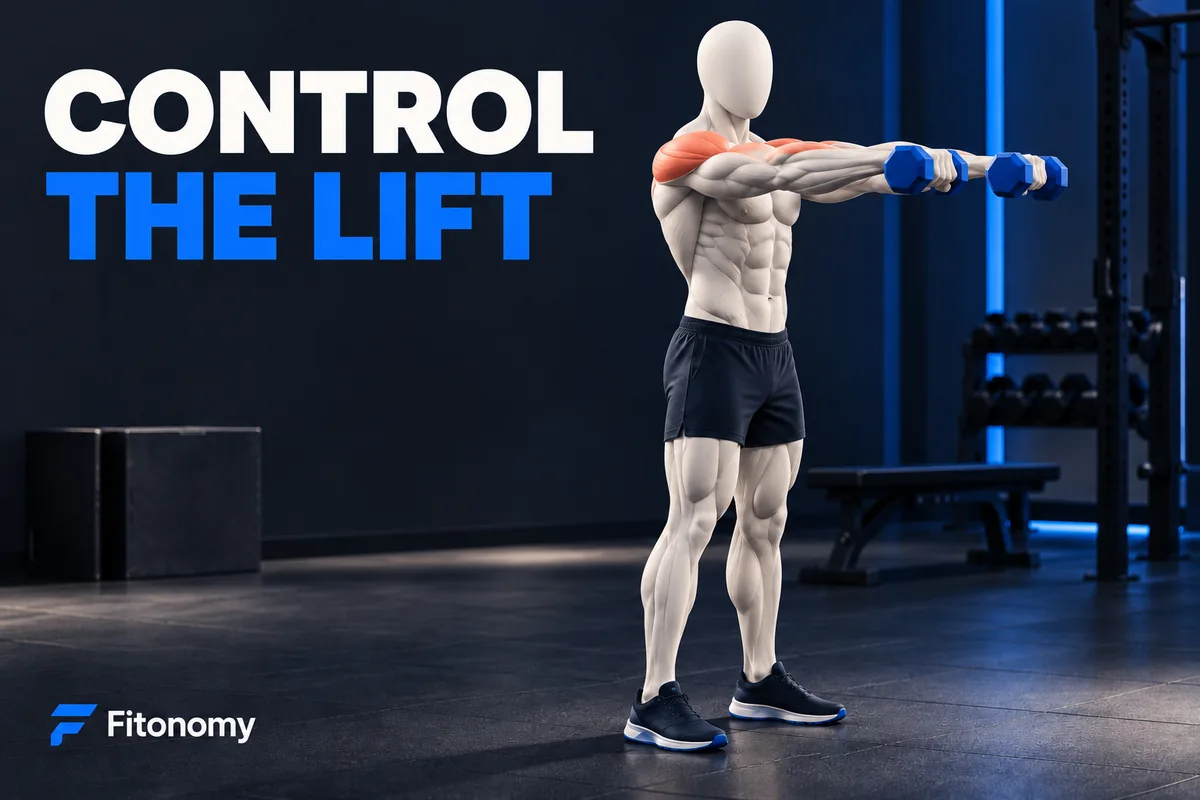
Choose the forward movement
A front raise moves the upper arms in front of the body. A lateral raise moves them outward, while a seated shoulder press presses overhead with bending elbows. These tasks need separate loads. This guide follows the bilateral shoulder height version in PureGym’s instructions, not its optional higher variation. It is one exercise within a wider routine, not a complete shoulder programme.
Set up with a light pair
Clear room in front of you and choose dumbbells you can lift and put down without rushing. Warm up with suitable light aerobic movement; Mayo Clinic’s technique guidance gives five to ten minutes as an example. Stand steadily with feet about shoulder width apart and knees relaxed. Hold the handles fully in front of your thighs, palms toward the thighs. Keep wrists aligned with forearms and elbows comfortably almost straight, without forcing a lock.
Raise and lower smoothly
Gently brace your abdomen and sweep both arms forward, keeping them about shoulder width apart. As they rise, the palms face down. Keep the elbow angle quiet rather than curling the weights. Finish around shoulder height, or earlier if comfort or control changes. Breathe out as you lift and in as you lower. Return slowly to the thighs without bouncing into the next repetition. The torso stays upright instead of leaning back to finish.
Adjust when control changes
If your hips start the lift, your torso rocks or your wrists fold, stop the set and choose a lighter pair. Do not make up unfinished repetitions by swinging. There is no universal starting weight or required count here. Stop for pain, dizziness, numbness or lost control. Recent injury, surgery or prescribed shoulder limits take priority; ask your clinician about suitability and a qualified trainer about an unclear movement.
Record and compare the task
Note the weight of one dumbbell, controlled repetitions and the height you used. For example, a note saying six smooth repetitions describes that session, not everyone’s target. Compare the same setup next time and rest before another attempt. A supported row is a different pulling task. Use the first gym workout guide to place exercises in a wider session. Explore Fitonomy’s training offering without assuming this exact exercise appears in every plan.