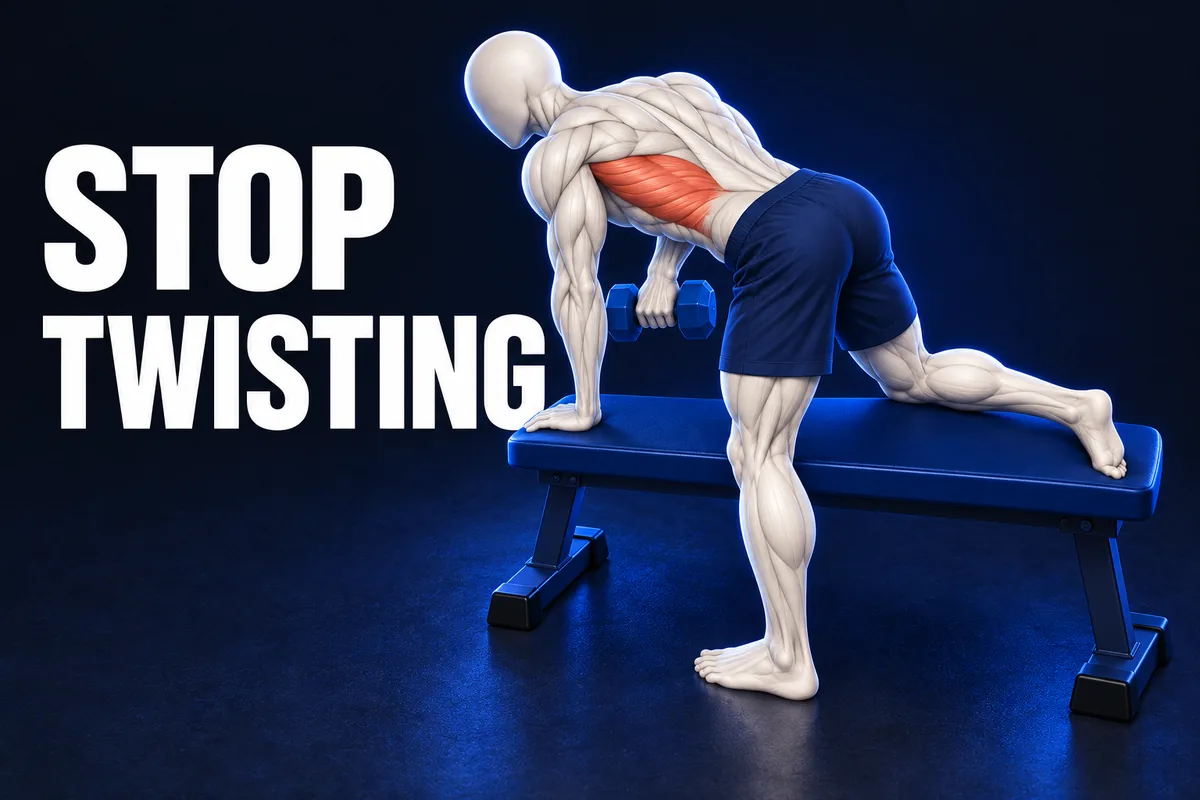
A supported dumbbell row trains a pulling movement with one arm while the other hand and one knee rest on a bench. The important beginner skill is moving the weight without turning the repetition into a twist of your whole torso. Support helps you organize the position, but it does not make every weight appropriate.
To place the row alongside leg work, pushing and trunk practice, use our first gym workout guide.
Build a stable starting position
Use a firm exercise bench on a level surface, not a chair with wheels or a soft bed. Clear the floor around the weight. Warm up with five to ten minutes of suitable aerobic movement, then rehearse the position with a very light dumbbell.
For a right arm row, support your left hand below your shoulder and your left knee below your hip. Plant your right foot on the floor beside the bench. Keep your back long, neck aligned and abdomen gently braced. Let the right arm hang without dropping that shoulder toward the floor.
Move the arm while the torso stays steady
- Breathe out as you draw the elbow back beside your ribs. Keep the wrist aligned with the forearm and the shoulder away from the ear.
- Stop lifting before you need to turn your chest, arch your back or jerk the weight higher. The dumbbell does not need to reach a particular mark on your body.
- Breathe in as you lower smoothly. Keep the support points steady, then change sides carefully after the set.
The ACE row guide describes this supported setup and emphasizes avoiding trunk rotation. ACE classifies the exercise as intermediate. If you cannot find a stable position, ask a qualified trainer to demonstrate it before adding load.
Choose control before a heavier dumbbell
There is no universal beginner weight. Mayo Clinic's weight training guidance uses 12 to 15 comfortable repetitions as an initial example. Start with a few practice repetitions and stop the set when the position changes, even if your planned count is unfinished.
Rest until you can repeat the movement steadily. A short video from a suitable angle can help reveal a lifting shoulder or rotating torso, but keep your head aligned during the actual row. Do not crane your neck toward a mirror while lifting.
Troubleshoot the visible mistakes
- Chest turning upward: reduce the weight and finish the pull earlier.
- Weight falling on the way down: use a lighter dumbbell and regain control before continuing.
- Uncomfortable support or pain: stop. Do not compensate by hanging off the bench or forcing your back into position. Get individual advice for an injury or persistent symptoms.
Record the same setup each time
Log the weight of one dumbbell, repetitions on each side and the bench setup. A note such as eight controlled repetitions per side is more useful than a total that hides different technique between arms. Compare sessions with the same support and movement.
Progress can mean a steadier repetition before it means more weight. Use our progression guide when the current load becomes consistently manageable. The machines and free weights comparison can help you discuss another setup with a trainer. A row belongs within a balanced routine, not as your entire workout.
After the row, learn the seated dumbbell shoulder press.
With just one dumbbell available, use the full body session to combine this row with leg work, pushing and trunk practice.