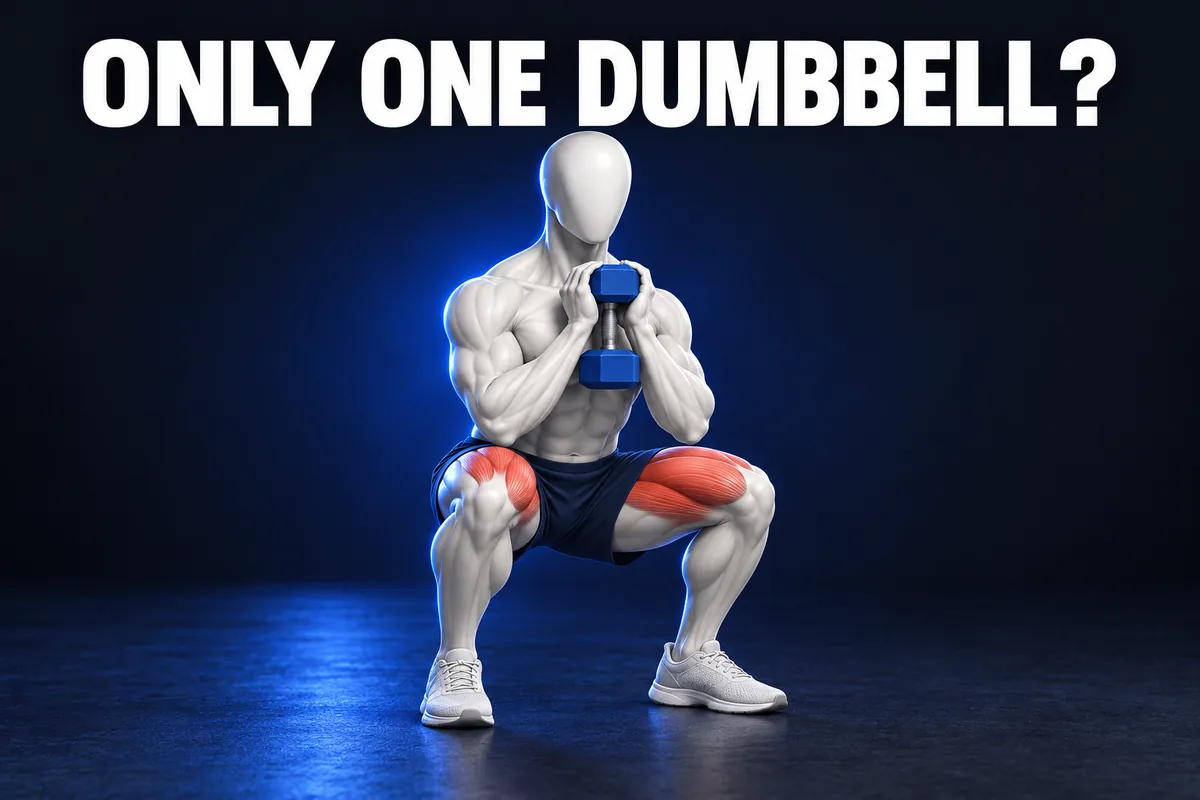
A single dumbbell can support a useful full body workout when you combine it with bodyweight exercises. You do not need to hold it for every movement. A weight that suits your legs may be too heavy for your arms, so the session should fit the equipment you can control.
Before starting at home, use the small space setup check to leave room for your planned movements and transitions.
To choose how often to train, compare full body and upper lower routines using the days you can reliably fit into your week.
If you have a long exercise band instead of a dumbbell, our beginner resistance band workout explains secure setup and a short introduction.
Prepare your space and load
Use a clear floor, a stable bench for the supported row and a wall that will not move. Check your grip before lifting. If the dumbbell feels too heavy for a movement, practise without it or choose a lighter option. There is no universal starting weight.
Mayo Clinic’s strength training guidance recommends warming up with five to ten minutes of walking or similar activity. Then rehearse a few easy repetitions of each movement. Breathe normally, move steadily and stop if you feel pain.
Try this five exercise sequence
This is an example practice session, not a prescribed programme. Start with one set of each exercise. Eight to twelve controlled repetitions can be a useful target for the first four, but finish earlier if your position changes. Rest about a minute between exercises, or longer when needed.
- Goblet squat: hold the dumbbell vertically at your chest, with both palms supporting the upper end. Keep your elbows close. With feet about shoulder width apart, sit your hips back and bend your knees to a comfortable depth. Push through your feet to stand. The ACE goblet squat instructions illustrate this grip and movement.
- Supported row: place one hand and the knee on that side on a sturdy bench. Keep the other foot on the floor. Pull the dumbbell toward your hip without turning your torso, then lower it under control. Complete both sides. Check the supported row setup before starting.
- Wall push up: place your palms on a firm wall, keep your body aligned and bend your elbows to approach it. Press away smoothly. Stand closer if needed, as shown in the wall push up guide.
- Glute bridge: lie on your back with knees bent and feet flat. Lift your hips without arching your lower back, then lower slowly. Keep the dumbbell aside while learning the bodyweight bridge.
- Modified forearm plank: support yourself on forearms and knees, with elbows under shoulders. Keep your trunk steady for three comfortable breaths, then rest. Our plank guide explains this easier starting position.
Make the next session repeatable
Record the dumbbell weight, repetitions on each side and any easier variation. Two nonconsecutive days, such as Monday and Thursday, are one scheduling example. Allow recovery before training the same muscles again.
When the same session feels controlled across several attempts, consider one extra repetition or a second set. Change one thing at a time using the progression guide. If your single weight stops fitting an exercise, changing the load or movement is more useful than forcing it.
For a way to use two manageable dumbbells while walking, read the beginner farmer carry guide.
Ask a qualified trainer for help with unfamiliar positions. Recent injury, persistent symptoms or a condition affecting exercise calls for individual advice before continuing.