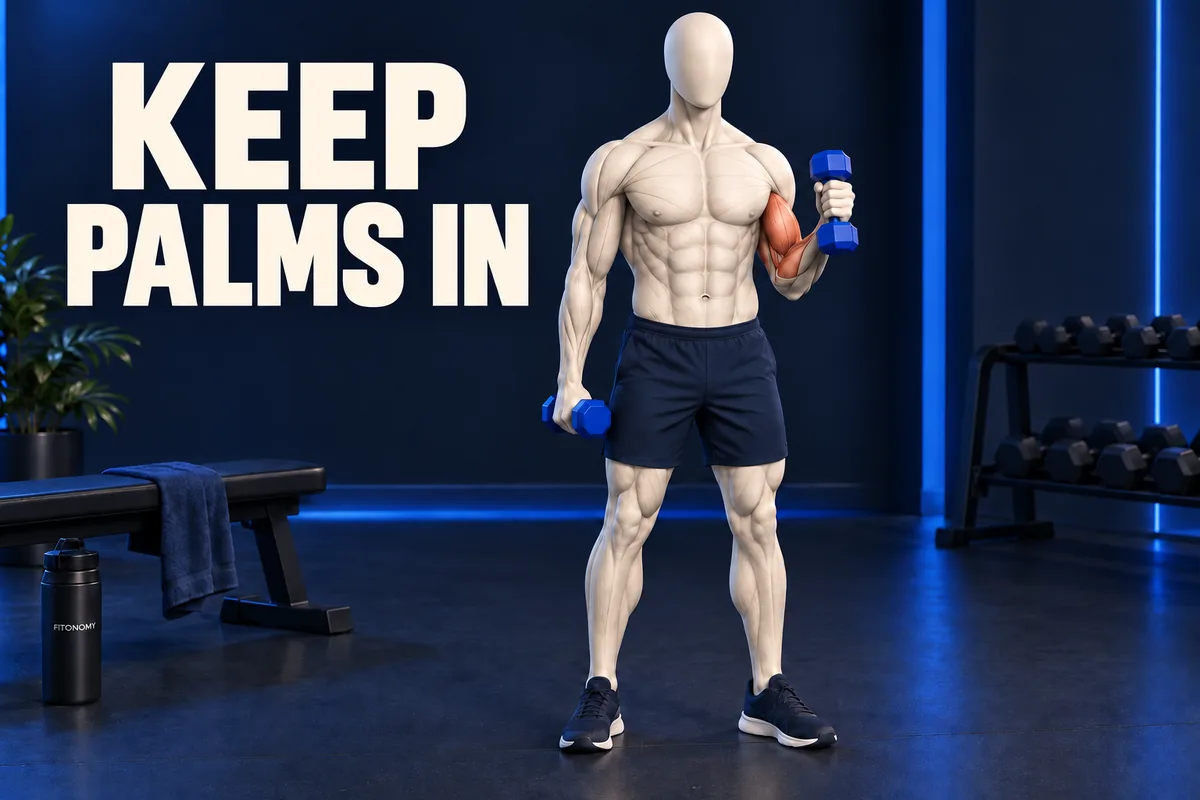
Learn the grip first
A hammer curl bends the elbow while the palm stays facing inward. Unlike the palms up dumbbell curl, it does not turn the forearm upward during the lift. ACE’s full guide classifies it as intermediate. Ask a qualified trainer to demonstrate an unfamiliar setup before adding weight.
Set a steady position
Warm up with suitable easy activity and choose light dumbbells you can handle safely. Stand with one foot slightly forward, torso upright and head aligned. Hold each handle fully with the thumb around it. Let the arms hang beside the body, shoulders settled and wrists straight. Leave space around the weights.
Bend without turning
Breathe out and bend one elbow slowly, keeping its upper arm near your side. The palm keeps facing inward as the weight approaches the front of the shoulder. Do not lean back, shrug or drive the elbow forward to gain height. With alternating curls, the other arm stays at the starting position.
Lower with the wrist aligned
Breathe in and lower smoothly to your comfortable starting range. Do not drop the weight or force an elbow lock. ACE notes that elbow structure varies: do not force a dumbbell against your thigh by bending the wrist. Mayo Clinic’s technique advice supports reducing load or repetitions when form changes and stopping for pain.
Record this variation separately
Note hammer curl, the weight of one dumbbell, repetitions per arm and whether arms alternated. Do not copy the load from a supported wrist curl, where another joint moves. Follow personal injury restrictions. This exercise belongs within a broader gym plan, not as a complete routine or a promise of arm growth.