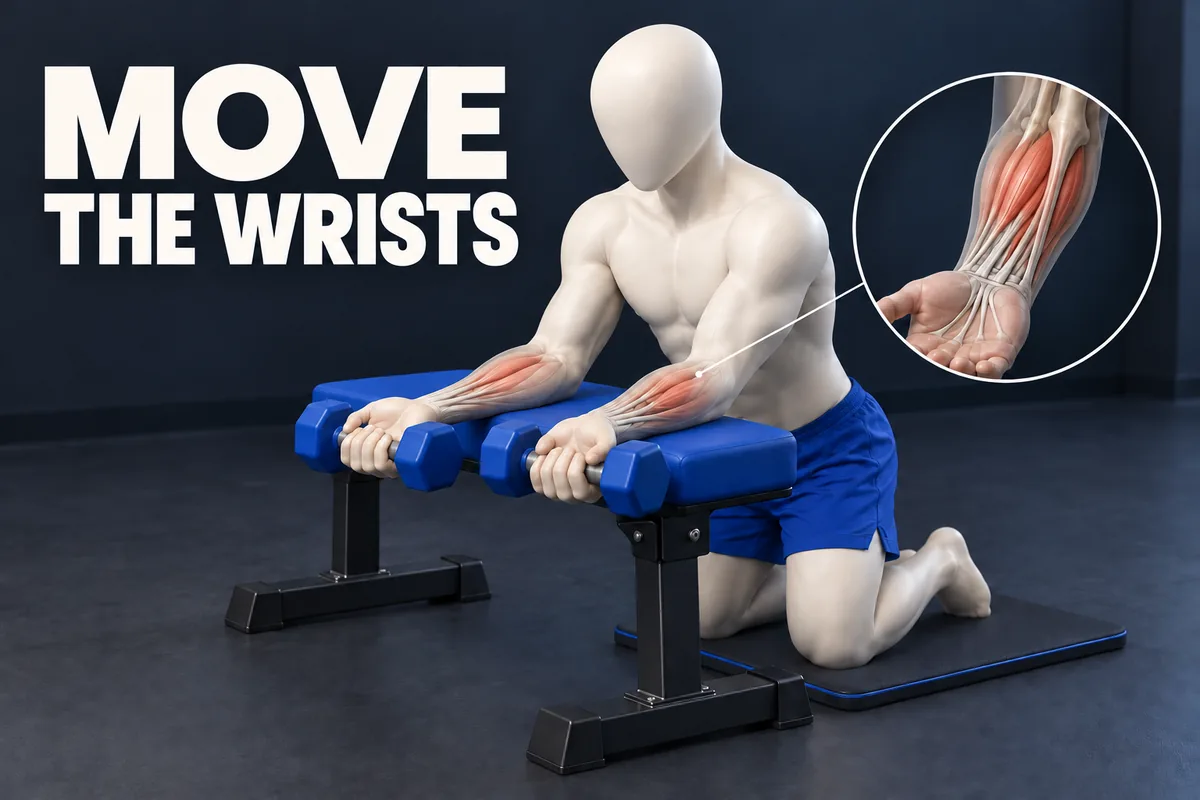
Check the bench and floor access
Use a stable exercise bench on a clear, level floor. Rehearse kneeling and getting up without weights first. If the position is uncomfortable or uncertain, ask a qualified trainer about another setup rather than copying the illustration. Mayo Clinic technique guidance recommends warming up before lifting and getting help with unfamiliar exercises. Choose light weights you can handle throughout.
Support the forearms with palms up
The ACE wrist flexion guide shows a kneeling position with the elbows bent about a right angle and forearms supported along the bench. Turn the palms upward. Let the hands and dumbbells project beyond the pad edge so they can move freely. Begin with wrists aligned with the forearms, not already bent sharply. Keep the handles fully held.
Lower and return through the wrists
Slowly allow the hands to move downward through wrist extension, keeping the forearms supported and elbows quiet. Then bend the wrists to bring the weights back toward the starting position. Breathe in while lowering and out while returning. Do not lean or lift the elbows to finish. This differs from a biceps curl, where the elbow bends and wrist stays straight.
Keep the handles in your hands
Do not loosen the fingers so the dumbbells roll toward the fingertips. ACE flags this practice as a risk for dropping weights and wrist injury. Keep a closed grip without chasing maximum squeezing force. If the load falls, the arms lift or the path becomes rushed, stop and reduce it. Stop for pain, numbness or lost control; individual injury restrictions take priority.
Record this as a separate exercise
Note the weight of one dumbbell, controlled repetitions and bench setup. Do not copy the load from a farmer carry or elbow curl. A few light learning repetitions are enough to check the task before choosing more work; no universal count applies. Use the workout record guide and Fitonomy for planning. This one exercise is not a complete routine or rehabilitation plan.