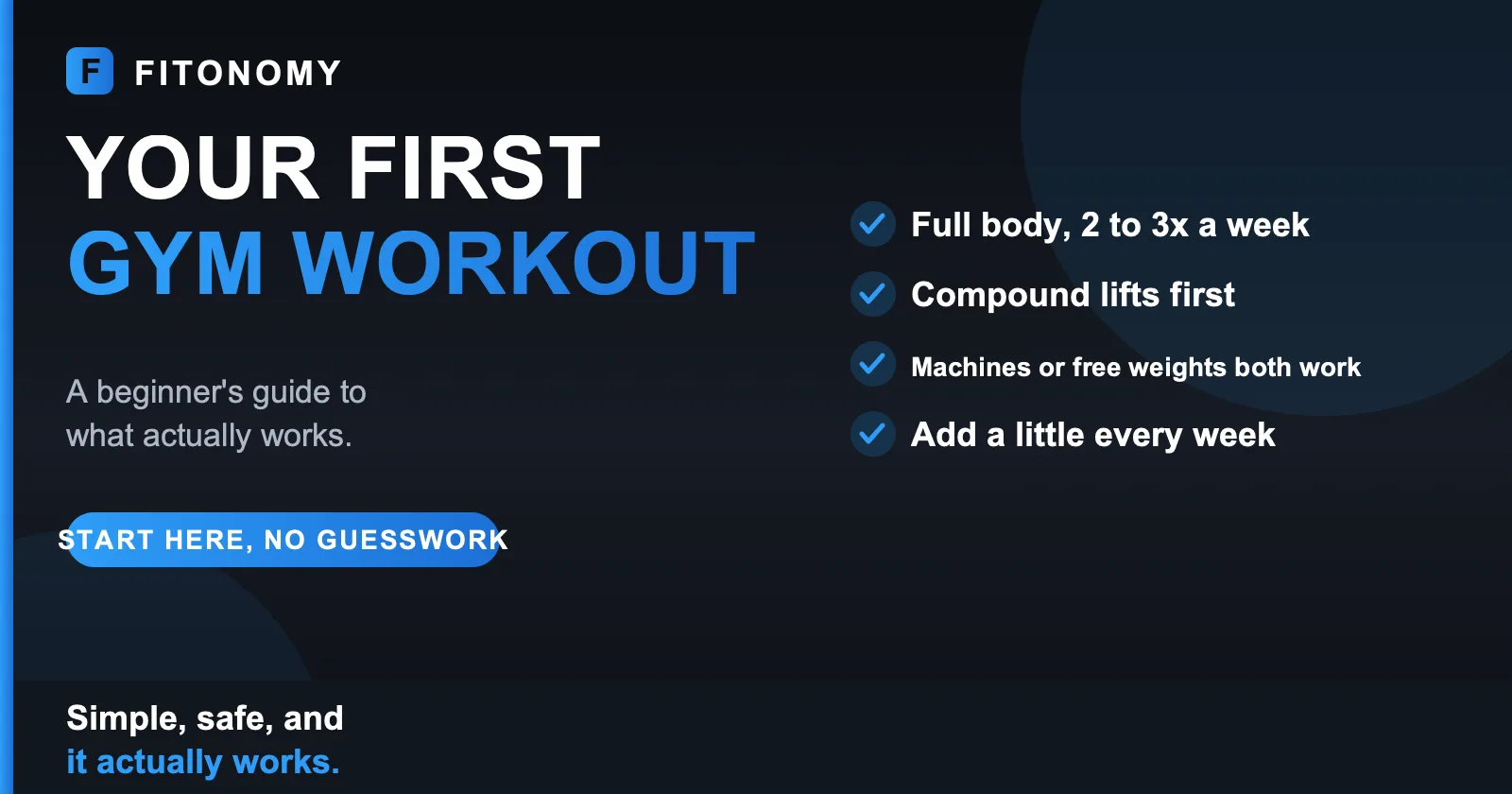
Walking into a gym for the first time can feel confusing. Machines have unfamiliar controls, the free weights area looks busy and it is easy to spend the session trying a little of everything. A short plan gives you a starting point and a reason to return.
If your shifts change, the workout planning guide for rotating schedules helps you protect sleep and choose training windows you can actually use.
To choose how often to train, compare full body and upper lower routines using the days you can reliably fit into your week.
Use this guide to connect the decisions that matter: preparing for the session, choosing exercises, finding a manageable effort and recording what happened. The sample below is a practical starting example for a generally healthy adult, not a personalized program or a test you must pass.
Your first week at a glance
Choose two days with a rest day between them, such as Monday and Thursday. Allow roughly 30 to 50 minutes, including time to learn equipment. On the first visit, one light practice set of each unfamiliar movement may be enough. Build toward two working sets when you understand the setup and recover comfortably.
The ACSM's 2026 guidance supports training major muscle groups twice weekly. A full body session is one convenient way to organize this. You do not need to divide every muscle into its own day or commit to six gym visits.
Before you pick up a weight
Bring water, comfortable clothing and shoes with a stable grip. Ask staff for an introduction to the machines, emergency controls and any equipment you intend to use. Write down seat settings instead of guessing again next time.
Begin with about five minutes of easy walking or cycling, then practice the planned movements with little or no resistance. Add another light preparation set if you need it. A warm up should leave you ready to practice, not tired before the session begins.
For the sequence and exercise specific preparation, use our guide to warming up before a workout.
Choose equipment you can control
Machines, dumbbells and bodyweight exercises can all fit this plan. Choose an option you can adjust comfortably, move under control and put down safely. A machine is not automatically a good fit for every body, and a barbell is not a required graduation step.
Our machines or free weights comparison explains the practical differences. Keep the same option for a few sessions while you learn it. If a station is occupied, use a familiar alternative or change the order rather than rushing into an unfamiliar lift.
If the equipment you planned to use is occupied, the busy gym workout guide helps you choose between waiting, changing the order and a familiar substitute.
A simple full body session
These five choices retain the useful structure of a squat pattern, work for the hips, a push, a pull and trunk practice. Learn the more demanding movements while you are fresh. Ask a qualified trainer to check any exercise you cannot set up confidently.
- Legs: choose a leg press or a goblet squat. Start with a comfortable depth and a load you can control. Aim for 8 to 12 repetitions per working set.
- Hips: choose a floor glute bridge, or a light dumbbell Romanian deadlift if you have learned the hip hinge. Use 8 to 12 controlled repetitions. These are alternatives for this introductory session, not identical exercises.
- Push: choose a chest press machine or a push up against a secure raised support. Use 8 to 12 repetitions without forcing the final repetition.
For the machine option, read the chest press setup guide. Check seat height, handle position and the controlled return before choosing your working load.
- Pull: choose a seated cable row or a supported dumbbell row. Use 8 to 12 repetitions, on each side for the dumbbell option. The beginner dumbbell row guide explains support, positioning and common mistakes.
- Trunk: try a short elevated plank using a stable support. For example, hold for 10 to 20 seconds while breathing comfortably. End the hold when you can no longer maintain the position. There is no need to chase a longer time.
Sets, effort and rest
After the initial practice visit, two working sets per exercise are a simple planning option. The repetition numbers above are examples, not a special muscle building threshold. Choose an effort that lets you finish with roughly two or three controlled repetitions still possible. When learning a movement, staying lighter is reasonable.
Rest about one to two minutes between sets and longer if breathing or technique has not settled. Lower the weight or end the set if you start swinging, shortening the movement or losing control. Stop an exercise that causes pain. Persistent pain, injury or a condition affecting exercise calls for individualized guidance.
Use your log to plan the next visit
Record the exercise, equipment setting, weight, repetitions and a short effort note. For example: seated row, setting 3, 15 kg, 10 then 9 repetitions, controlled. This is a record, not a target everyone should copy. Our workout tracking guide helps you choose a recording method.
Repeat a manageable load while you learn. Later, if both sets reach the top of your range on comparable sessions with control and effort in reserve, consider the smallest suitable increase. If the jump makes the movement unreliable, return to the previous load. The guide to when to increase your weights walks through that decision.
Common questions before the second session
Do I need to feel sore? No. Soreness is not the goal of the plan. If soreness makes ordinary movement difficult, reduce the next session's work and allow more recovery. Do not use pain as evidence that a workout worked.
Should I add a third day? First make two sessions repeatable. Add another only if your schedule and recovery support it, with recovery time between sessions. You can keep the same basic exercises while your technique develops.
When will I see results? Changes in strength, confidence and appearance vary. Look for repeatable attendance and better control before expecting a particular number or visible deadline. More weight every workout is not required.
Before leaving, write down your next visit and one useful next step: repeat the setup, practice a movement or attempt one more controlled repetition. The goal is a routine you can understand and adjust, with these supporting guides available when the next question arises.
Further guidance
Mayo Clinic: proper weight training technique. NHS: accessible strength exercises.
When you are ready to explore a held weight after an unloaded squat, see the controlled goblet squat guide.
If the hip movement is unfamiliar, a three point dowel drill teaches the unloaded pattern before considering weight.
For a focused vertical back pull on a machine, read Lat Pulldown Machine Setup for Beginners.
Before the workout, check the venue and bag essentials separately from choosing exercises, especially if you will change or shower there.
Bringing water also means caring for its container. Wash and dry your reusable bottle according to its own instructions before the next visit.