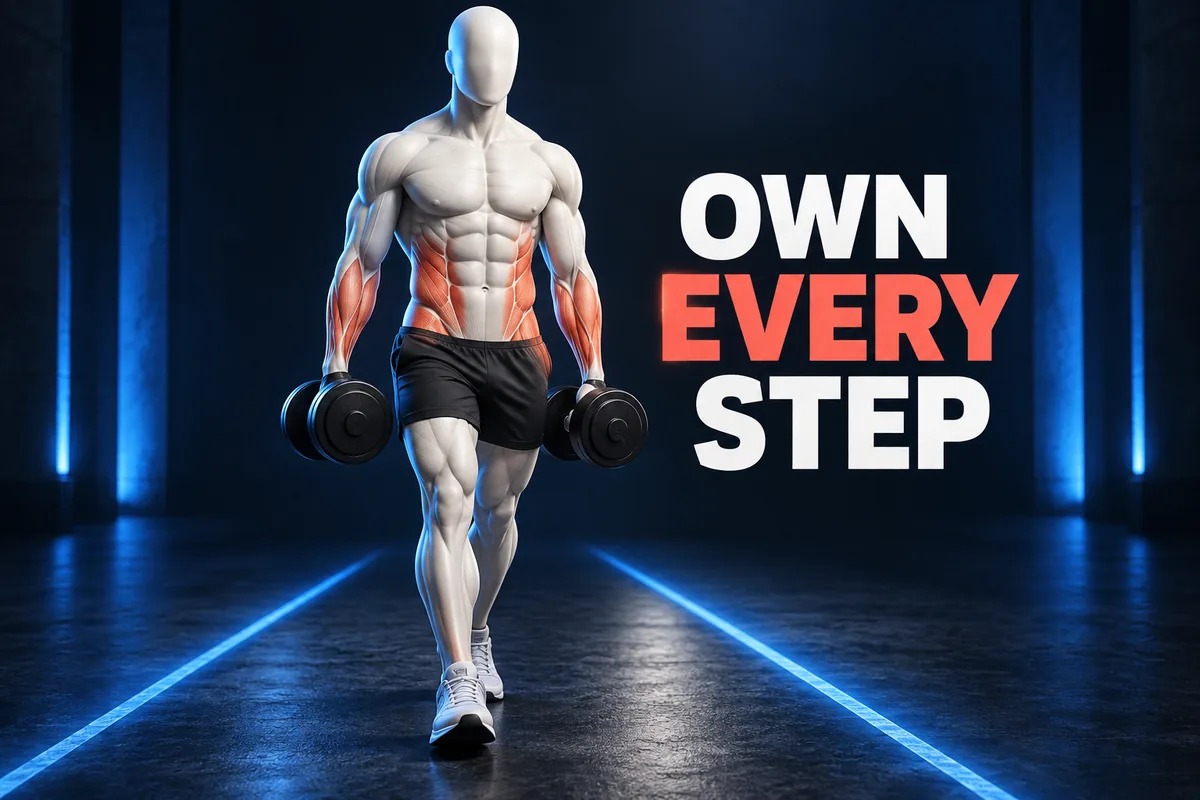
A farmer carry looks simple because the weights remain beside you. The challenge is to organize your grip, trunk and steps before fatigue changes the walk. Begin with a load you can move without rushing or leaning.
Set the lane before you lift
Choose a level path with enough room to walk and turn without weaving around people. Place equal dumbbells outside your feet. Hinge at the hips, take a firm grip and stand up with both weights together. Let the arms hang naturally beside the hips.
Walk tall and keep the weights quiet
Look ahead, keep the ribs comfortably over the pelvis and take natural controlled steps. The dumbbells should travel beside you rather than swinging into the thighs. Slow down before the turn, use several small steps and face the new direction before continuing.
Let movement quality choose the load
The right starting load allows an even pace, a steady trunk and a secure grip from the first step to the last. End the carry when the shoulders tilt, the body leans, the weights bounce or the grip begins to open. A shorter controlled walk gives you clearer feedback than a longer struggle.
Use the coaching evidence carefully
The ACE farmer carry guide describes a firm grip, dumbbells beside the hips, a straight back and walking over a chosen distance. The Catalyst Athletics farmer carry guide also emphasizes posture and control while walking under two loads. These coaching instructions explain the task. They do not establish one ideal weight, distance or result for every person.
Fix the first thing that changes
If the weights swing, reduce speed and shorten the steps. If one side drifts lower, stop and reset with equal loads. If your grip fails before posture changes, use lighter dumbbells. Set the weights down with a hip hinge instead of dropping them at the end.
Pair this carry with the one dumbbell full body workout when equipment is limited, and review the beginner dumbbell row guide for another controlled pulling pattern.
Stop when control is no longer clear
Stop for sharp or increasing pain, dizziness, numbness, tingling or sudden weakness. Use extra caution if grip, balance or walking is currently limited. After an injury or surgery, follow the load and movement guidance from your qualified clinician.