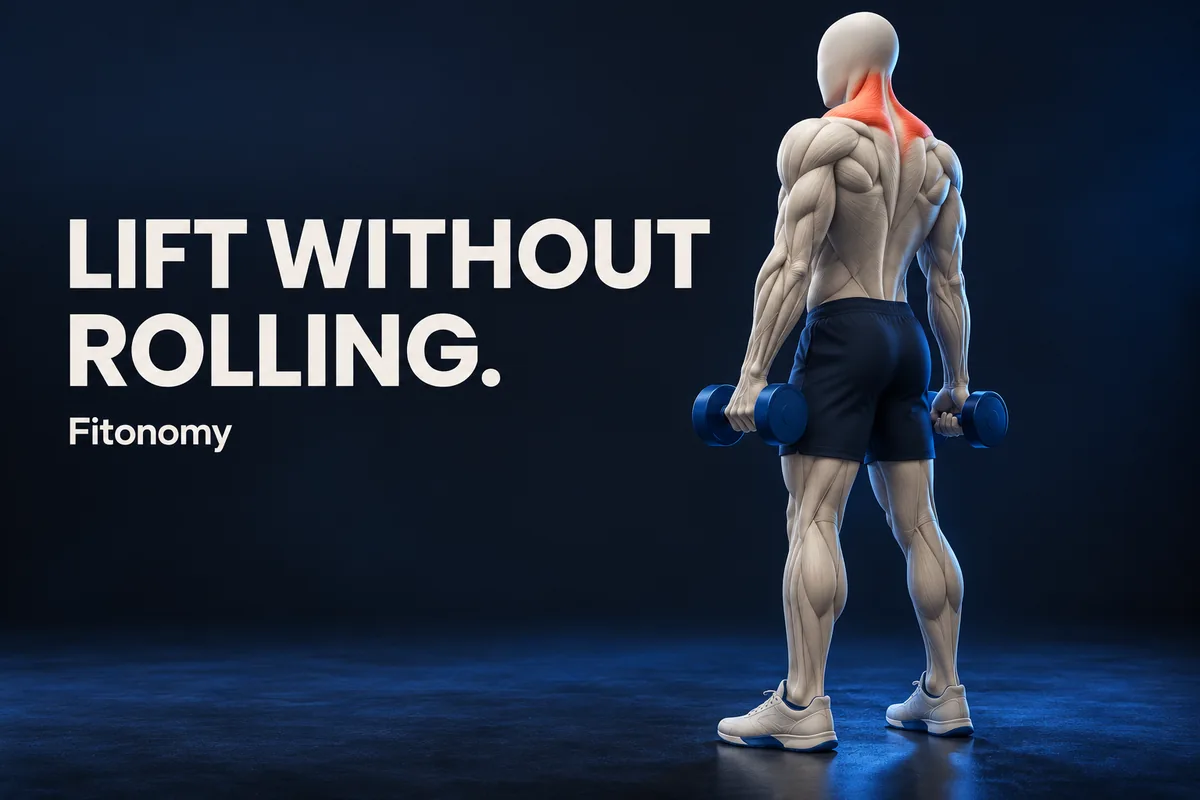
Identify the shoulder movement
A shrug lifts the shoulders while the arms hang beside you. It is different from lifting the upper arms in a lateral raise or bending the elbows in a curl. The ACE standing shrug guide classifies its version as intermediate. Ask a qualified trainer to demonstrate an unfamiliar setup before adding weight.
Prepare a light stable setup
Warm up with suitable light activity and choose a pair you can lift and put down safely. Mayo Clinic technique guidance emphasizes manageable weight and careful form. Stand with one foot slightly ahead, torso upright and head aligned. Wrap the thumbs around the handles, palms facing the body. Keep the weights beside the thighs, arms long and wrists straight.
Lift without rolling or curling
Breathe out and slowly raise the shoulders on a small comfortable upward path. Keep the torso still instead of leaning backward. The ACE instructions separate this lift from shoulder rotation and elbow bending. Do not roll the shoulders, curl the weights or drive the head forward. No maximum height is required.
Lower and adjust the load
Breathe in and lower gently to the starting position. Keep the grip closed and do not drop or bounce the weights. Stop the set if the trunk rocks, wrists fold or grip loosens, then choose less weight or rest. Stop for pain, dizziness or numbness. Injury, recent surgery or personal restrictions call for individual advice rather than forcing the position.
Record the task separately
Note shrug, the weight of one dumbbell and controlled repetitions. A farmer carry walks with hanging weights and needs its own load choice; do not copy that load. Rest before another attempt and compare the same setup. Use the first gym workout guide for a broader plan. Explore Fitonomy without assuming this exact exercise appears in every programme. No growth or pain relief result is promised.