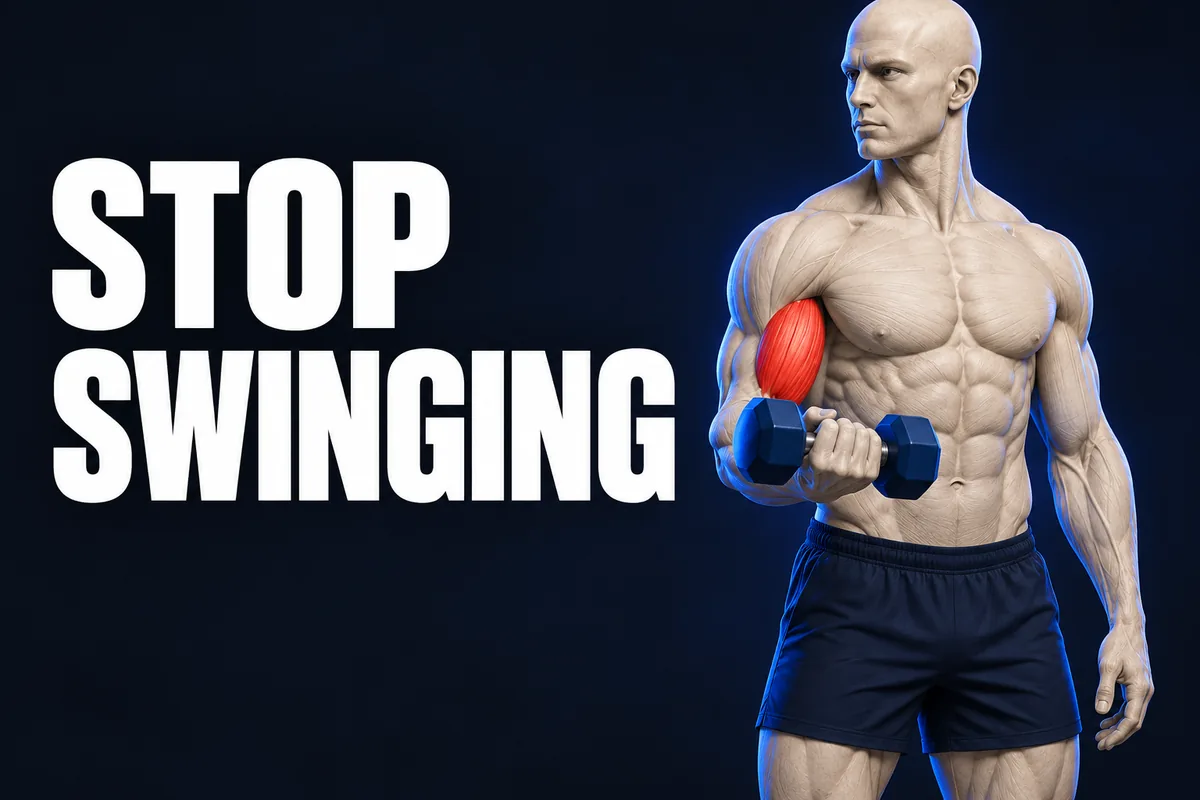
A dumbbell biceps curl trains the front of your upper arm by bending the elbow against resistance. For a beginner, the useful skill is moving the weight without throwing your shoulder or torso into the repetition. A heavier dumbbell is only progress when the movement stays controlled.
Set up before the first repetition
Warm up with five to ten minutes of walking or another suitable aerobic activity. Choose a clear space and a light dumbbell you can pick up and put down safely. You can stand steadily or sit upright on a stable chair with your feet supported.
Start with one arm so you can watch its position. Keep your shoulder relaxed, upper arm beside your torso and wrist in line with your forearm. Turn your palm forward at the bottom so it faces upward as the elbow bends.
Curl through the elbow
- Bend your elbow to lift the dumbbell in a smooth arc. Keep the elbow near your side instead of driving it forward to lift the weight higher.
- Keep your wrist straight. Let the elbow produce the movement rather than curling your hand toward your forearm.
- Lower with control to your comfortable starting position. Breathe out while lifting and in while lowering, then repeat on the other side.
The Mayo Clinic curl demonstration emphasizes a steady elbow, straight wrist and smooth movement. The dumbbell does not need to touch your shoulder. Avoid forcing the elbow beyond a comfortable range.
Choose a weight you can control
There is no useful starting weight that fits every beginner. Mayo Clinic's weight training guidance suggests a weight you can lift comfortably for 12 to 15 repetitions. Treat that as a starting example, not a requirement to finish despite losing technique.
Try a few practice repetitions first. If you need to lean backward, swing the weight or drop it on the way down, lower the load or stop the set. Rest before trying again. Stop the exercise if it causes pain.
Check the mistakes you can see
- A rocking torso: reduce the weight and rebuild a steady repetition.
- A wrist that folds: reset the hand and forearm alignment before continuing.
- An elbow moving far forward: finish the curl earlier, keeping the upper arm beside your body.
Record each arm clearly
Write down the weight of one dumbbell, repetitions for each arm and whether you stood or sat. For example, a log reading 4 kg, ten repetitions per arm describes the session; it is not a recommended weight for everyone. Do not add both dumbbells together unless your log explicitly uses that convention.
Use the same setup when comparing sessions. Our progression guide explains gradual increases, and the workout tracking guide helps keep records consistent. Curls are one part of a balanced routine, not a complete workout. Ask a qualified trainer for a form check if you remain unsure, and get individual clinical advice if an injury or health condition affects the exercise.