Rehearse the stance first
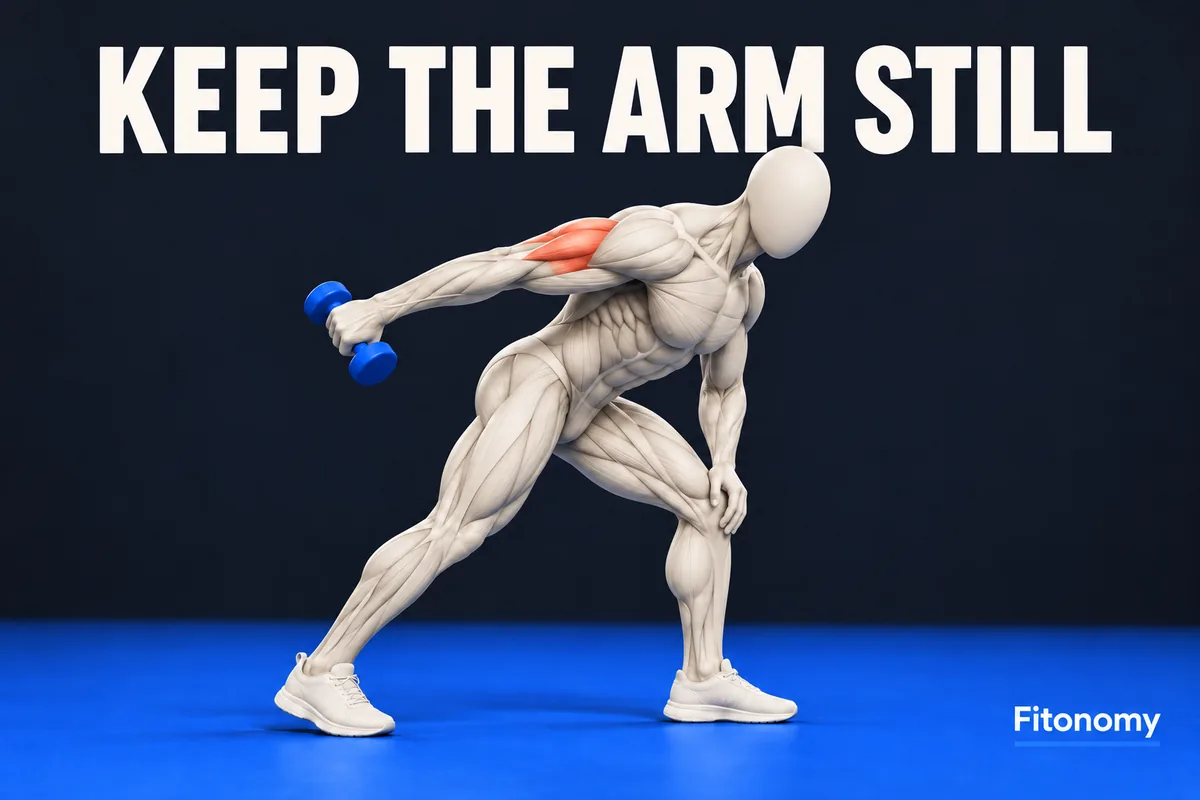
Warm up with suitable easy activity, then choose one light dumbbell you can pick up and put down safely. Mayo Clinic technique guidance favors manageable weight and careful form. Put the opposite foot forward, rest your free hand on that thigh and hinge at the hips. Keep your head aligned. Ask a trainer if this position is unfamiliar.
Place the upper arm
Keep the working upper arm close and parallel to your torso, with the shoulder settled. Bend the elbow so the forearm hangs roughly downward. Wrap your thumb around the handle and align the wrist with the forearm. The ACE demonstration shows this setup. The lying extension points the upper arm upward instead.
Straighten without lifting the shoulder
Breathe out and slowly open the elbow, moving the dumbbell backward without throwing it. Keep the upper arm stationary beside the torso. Avoid rotating your chest or arching your lower back. Finish within a comfortable straight arm position without snapping the elbow.
Control the return
Breathe in and bend the elbow slowly while keeping the same torso and upper arm position. This is not a row. If you must swing, shrug or fold the wrist, reduce the load or end the set. Stop for pain, numbness or dizziness. Personal injury or surgery restrictions take priority.
Keep a separate record
Put the weight down safely before changing sides. Note kickback, the weight of one dumbbell and controlled repetitions per arm. No fixed load or count suits everyone. Do not copy the cable pressdown load. Use the first gym guide for broader planning. This exercise alone is not a complete routine or a promise of results.