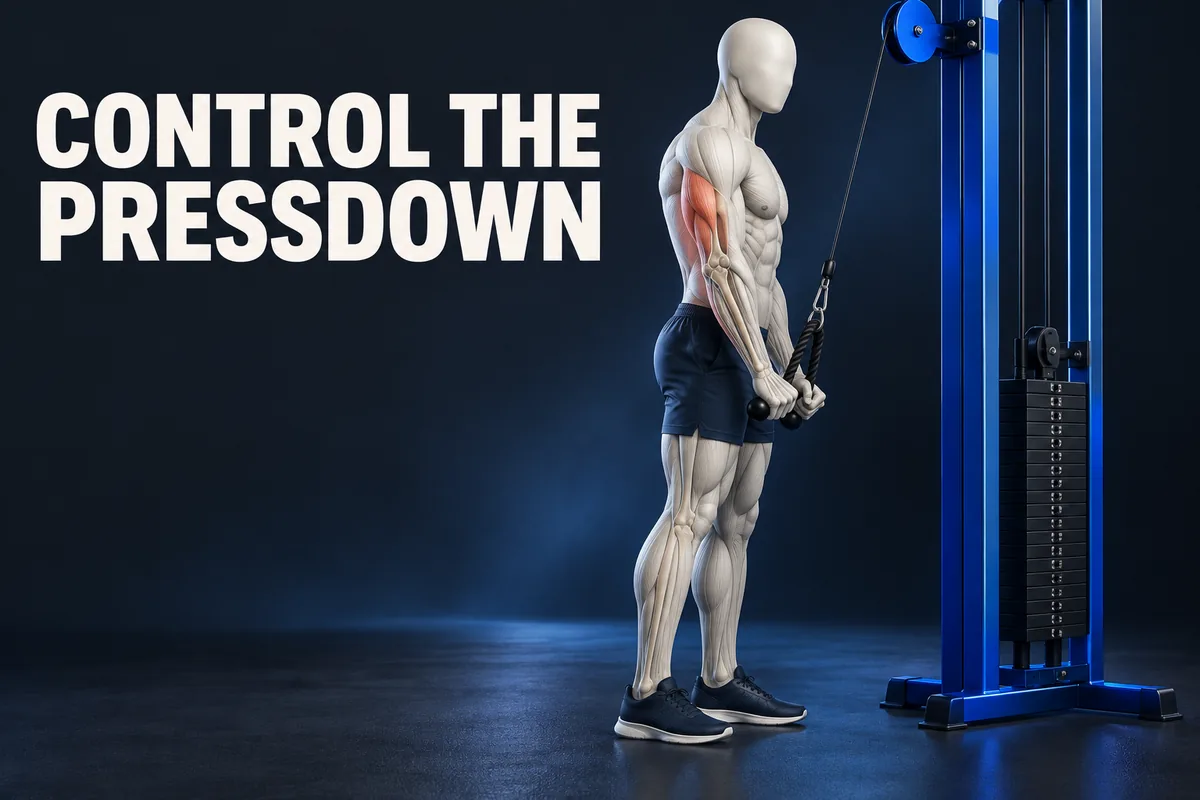
Check the station first
A cable column needs its attachment and pulley height set before use, as Mayo Clinic explains. Ask gym staff if the controls are unfamiliar. Follow the station instructions, secure a suitable handle or rope and choose manageable resistance. Leave room for the cable path and the weight stack.
Set your upper arms
Face the high pulley with a stable stance. Hold the attachment with a full grip. Bring your upper arms beside your trunk and keep wrists aligned with forearms. The ACE technique guide describes this position. The attachment should not pull you into a forward bend before you begin.
Press through the elbows
Extend the elbows slowly as the hands travel downward. Keep the torso quiet and avoid driving the upper arms backward. Finish without a hard elbow lock. This differs from a lat pulldown, where the upper arms move during the pull.
Give the return equal attention
Let the elbows bend slowly while maintaining your grip. End the return before the upper arms start drifting forward. Avoid letting the stack crash. If you must sway or fold the wrists, reduce resistance or stop. Stop for pain, numbness or other concerning symptoms; personal clinical advice takes priority.
Record a repeatable setup
Note the station, attachment, displayed load and controlled repetitions. Cable machines can differ, so compare the same setup. A biceps curl practices elbow bending with different resistance. Use the first gym guide for broader planning or explore Fitonomy. This exercise alone is not a complete routine or a promise of results.
For elbow extension with a different support and resistance path, compare the lying dumbbell setup. Keep its upper arm upward rather than beside the trunk and choose the load separately.