Plan the setup and finish
Choose a stable bench or clear floor space you can enter and leave comfortably. Rehearse without weight, then use a light dumbbell you can handle throughout. Ask a qualified trainer for help if positioning or removing it is uncertain. Keep the weight away from your face.
Point the upper arm upward
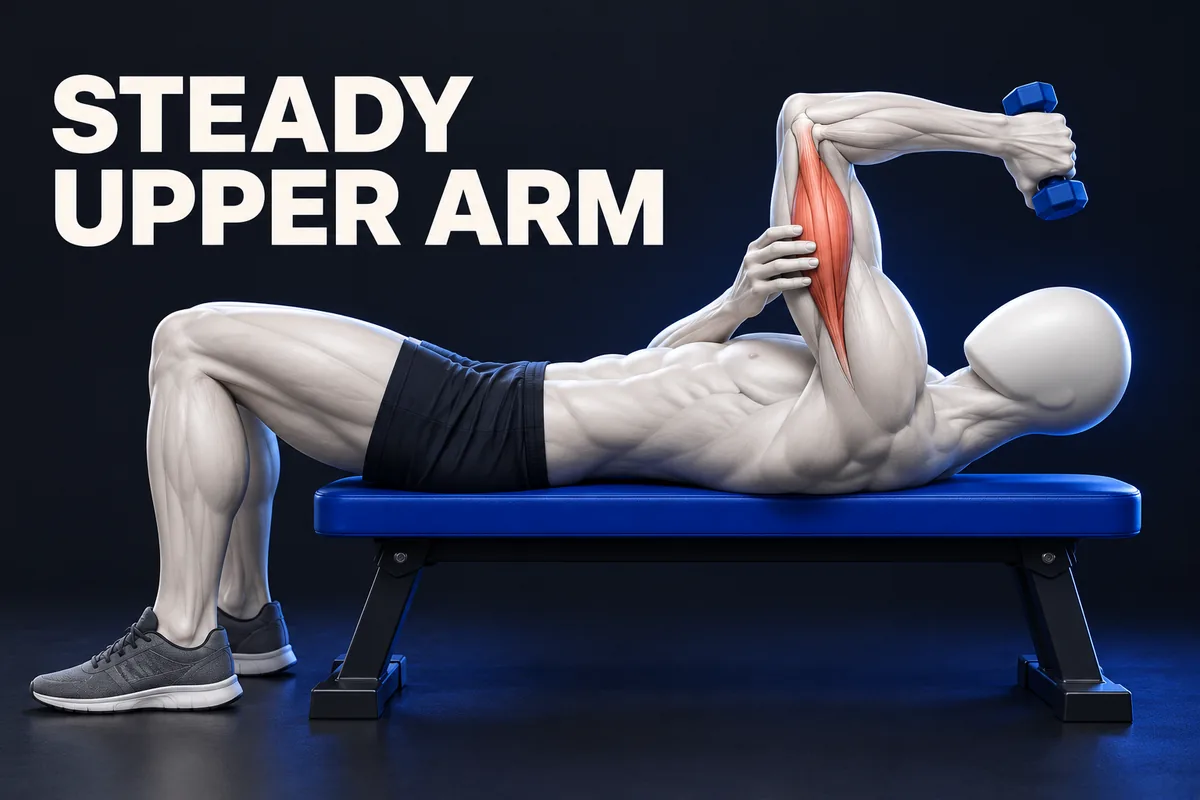
Lie on your back with your head and trunk supported. Hold one dumbbell securely, upper arm pointing toward the ceiling and elbow comfortably bent. The Mayo Clinic demonstration uses roughly a right angle at the elbow. Your free hand can gently steady the upper arm. Do not force the shoulder into position.
Straighten through the elbow
Slowly straighten the elbow to move the weight upward while the upper arm stays quiet. Avoid a hard lock or a sudden throw. Michigan State Extension also describes a vertical upper arm and controlled movement. This setup differs from a cable pressdown, where the upper arms stay beside the trunk.
Give the return equal attention
Bend the elbow slowly, lowering beside the ear within a comfortable path rather than toward the face. Reduce load or stop if the upper arm drifts, the wrist folds or control changes. Stop for pain, numbness or dizziness. Personal injury restrictions take priority; get individual advice when needed. Put the weight down safely before changing position.
Record the exact setup
Note the side, weight of one dumbbell, bench or floor support and controlled repetitions. There is no universal load or required count here. A floor press moves the upper arm differently, so do not copy its weight. Use the first gym guide for wider planning or explore Fitonomy. One exercise is not a complete routine.