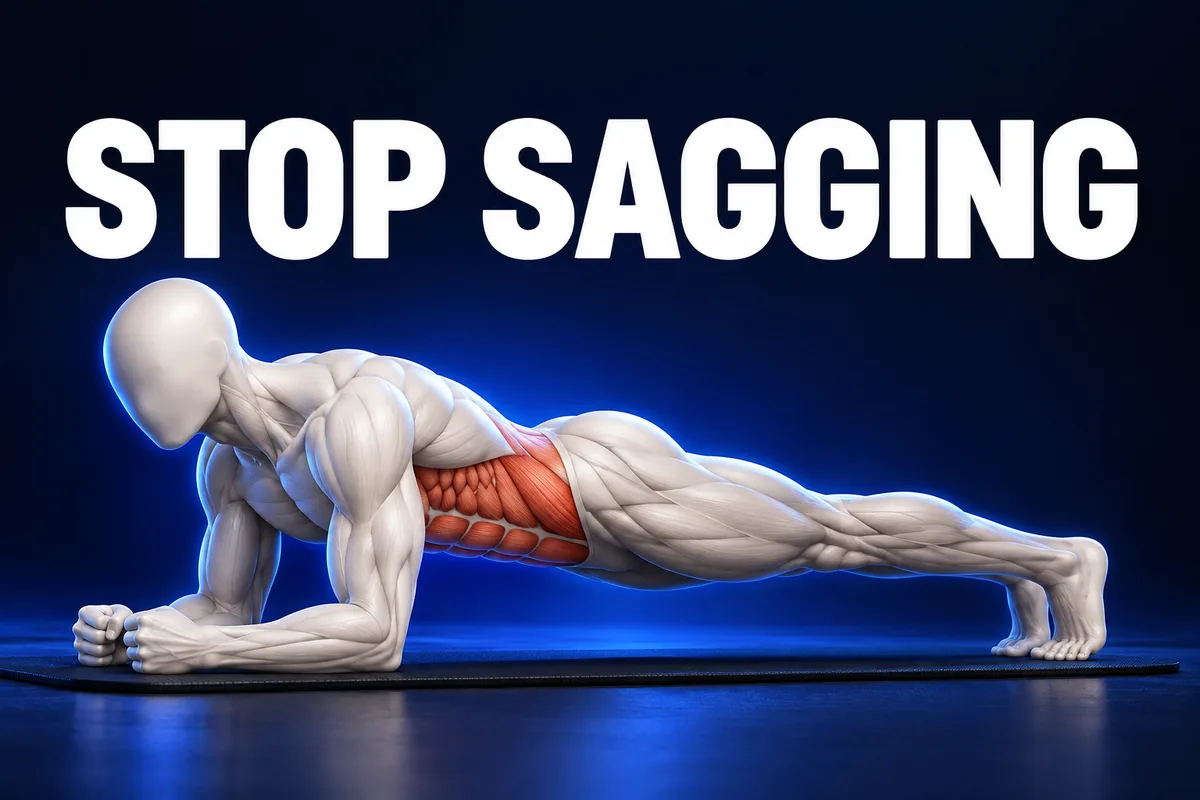
A forearm plank asks your trunk to stay steady while your arms and lower body support you. A useful first goal is a comfortable position you can repeat while breathing. A longer hold is not progress if your back sags or your hips rise.
Choose a starting version
Begin with your forearms and knees on a mat if a full plank is too demanding. Mayo Clinic describes this modified plank with shoulders above elbows, the head and neck aligned with the back, and a hold lasting three deep breaths. Keeping your knees down is a valid starting option.
Set up and hold
Use a firm, nonslip surface. Place your elbows directly below your shoulders and extend your forearms forward. Keep your knees supported and find a comfortable line through your head, trunk and hips.
- Gently tighten your abdomen. Keep your shoulders away from your ears without squeezing them down forcefully.
- Breathe freely. Try the three breaths described by Mayo Clinic only while you can keep the position comfortable and controlled.
- Lower and rest before you lose alignment. Do not collapse onto the floor or hold your breath to finish a target.
When to try the full plank
The ACE front plank guide classifies the standard version as intermediate. If the supported version is manageable, you may try extending both legs and supporting yourself on your toes and forearms. Keep your head, trunk and hips aligned. Return to your knees if that position is not controlled.
Check these common changes
- If your lower back sags or your hips lift, end the hold and reset. Use the supported version or a shorter hold instead of forcing more time.
- If your shoulders creep toward your ears or your head drops, reset your elbows under your shoulders and let your neck follow your back.
Keep the first practice short
One or two brief holds with a comfortable rest between them can be a starting practice, not a universal workout prescription. Stop earlier if control changes. You do not need to complete a minute or a daily challenge to learn the movement.
Make one change at a time, such as a small increase in hold time while keeping the same version. Moving from knees to toes changes the difficulty, so compare like with like. Our progression guide explains why several simultaneous changes make progress harder to judge.
Record more than seconds
Log the version, hold time or breaths, rest and one technique note. A shorter steady hold is useful practice. Include other movements in your programme; our chair standing guide covers a beginner lower body exercise.
Stop if you develop pain, especially lower back pain. If you have back problems, osteoporosis, a recent injury or other health concerns, ask a qualified clinician before starting. A plank is a strength exercise, not a diagnosis or a promised treatment for back pain.