A beginner resistance band workout starts with a band you can control through the whole movement. This introductory session uses two band exercises and a wall push up. It is a first practice, not a complete programme for every major muscle group.
Check the band before stretching it
Use a long exercise band suitable for the movements below, not a short mini loop. Follow its maker's setup and stretch limits. Band colours are not a universal resistance scale.
Inspect for nicks, holes and worn areas before each use. Replace damaged equipment. Keep the band away from sharp edges, and use a suitable alternative if you have a latex allergy. Royal Devon's safety advice also warns against positions where a band could snap toward your face.
Try three controlled movements
Begin with easy walking and rehearse the movements without resistance. Stand on secure flooring and wear footwear that holds the band without sharp edges. Test the grip and footing with light tension before each set.
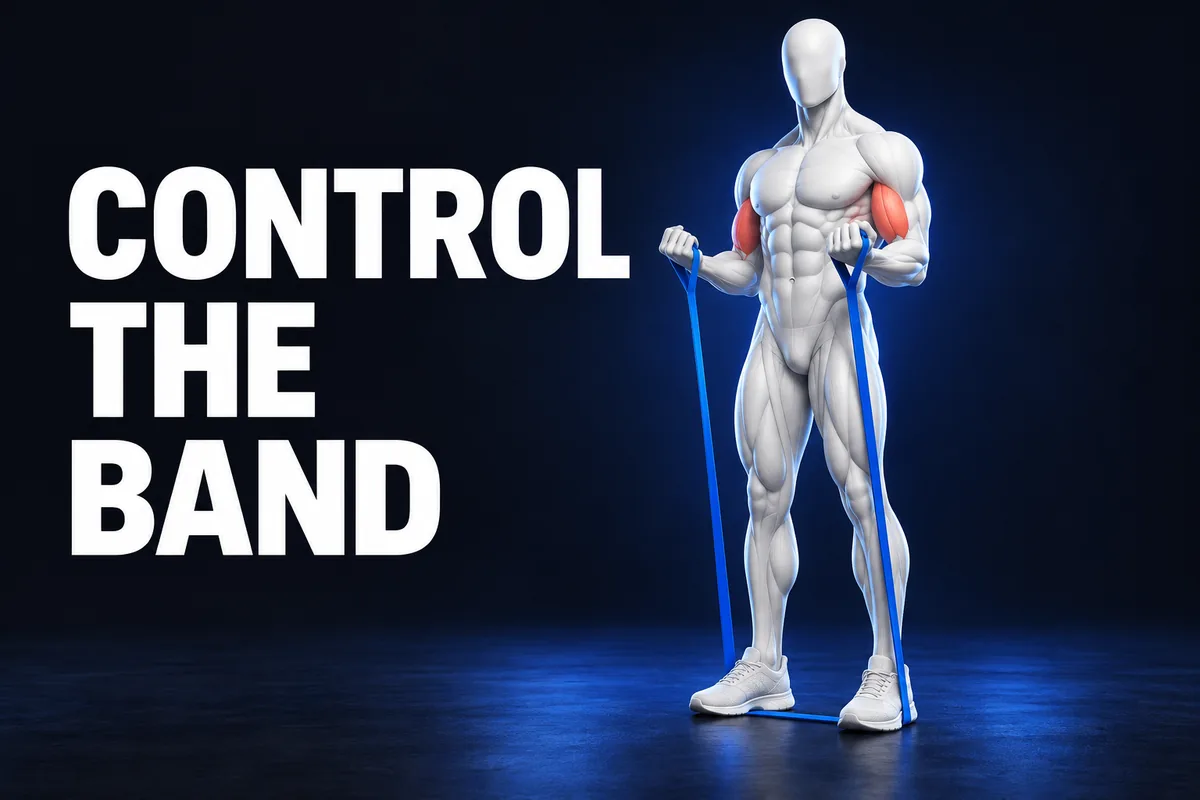
- Band curl: place the middle under both feet, about hip width apart. Hold an end in each hand, palms forward and elbows beside your ribs. Bend your elbows to raise your hands, then lower slowly. Keep your torso still.
- Shallow band squat: keep the band under both feet and hold its ends at your waist. Bend your knees and move your hips back a comfortable distance, then stand smoothly. Skip the band while learning if it changes your balance.
- Wall push up: put the band aside. Use a firm wall and follow the wall push up setup. Choose a body angle you can control.
The British Heart Foundation guide demonstrates the band movements. For a first attempt, try one set of eight curls, eight shallow squats and five wall presses, or fewer. Rest about one to two minutes between exercises, extending it until breathing and control feel ready. These counts are an adjustable example.
Control the return
Do not let the band pull your hands down suddenly. If you sway, shorten the comfortable movement or use less resistance. Keep breathing. Stop for pain, dizziness, a slipping band or loss of balance.
Make the next session comparable
Record the band, foot spacing, grip position and repetitions. Different grip lengths can change the challenge, so colour alone is not enough. Repeat a manageable setup before following the progression guide.
Two nonconsecutive days are one starting schedule. If injury or a medical condition affects exercise, get individual advice; a general band routine is not rehabilitation.