Find the right station
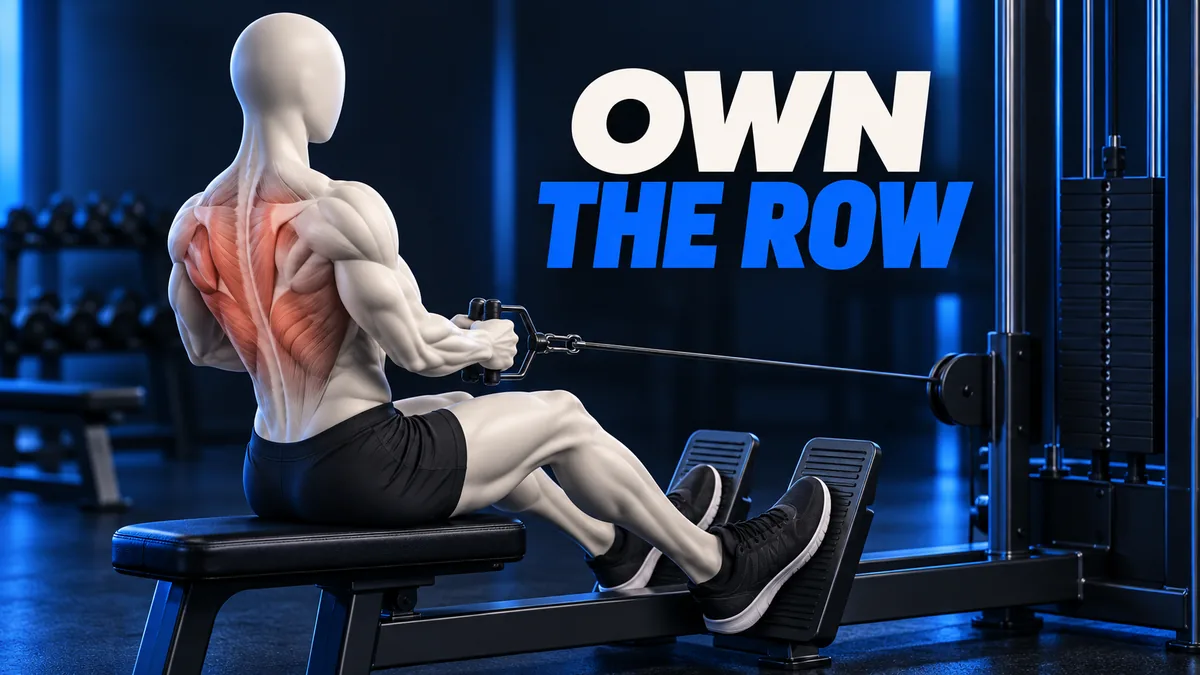
Look for a low pulley, a seat, foot supports and a handle connected to a cable. This is not the machine with a chest pad. The ACE seated row instructions describe a seated cable setup with bent knees and an upright chest. Start with a load that lets you control the handle from beginning to end.
Set your position
Place both feet securely on the supports. Sit tall with knees comfortably bent, arms reaching toward the handle and shoulders relaxed. Take a grip you can hold without twisting your wrists. Keep your torso steady rather than leaning far back to move the weight. If the seat or handle does not fit your reach, adjust the station before pulling.
Pull toward your torso
Draw the handle toward the front of your lower torso while your elbows travel near your ribs. Let your shoulder blades move naturally without forcing a hard squeeze. The ACE exercise guide describes a controlled pull and an upright trunk. Avoid jerking the cable or using momentum from your hips. A smaller clean movement is more useful than a heavier swing.
Return with control
Let your arms extend gradually and allow the cable to move forward without dropping the stack. Keep your feet supported and your chest comfortable as you return. If you have to snap your torso forward or cannot slow the handle, choose less resistance. Stop if you feel pain, dizziness or unusual symptoms, and seek qualified advice when needed.
Choose the row that fits
The cable row asks you to steady your torso without a chest pad. A chest supported row setup offers a different support, while a beginner dumbbell row uses a free weight. A lat pulldown setup pulls from above. The ACE back exercise review compares exercises but does not make one universally best. Explore activity planning in Fitonomy.