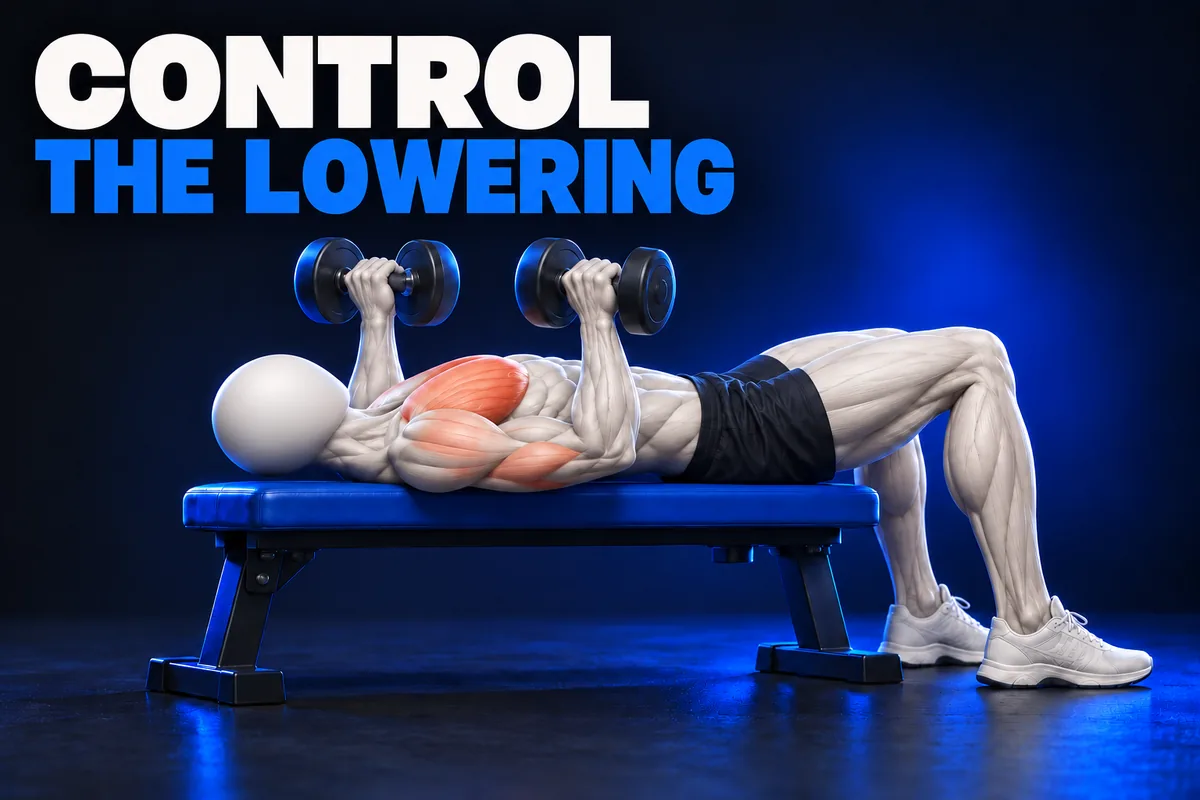
Plan a flat supported setup
Use a firm horizontal exercise bench on level flooring and clear space around the weights. ACE classifies this chest press as intermediate. Ask a qualified trainer to demonstrate an unfamiliar start and finish. Choose light weights you can position and remove calmly, with a spotter ready if needed. Injury, surgery or personal restrictions require individual guidance first.
Set the grip and contact points
Sit with both feet grounded, then settle onto the bench with help if needed. Keep the head, shoulders and seat supported. Wrap your thumbs around the handles, palms toward your feet, and align the wrists with the forearms. The Human Kinetics guide describes this firm grip and supported start. Do not throw the weights into position.
Lower without chasing depth
Breathe in and bend both elbows slowly, keeping the dumbbells controlled beside the chest. Follow a comfortable repeatable path. Mayo Clinic advises keeping the elbows from dropping below the horizontal line of the body. Chest contact or a deep stretch is not required. Avoid bouncing, letting the wrists fold back or increasing the back arch to gain depth.
Press and finish under control
Breathe out and press smoothly until the arms are nearly straight, without slamming the elbows or striking the weights together. Keep feet and seat quiet. End while you still control the descent. If using a spotter, signal them to take the dumbbells one at a time near the wrists, keeping your grip until each is secure. Do not throw weights aside or rise while they remain above you. Stop for pain, dizziness, numbness or lost control.
Record a comparable practice
Note the weight of one dumbbell, controlled repetitions and the flat bench setup. There is no required practice count here. A floor press has upper arm contact with the floor, while an incline press uses an angled support. Neither chooses your bench load. Place the movement within the first gym workout guide, or discuss a chest press machine as a separate equipment choice.