Choose the method and storage first
Use intact shell eggs that fit your allergy and dietary advice. Wash hands and prepare clean equipment. This guide follows the MedlinePlus recipe, using its US egg size labels. Check local package and raw storage guidance too. Decide whether you will serve the eggs warm or have reliable refrigeration ready.
Follow one complete saucepan sequence
Put eggs in one layer in a saucepan. Add cold water to cover them by at least one inch, about 2.5 centimetres. Bring to a full boil, remove the pan from the heat and cover. Leave in the hot water for nine minutes for the recipe’s US medium size, twelve for large or fifteen for extra large. Local size labels vary; use a suitable complete local method if the sizes do not match.
Check before serving
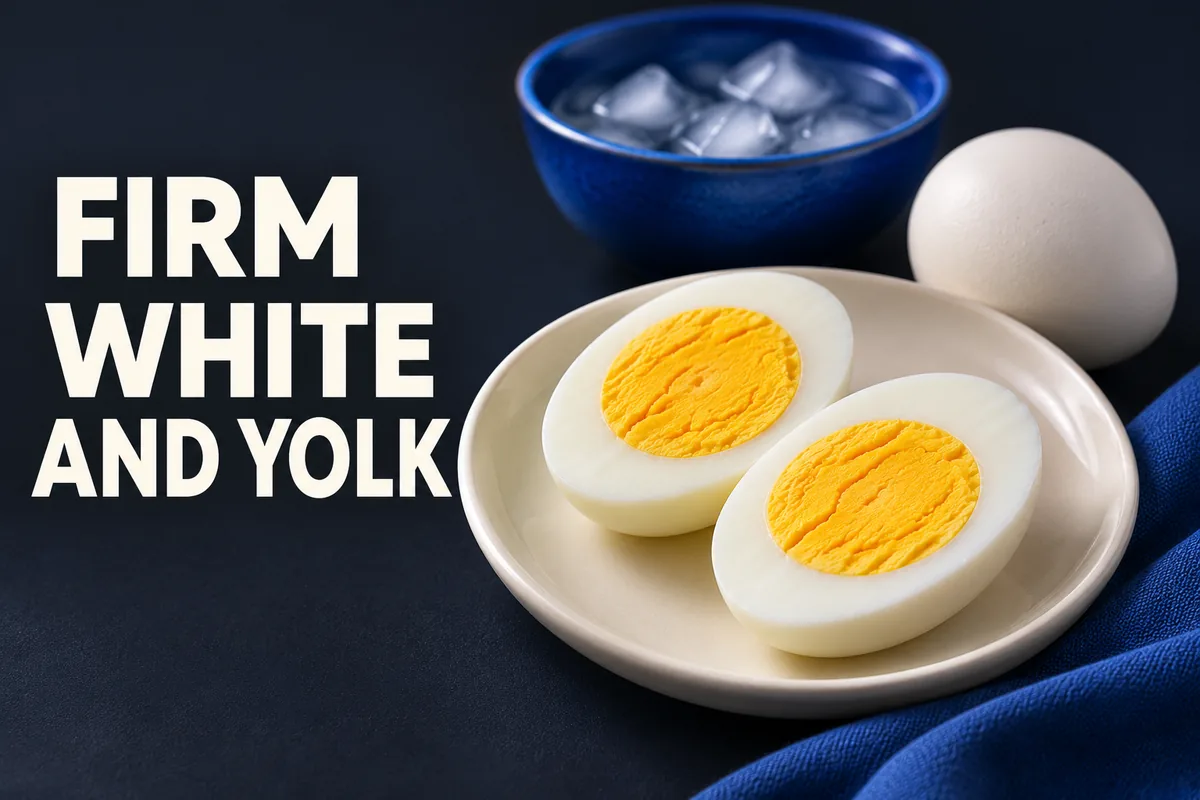
Drain immediately, taking care with hot water, cookware and steam. The white and yolk should both be firm; a timer alone does not prove doneness. Continue cooking if they are not firm. Serve warm, or cool completely under cold running water or in ice water before the chilled storage plan.
Chill promptly and label
The FDA egg safety guide emphasizes firm cooking and cold handling. Refrigerate within two hours of cooking, or within one hour when the surroundings are above 32°C. Keep the fridge at 4°C or colder. Following the named recipe, use peeled eggs within two days or eggs in their shells within one week. Label the cooking date; chilling cannot repair uncertain earlier handling.
Keep the meal practical
Use the eggs as one ingredient in a simple lunch, without a required portion or fitness promise. For travel, follow the cold packed lunch plan. If reliable chilling is unavailable, prepare only what you will serve now. Fitonomy planning does not verify food safety.