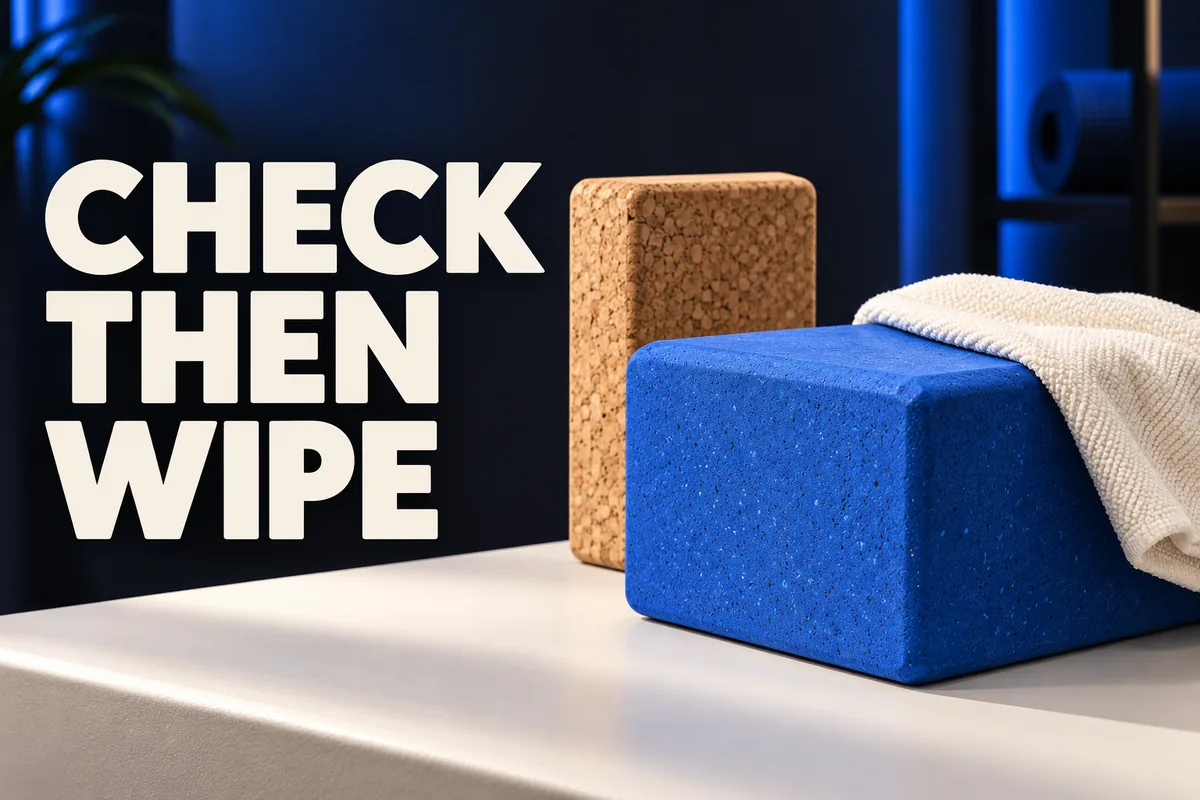
Identify the block you own
Find the maker, model and material before choosing a cleaning method. A cork block and a recycled foam block may have different instructions, even when they look equally sturdy. This guide concerns optional equipment you already use. You do not need to buy a block to begin activity.
Read instructions for the actual prop
The Manduka cork block FAQ recommends a damp cloth. Its recycled foam FAQ gives the same simple surface wiping example for that product. These examples do not authorize soaking every block. Directions for a mat, towel or another brand are not automatically directions for your support.
Wipe only as permitted
Put the block on a stable surface and use the cloth and cleaner allowed by its instructions. Work gently over accessible faces, turning it without dropping it. If a cleaner is permitted, follow its label as well. Do not invent a chemical mixture, washing machine cycle or stronger stain treatment. Ask the maker when care is unclear.
Check before storing or using it
Let the block reach the dry condition required by its care directions before packing or using it as support. Check for residue, loose material or damage. If anything remains unresolved, set it aside and ask the maker. A clean appearance does not prove disinfection, restore damaged construction or guarantee grip.
Add care to your preparation
Keep the care instructions with your equipment notes so you can repeat the appropriate method. Check your home activity space separately. Band inspection has its own material rules, and the home equipment plan helps match training to what you own. Fitonomy does not inspect or certify your props.
A woven strap needs different care from a rigid block. Check the actual model in the cotton yoga strap cleaning guide before choosing a wash method.
A mat has different layers from a rigid block. The model specific mat cleaning guide explains why soap permission and dry storage cannot be copied between products.