Workouts

Does Stretching Prevent Injury and Soreness?

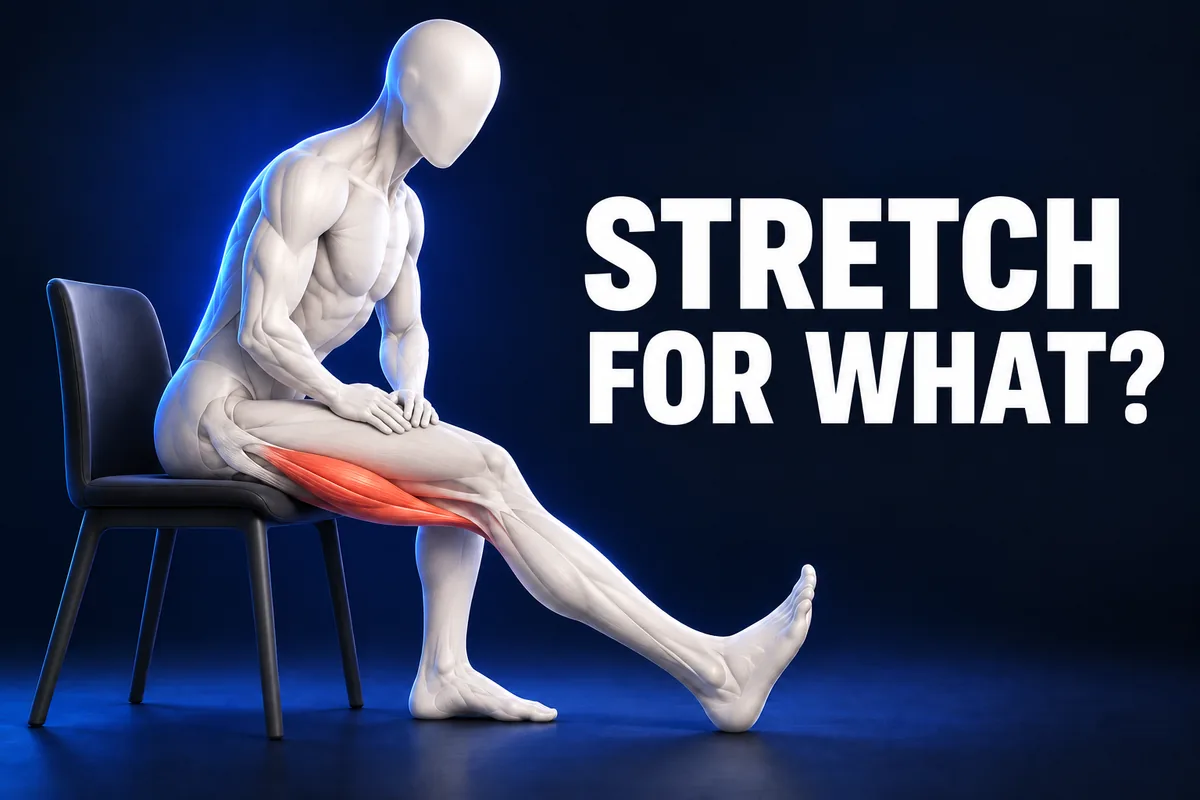
Stretching does not prevent injury or reduce soreness, despite what you were told, and long static stretching before a workout can actually make you weaker. But stretching is not useless, it genuinely improves flexibility. Here is what the research shows and how to stretch the right way.

Fitonomy Coach

July 13, 2026

Does stretching prevent injury and soreness, what the research says - Fitonomy

Touch your toes before a run so you do not pull something. Stretch after lifting so you are not sore tomorrow. These are two of the most repeated pieces of fitness advice, passed down from gym teachers to coaches to apps. They are also, for the most part, wrong.

The research on stretching is surprisingly clear, and it upends the two things most people stretch for. Stretching does not meaningfully prevent injury, and it does not reduce muscle soreness. Worse, long static stretching right before you train can temporarily make you weaker. But stretching is not pointless, it is genuinely good at one thing most people overlook. Here is what the science actually shows and how to stretch in a way that helps.

Does stretching prevent injury?

Not on its own. A large 2014 meta-analysis by Lauersen and colleagues in the British Journal of Sports Medicine pooled data from over 26,000 people and found that stretching showed no significant benefit for preventing injuries. The thing that did work, dramatically, was strength training, which reduced sports injuries to less than a third and overuse injuries by almost half. So the activity most people skip is the real injury preventer, and the one they religiously perform does little.

This makes sense mechanically. Most injuries happen when a muscle or tendon is loaded beyond what it can handle. Being more flexible does not make tissue stronger or more resilient to load. Building stronger, more robust muscles and tendons does, which is why progressive strength work (see strength training after 30 and how many sets and reps) protects you far more than touching your toes.

Takeaway: Stretching does not meaningfully prevent injury. Strength training does, cutting injury risk to under a third in the research. If injury prevention is your goal, lift, do not just stretch.

Does stretching reduce soreness?

No. A Cochrane systematic review by Herbert and colleagues pooled 12 studies of nearly 2,600 people and concluded that stretching, whether done before exercise, after, or both, does not produce clinically worthwhile reductions in delayed-onset muscle soreness. The tiny differences it found were too small to matter. If you stretch after a workout hoping to avoid being sore, the science says it will not help (for what actually helps soreness, see our muscle soreness guide).

Takeaway: Stretching does not reduce muscle soreness, before or after exercise. A Cochrane review of nearly 2,600 people found the effect too small to be worthwhile. Post-workout stretching feels nice, but it will not save you from being sore.

The twist: stretching before lifting can make you weaker

Here is the part that surprises people. Long static stretching right before you train can hurt your performance. A 2013 meta-analysis by Simic and colleagues, pooling 104 studies, found that pre-exercise static stretching reduced maximal strength by about 5.4 percent and cut power and explosive performance too. Holding a long stretch temporarily reduces your muscles' ability to produce force, which is the opposite of what you want before a heavy or explosive session.

The good news is that this is dose-dependent. A 2011 review by Behm and Chaouachi found that short static stretches, under about 60 seconds per muscle, cause little to no impairment, while longer holds (over 60 to 90 seconds) are where performance drops off. So a quick stretch will not ruin your workout, but spending several minutes in deep static stretches beforehand can.

Takeaway: Long static stretching before training can cut your strength by around 5 percent and reduce power. Keep any pre-workout static stretch brief (under 60 seconds per muscle), or skip it in favor of a dynamic warm-up before heavy or explosive work.

So is stretching useless? No, it builds flexibility

Stretching is not worthless, it just does not do the two things people think. What it genuinely does is improve flexibility. A 2018 meta-analysis by Medeiros and colleagues found that regular static stretching meaningfully increased range of motion, for example adding around 5 degrees of ankle mobility over a stretching program. If you want to touch your toes, do a deep squat comfortably, or improve mobility for a sport or daily life, stretching works, done consistently over weeks.

So stretching has a real place. It is a flexibility and mobility tool, not an injury or soreness tool, and not a warm-up. Use it for the job it actually does.

Takeaway: Stretching does reliably improve flexibility and range of motion over time. If better mobility is your goal, it works. Just do not expect it to prevent injury, cut soreness, or replace a warm-up.

Static vs dynamic: what to do before a workout

  • What it is. Static stretching: Holding a stretch still (20 to 60+ sec). Dynamic stretching: Active movements through a range (leg swings, lunges).
  • Effect before training. Static stretching: Can reduce strength and power if long. Dynamic stretching: No impairment, may boost performance.
  • Best use. Static stretching: Separately, for building flexibility. Dynamic stretching: As part of your pre-workout warm-up.
  • Best timing. Static stretching: After training or on its own. Dynamic stretching: Right before you train.

The practical rule: warm up with dynamic movements before you train, not long static holds. A proper warm-up raises your body temperature and primes your muscles without the force loss, which is exactly what our warm-up guide covers. Save static stretching for after your session or a separate flexibility routine.

Takeaway: Do dynamic movements before training and static stretching separately for flexibility. A dynamic warm-up prepares you without the strength loss of long static stretching. Match the tool to the moment.

What actually prevents injury and soreness

If stretching is not the answer, what is? For injury: strength training to build resilient tissue, sensible progression rather than sudden jumps in load, a proper dynamic warm-up, and adequate recovery. For soreness: there is no magic fix, but easing into new exercises, staying consistent so your body adapts, gentle movement, sleep, and protein all help more than stretching (our soreness guide has the details). The unglamorous basics beat the stretch you were told was essential.

Takeaway: Prevent injury with strength training, gradual progression, a dynamic warm-up, and recovery. Manage soreness with sensible progression, consistency, sleep, and protein. None of the real answers is static stretching.

The Fitonomy angle: warm up right, without the strength tax

The research gives a clean instruction: before you train, do a dynamic warm-up, not long static stretching that can sap your strength. The trouble is that most people either skip the warm-up or default to the old toe-touch routine that the evidence says to avoid. A guided app fixes that by building the right preparation into the session. Fitonomy's workouts include a proper warm-up so you are ready to train without the force loss of pre-workout static stretching, and you can add a flexibility routine separately when mobility is your goal. You get the version the science supports without having to design it yourself. You can follow a guided, warmed-up session in the Fitonomy app and stretch for flexibility on your own terms.

Takeaway: The right prep is a dynamic warm-up, not long static stretching, and Fitonomy builds that into its guided sessions. You warm up correctly by default and keep static stretching for flexibility, exactly as the evidence recommends.

The bottom line

Stretching does not prevent injury and does not reduce soreness, and long static stretching right before you train can temporarily make you weaker. What it does do, reliably, is improve flexibility over time. So stop stretching for the wrong reasons. If you want to avoid injury, get stronger and progress sensibly. If you want to avoid soreness, ease in, sleep, and stay consistent. Before a workout, warm up with dynamic movement, not long holds. And if you genuinely want to be more flexible, then stretch, on its own, and it will deliver. Use the right tool for each job and stretching finally makes sense.

Frequently asked questions

Does stretching prevent injury? Not meaningfully. A 2014 meta-analysis of over 26,000 people found stretching had no significant injury-prevention benefit, while strength training reduced injuries to less than a third. Being more flexible does not make tissue more resilient to load, but stronger muscles and tendons do. For injury prevention, strength training beats stretching.

Does stretching reduce muscle soreness? No. A Cochrane review of nearly 2,600 people found that stretching before, after, or before and after exercise does not produce worthwhile reductions in delayed-onset muscle soreness. The effect was too small to matter. Stretching after a workout may feel good, but it will not prevent you from being sore.

Should you stretch before or after a workout? Before a workout, use dynamic stretching (active movements like leg swings and lunges) as part of a warm-up, not long static holds, since holding stretches for over about 60 seconds can reduce strength and power. Static stretching is better done after training or as a separate flexibility session, where the temporary strength loss does not matter.

Is static stretching bad? Only in the wrong context. Long static stretching right before heavy or explosive training can cut strength by around 5 percent, so it is a poor warm-up. But static stretching done on its own is an effective way to build flexibility and range of motion over time. It is a flexibility tool, not a warm-up or an injury preventer.

What is the difference between static and dynamic stretching? Static stretching means holding a stretch still for 20 to 60 or more seconds, best used separately to build flexibility. Dynamic stretching means moving actively through a range of motion, like leg swings or walking lunges, and is ideal before a workout because it prepares the body without reducing strength and may even improve performance.

Ready to move?

Download the app or join the plan now.

Keep the final block simple and direct so the visitor never has to wonder what to do next.