Start with personal instruction
Use this explanation only if a clinician has personally taught and cleared assisted elbow straightening for you. The Leeds elbow guide permits the other arm to help when needed, within patient instructions. Injury, fracture, surgery or a splint can change permission. This page does not authorize a new stretch.
Confirm the exact support
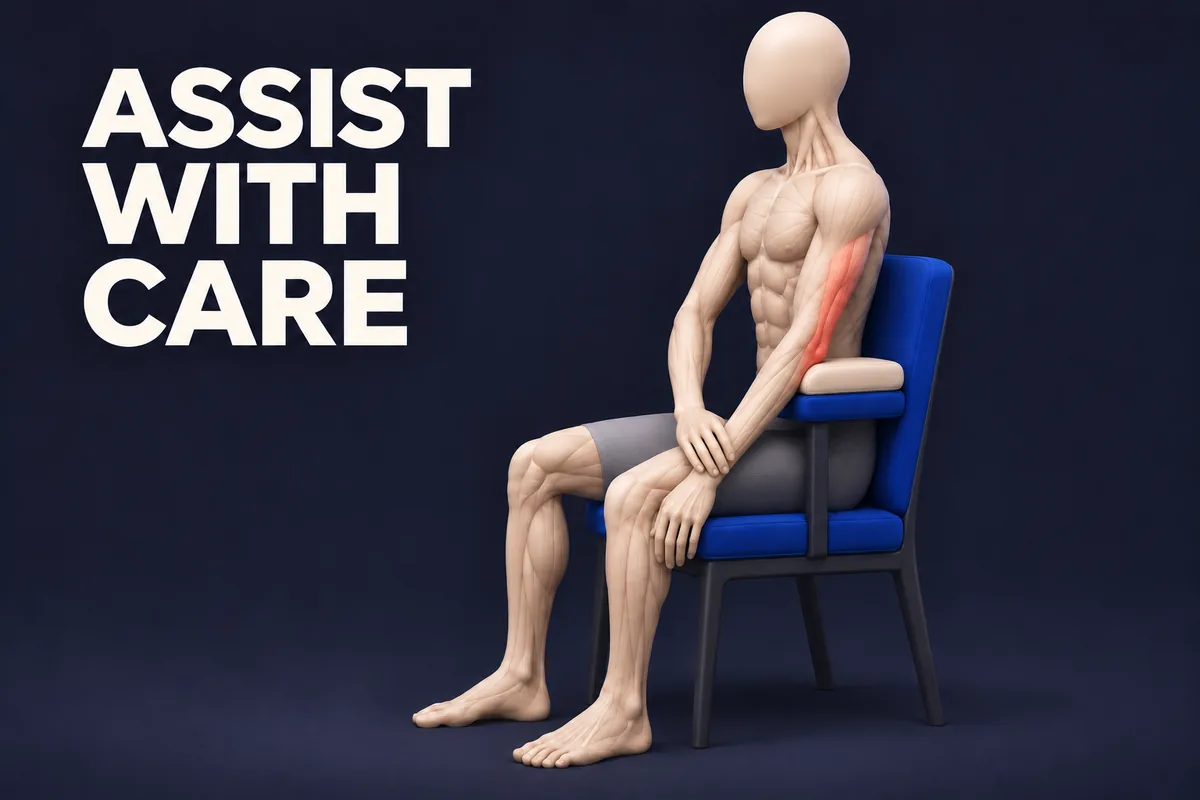
Extension means making the elbow straighter, opposite to bringing the hand toward the shoulder. The Leeds radial head phase two sheet describes sitting upright with the point of the elbow on an armchair or table. That clinical phase is source context, not a progression you should assign yourself.
Clarify the assisting hand
Ask your clinician to demonstrate the exact support, opposite hand contact and comfortable stopping point. Keep the target elbow in its taught contact with the support. The other hand assists as shown; do not force locking or copy pressure from the cover. Hold and release gently according to your own instructions.
Keep other methods separate
Do not add a weight, pull the fingers or substitute a wall exercise. Your clinician sets range, hold, repetitions and frequency. Stop for pain, tingling, numbness, new swelling or lost control and seek individual advice. Do not repeat the movement to test a symptom.
Record the task accurately
Note the side, support, taught contact, personal amount and comfort. A larger angle alone is not proven progress. The assisted elbow bend moves in the other direction; the active elbow hinge uses the arm’s own movement. Permission for one does not clear another. Fitonomy Mobility does not provide clinical clearance.