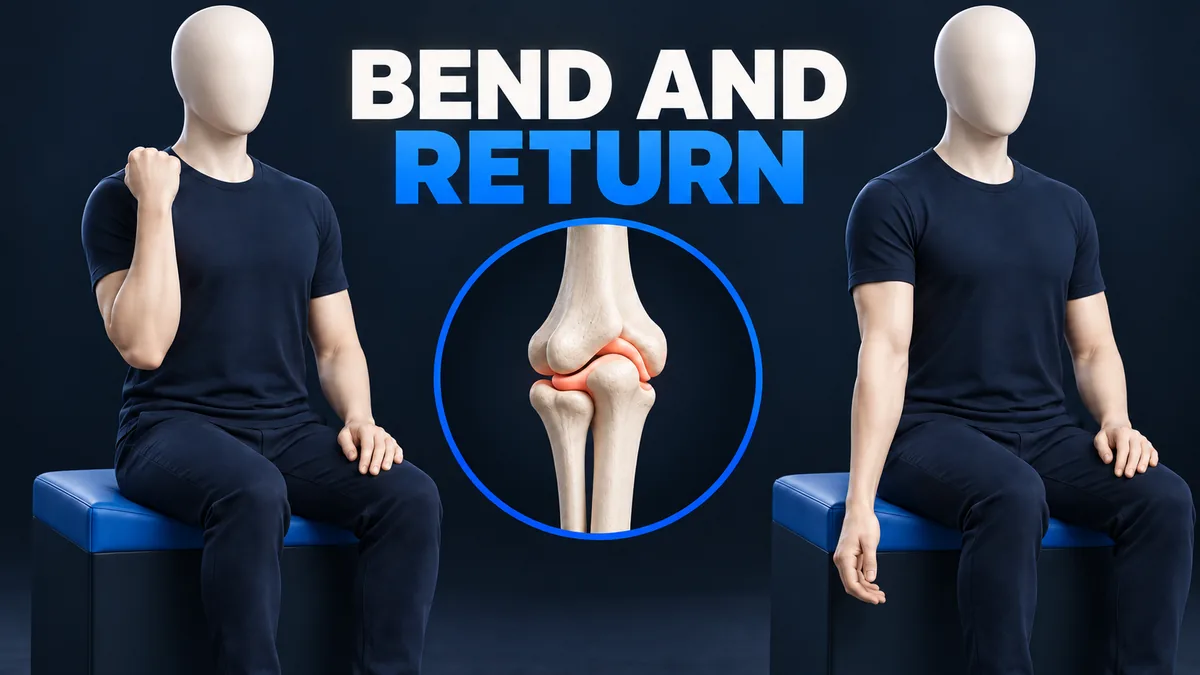
Elbow bending brings the hand toward the shoulder. Straightening opens the angle again. The goal is a comfortable active path with the upper arm and torso quiet, not a forced end position.
Choose a stable setup
Sit on a stable chair with both feet supported. Let one upper arm rest near your side. Keep the wrist in a comfortable neutral shape and begin with the palm in any easy orientation.
Bend from the elbow
Slowly bring the hand toward the shoulder while the upper arm stays near the side. The Cambridge NHS guide shows the same observable bend and straighten action. Its assisted options and clinical dose are not a general target.
Straighten and return
Reverse the path until the arm is comfortably straighter. Do not force the joint to lock. The Leeds NHS guide also describes bending and straightening and warns against pushing into pain.
Keep nearby areas quiet
If the shoulder lifts, the wrist folds, or the torso leans, make the movement smaller. A smaller clear elbow path is more useful than a larger movement borrowed from several joints.
Compare the right movements
The forearm rotation guide turns the palm while the elbow angle stays mostly fixed. Shoulder circles move the shoulder girdle. This practice changes the elbow angle itself.
Observe without diagnosing
Notice whether one side bends or straightens more comfortably today. Record the observation in Fitonomy Mobility if useful, but do not label the reason. Stop for pain, numbness, tingling, instability, swelling, or symptoms that persist. Recent fracture, surgery, dislocation, or professional restrictions need individual guidance.