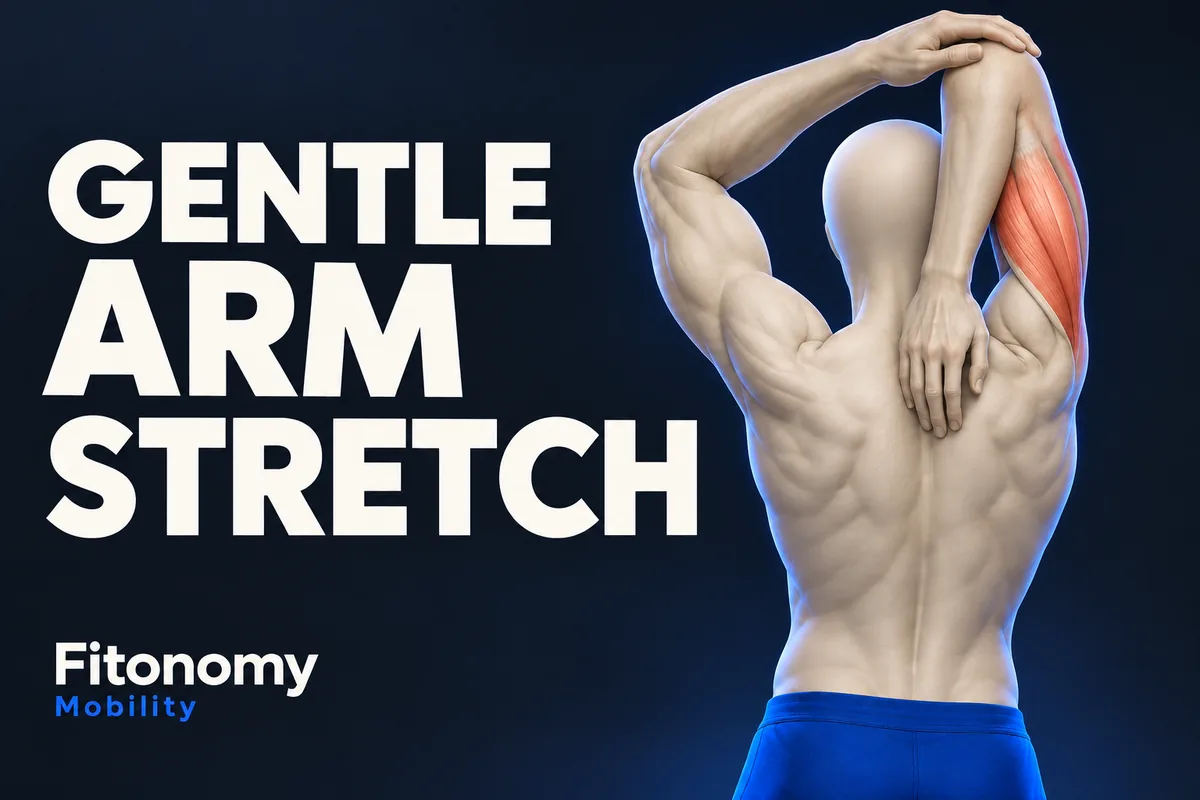
Check comfortable overhead access
This is a held stretch, not a weighted triceps exercise or an assisted rehabilitation task. Start after light activity rather than stretching cold muscles, as Mayo Clinic advises. If raising your arm is painful or restricted, skip the position. Injury, recent surgery, symptoms or uncertainty call for individual advice before trying it.
Raise and bend one arm
Stand steadily or sit securely with room above you. Raise one arm and bend the elbow so the hand moves behind your head. Keep your head comfortable and avoid lifting your ribs or arching your back to reach farther. Mayo Clinic’s demonstration uses this overhead position to stretch the back of the upper arm and shoulder.
Support without pulling hard
Place the opposite hand gently at the bent elbow. Use light support, not a forceful pull or pressure on your head. The MedlinePlus alternate method also stabilizes the overhead elbow with the other arm. Aim for a mild pull at the back of the upper arm. Stop for pain, pinching, tingling or instability instead of pushing farther.
Hold gently and release
Breathe normally without bouncing. Mayo gives fifteen to thirty seconds as an example, not a compulsory dose to tolerate. Release sooner if comfort changes. Remove the helping hand and lower the arm gradually, then consider the other side. Do not force the hands together behind your back. The cross body shoulder stretch is a different position, not a required progression.
Compare the same setup
Note the side, support and comfortable hold, rather than scoring how far the hand reaches. One easier attempt does not prove lasting improvement. The beginner mobility guide helps organize a small practice. For moving the elbow with the arm lower, read seated elbow bending. This is general flexibility guidance, not treatment; article translations do not establish Mobility app language support.