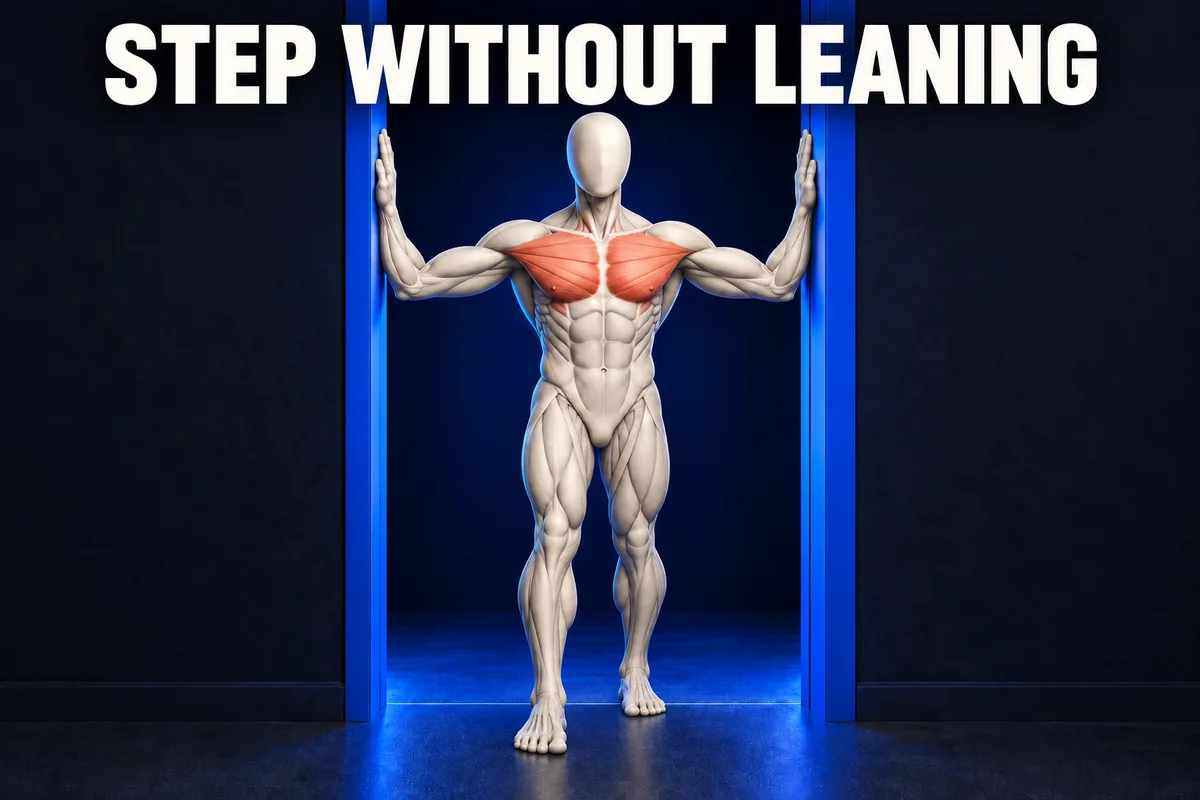
Check the doorway and your starting point
Choose a clear open doorway with a secure frame and a door that cannot swing into you. Stand only if you feel steady. Begin after easy activity, as Mayo Clinic advises. Recent surgery, injury or movement restrictions call for individual advice before this position. This is general flexibility practice, not treatment for chest pain.
Place both palms with bent elbows
Stand in the opening. Raise both arms out to the sides, bend the elbows to about right angles and face your palms forward against the frame. The Grady doorway instructions use this two palm setup. Choose comfortable contact rather than forcing your arms into position. This differs from the low unsupported arms of the seated chest stretch.
Step forward while staying upright
Slowly take a small step forward with one foot. Keep your torso upright rather than leaning through the doorway or arching your lower back. Aim for mild tension across the front of the chest and shoulders, not a deeper lunge. Breathe normally without bouncing. Stop for pain, pinching, tingling or instability rather than trying to push through.
Step back before releasing
Grady gives fifteen seconds as a hold example, not a requirement. Release sooner if comfort changes. Step back to ease the stretch, then lower your arms gradually. Do not use timing to justify more force or repeat automatically because a guide gives a count. Follow personal instructions if you have them.
Record the setup without chasing depth
Note your arm height, foot position and comfortable hold. Compare the same setup; one easier attempt does not establish lasting range or better posture. The cross body shoulder stretch addresses a different position behind one shoulder. Use the beginner mobility guide to choose a small routine, rather than treating every stretch as a required sequence.