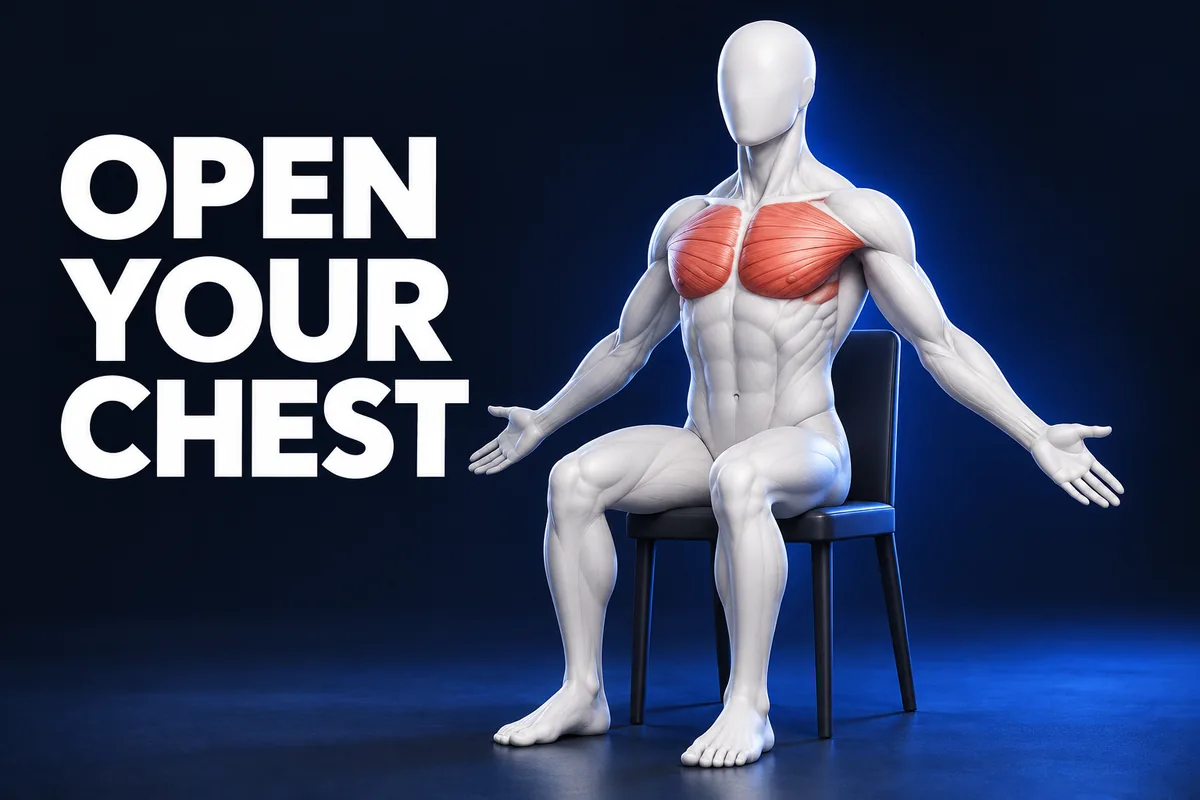
The seated chest stretch opens both arms outward while you stay upright on a chair. Aim for a mild stretch across the front of the chest. You do not need to grip the chair, lift your chin or force your shoulders backward to make it count.
This is a held stretch, distinct from turning the torso or pulling one arm across the chest. Our beginner mobility guide helps you choose a small routine around the movement that suits your setup.
Set up the chair and your space
Choose a firm, stable chair without wheels or armrests. Both feet should rest flat on the floor with knees comfortably bent. Clear space beside you so your hands will not hit a desk or another person.
Sit toward the front of the seat, far enough from the backrest to move your arms freely while remaining securely supported. Keep your head comfortably above your torso. Begin after some easy movement rather than using a forceful stretch to warm up.
Open the arms without shrugging
- Let your shoulders settle down and gently back. Keep your neck relaxed rather than squeezing the shoulder blades as hard as possible.
- Move both arms outward to the sides in a low open position. Keep the elbows comfortable and hands near hip level. Do not grab the chair for leverage.
- Gently lift the chest slightly forward and upward until you feel a mild stretch across its front. Keep breathing, with no exaggerated arch in the lower back.
- Ease out slowly and let the arms return to your sides. A comfortable small movement is enough while learning.
The NHS sitting exercise instructions give five to ten seconds per hold, repeated five times. Treat that as an example to adapt, not a target to force. A shorter comfortable attempt is fine; pain is a reason to stop, not to hold longer.
Three checks that matter more than depth
If the shoulders creep toward your ears, release the position and restart more gently. If your chin lifts or lower back arches, reduce the chest lift. If you feel pinching in a shoulder, sharp pain or tingling, stop rather than pulling farther.
Keep this exercise separate from the cross body shoulder stretch, which aims for the back of one shoulder. For a gentle trunk turn, use seated thoracic rotation. These movements serve different purposes; they are not interchangeable tests.
Record a comfortable setup
Note the chair, arm height, hold duration and one useful cue, such as shoulders stayed relaxed. Compare similar attempts instead of chasing a deeper stretch each time. A single easier hold does not establish a lasting change in posture or mobility.
If you have an injury, recent surgery or uncertainty about suitability, ask a qualified healthcare professional before trying the movement. This guide is for gentle movement practice, not treatment for chest pain or a diagnosis of why you feel stiff.
Learn a small shoulder roll in both directions while your arms stay loose, your feet stay supported, and your neck stays comfortable. Seated Shoulder Circles With Relaxed Arms