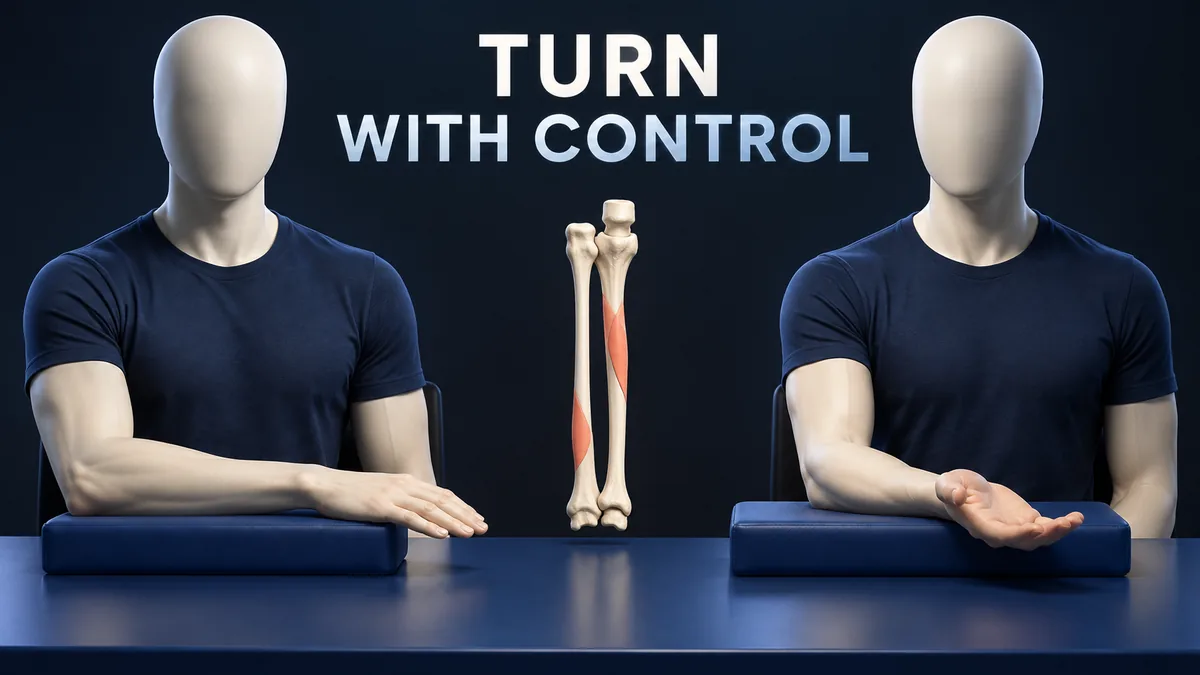
Forearm rotation turns the palm down and up. The radius moves around the ulna while the elbow stays bent. The goal is a comfortable active path, not forcing the hand flat in either direction.
Choose a stable setup
Sit at a stable table or in a chair with the upper arm close to your side. Bend the elbow comfortably. Support the forearm if that helps you keep the shoulder and torso quiet.
Turn the palm down
Begin with the thumb pointing up. Slowly rotate the forearm until the palm faces down as far as comfortable. Keep the wrist neutral and avoid leaning the body.
Turn the palm up
Return through the thumb up position, then rotate until the palm faces up as far as comfortable. The Worcestershire NHS guide uses a seated elbow bent setup and the same palm changes.
Keep nearby joints quiet
The movement comes from the forearm. If the elbow drifts, the wrist bends or the torso twists, make the path smaller. The South Tees guide also supports the forearm on a table, but its clinical end range wording is not a target you must force.
Compare without diagnosing
Notice whether one side or direction feels clearer today. This is an observation, not a diagnosis. Compare with seated wrist mobility, which bends the wrist, and finger tendon glides, which change hand shapes. You can record the practice in Fitonomy Mobility, but the app does not diagnose restrictions. Stop for pain, numbness, tingling or symptoms that persist.
Practise a clear elbow hinge while the shoulder, wrist, and torso stay quiet. Seated Elbow Bend and Straighten With a Quiet Shoulder
Support the forearm, move the thumb to each fingertip, and use light contact while the wrist stays quiet. Thumb Opposition: Touch Each Fingertip With Control
Turning the forearm differs from moving the wrist toward thumb and little finger; that table setup keeps the arm still.