Confirm the exact instruction
Use this explanation only if your hand therapist has personally taught and cleared this exact assisted movement. The Guy’s and St Thomas’ guidance says to perform only instructed exercises, with the amount set individually. This page does not authorize starting after injury, surgery or immobilization. Ask for clarification if permission is uncertain.
Recognize palm down rotation
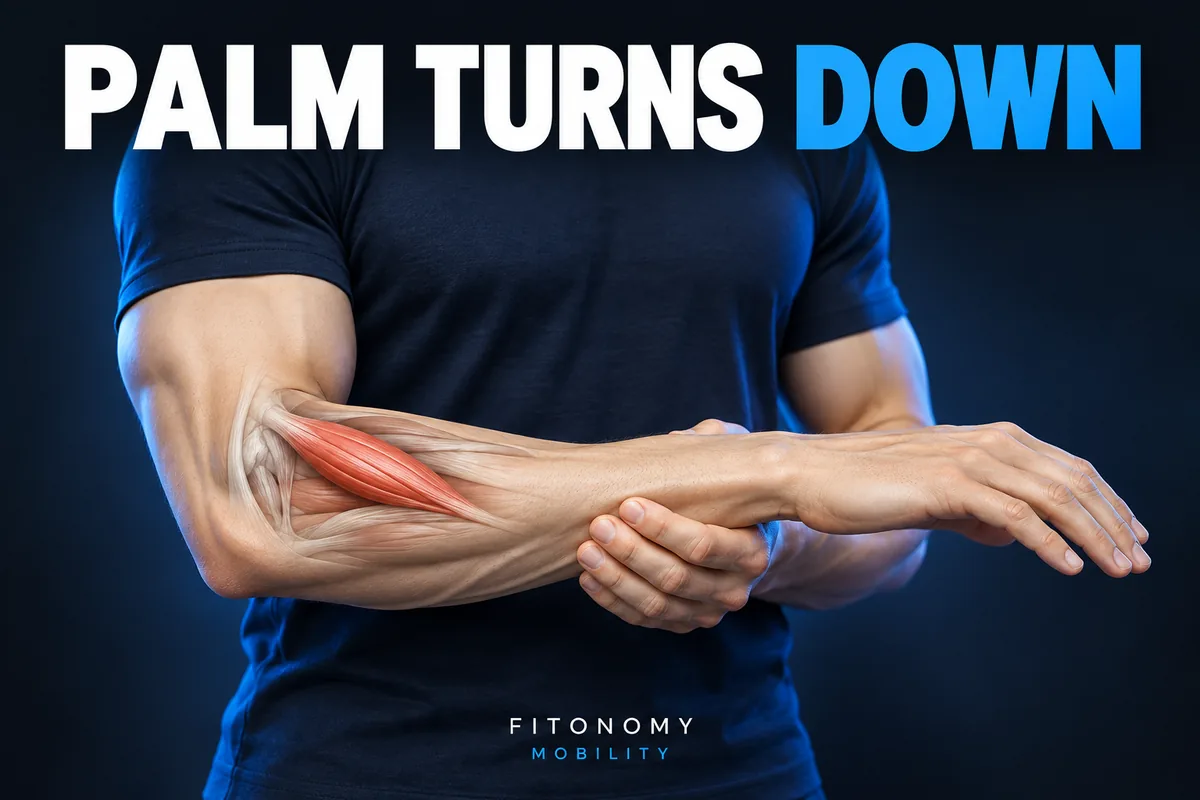
In the Cambridge leaflet, passive forearm pronation keeps the elbow near the side, bent roughly a right angle, while the other hand helps turn the palm toward the floor. The forearm rotates. Bending the wrist forward or sweeping the arm from the shoulder is different. Do not force the palm to match a picture.
Clarify the helping hand
Use only the assisting contact, support and comfortable range demonstrated to you. The cover illustrates a direction, not a prescribed grip or pressure. Do not pull fingers, add a weight or use your body to push farther. If the contact or return is unclear, request another demonstration before repeating the task.
Keep neighboring tasks separate
Active forearm rotation uses your own muscles; permission for it does not authorize assistance. The assisted palm up turn is supination, the opposite direction. Assisted elbow bending changes the hinge angle. These tasks do not share an automatic progression, dose or clearance.
Record personal limits
Note the side, taught contact, range and any prescribed amount. Return as demonstrated; no universal hold or repetition count is given here. Stop for concerning pain, tingling, numbness, swelling or lost control and seek individual advice. The beginner guide helps organize practice, not clinical permission. Article translations do not establish Mobility app language support.