Confirm your own demonstration
Use this reminder only after your clinician has personally taught and cleared this exact hold for you. The DynamicHealth NHS guide describes isometric ankle inversion in a clinical context. It does not diagnose your symptoms or give permission to start after injury.
Check the taught contact
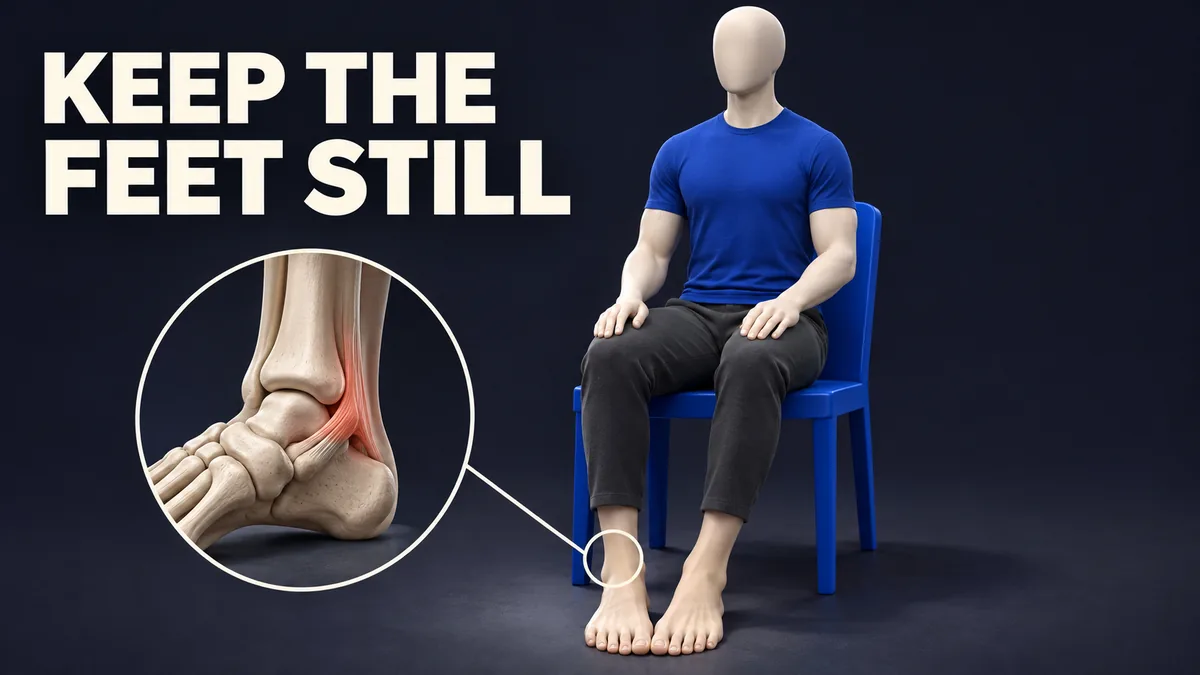
Sit with the support you were shown. Keep feet uncrossed and bring the inner borders of the big toes together as taught. Ask your clinician if contact is unclear. Do not force the toes together or press a painful spot.
Keep the feet stationary
Use only the inward effort you were taught while the feet stay still. Do not roll the ankles, curl the toes, cross the feet to meet the little toe edges or add a band or weight. Those are different actions.
Keep your own amount
Follow your clinician’s effort, hold, repetitions, frequency and release instructions. Do not borrow a dose, pain allowance or injury timeline from a general page. Stop with pain, tingling, numbness, swelling or changed control and seek clinical advice. Inability to bear weight or a hot swollen ankle needs prompt assessment.
Record the distinction
Note contact and control, not a promised result. Seated ankle inward and outward movement moves the foot, while seated ankle circles trace a loop. Neither proves this hold improves range or recovery. Mobility does not provide clinical clearance.