Confirm the task you were taught
This explanation is for adults already taught and individually cleared for this static shoulder task. Southampton hospital guidance places it within rehabilitation, not a general instruction to start after surgery or injury. Ask your clinician which side, position, effort and amount apply to you. An article cannot choose a recovery stage or provide clearance for a painful or unstable shoulder.
Set the bent elbow beside you
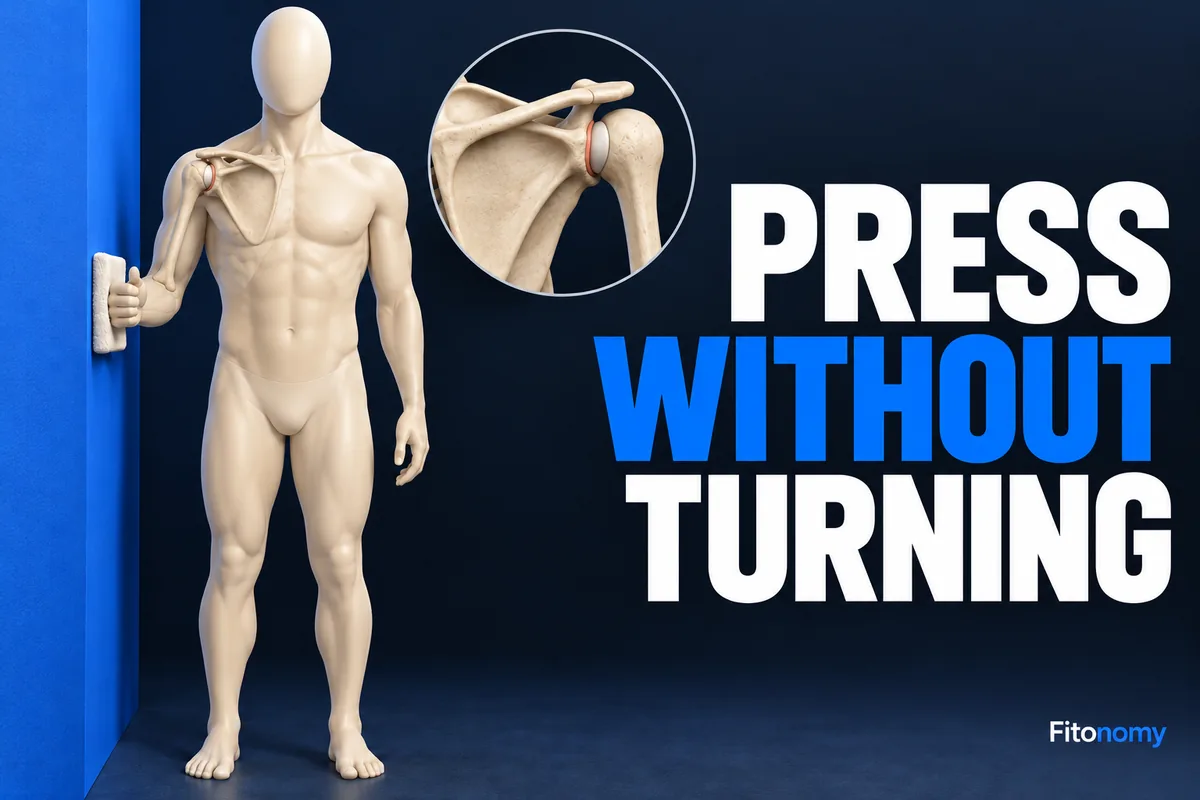
Stand beside a fixed wall with stable footing, using your taught position. Let the upper arm stay near the ribs and bend the elbow about a right angle, with the forearm pointing forward. Place the back of the hand against a folded towel on the wall, as Bexley NHS guidance describes. Keep the wrist comfortably aligned. The palm faces inward, not into the wall for an inward press.
Apply gentle outward pressure
Gently try to turn the hand outward into the wall while keeping the arm still. The wall resists the effort; the forearm does not sweep sideways. Keep the elbow beside you, shoulders quiet and chest facing forward. Do not lean, shrug, twist the trunk or rotate the palm at the forearm to create pressure. Breathe normally and avoid maximal force or breath holding. This is stationary effort, not a deep stretch.
Release before changing position
Ease the pressure off gradually before taking the hand away or changing sides. Do not turn the release into a wall slide. Use only your personal instructions for effort, hold and repetitions; the hospital examples have clinical doses that are not a shared routine. Stop for pain, numbness, tingling, dizziness, instability or lost control. If you must lean or force the position, pause and ask for the setup to be checked.
Keep effort and range separate
Active outward rotation moves the arm, while rotation with a stick uses the other hand to guide it. Neither authorizes this static task or inherits its dose. AAOS emphasizes individual supervision when choosing shoulder conditioning exercises. Record the side, setup and personally instructed amount, not a supposed increase in range. Use the beginner mobility guide to understand other tasks without combining them automatically. This does not diagnose or treat a condition or guarantee more mobility.
This rotation task uses hand contact with the elbow quiet. A static sideways shoulder press against a wall uses forearm contact and a different attempted upper arm direction; it needs its own personal instruction and clearance.