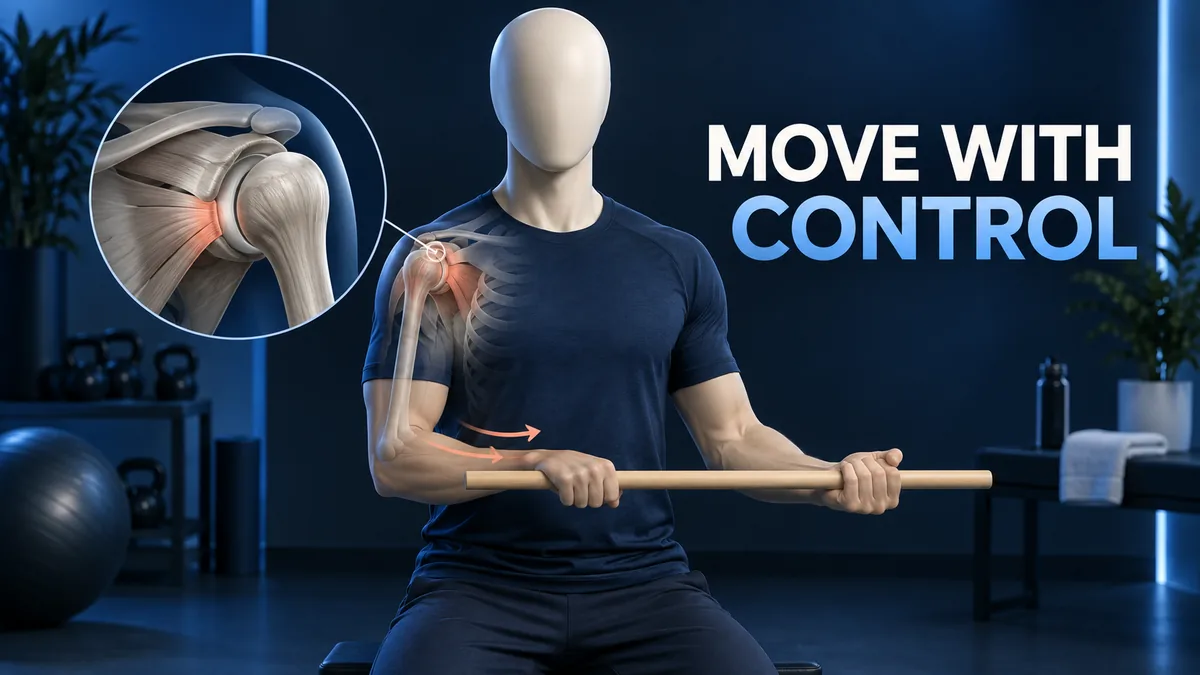
A stick can help guide one shoulder into a small outward rotation. The AAOS movement guide shows a light stick with the target elbow near the side. Its clinical hold times are not a general plan.
Understand the small motion
The motion occurs at the shoulder: the forearm travels outward while the upper arm stays near the ribs. It is not a wrist twist or a turn of the whole torso. Choose a small comfortable path rather than chasing a wide range.
Choose a light stick
Use a light straight stick you can hold easily. Sit or stand upright with room on both sides. Hold the stick across the front with both hands, elbows comfortably bent. Keep the shoulders relaxed and breathe normally.
Keep the elbow close
Keep the elbow of the shoulder you are exploring near your ribs. It need not be pinned hard. Face your chest and hips forward. The Leeds hospital instructions also show the elbow staying at the side while the other hand guides the stick.
Guide the hand outward
Let the other hand gently move the stick so the target hand travels outward a little. Do not lever or force the shoulder. Stop before pain or a twist of the torso. The South Tees guide describes a gentle outward guide and return.
Return and compare sides
Ease the stick back toward the starting position. Notice whether one side feels different without treating that as a diagnosis. Try the other side only if comfortable. There is no required depth, count or hold for everyone.
Try another shoulder path and stop safely
A shoulder pendulum uses a relaxed swing; wall slides travel upward; seated shoulder circles trace a different path. Stop for pain, numbness or dizziness. After injury, surgery or with movement restrictions, ask your clinician for individual guidance. Fitonomy Mobility is a separate app.
To move the arm forward rather than rotate the forearm outward, compare the guided stick raise.