Confirm your exact instruction
This guide is for adults personally taught and cleared for this exact towel movement. The Leeds shoulder sheet describes a clinical programme, not permission to begin after any injury or operation. If your restrictions, grip or permitted direction are unclear, ask your clinician to demonstrate again. Do not add the drill simply because another shoulder movement feels comfortable.
Recognise the behind back setup
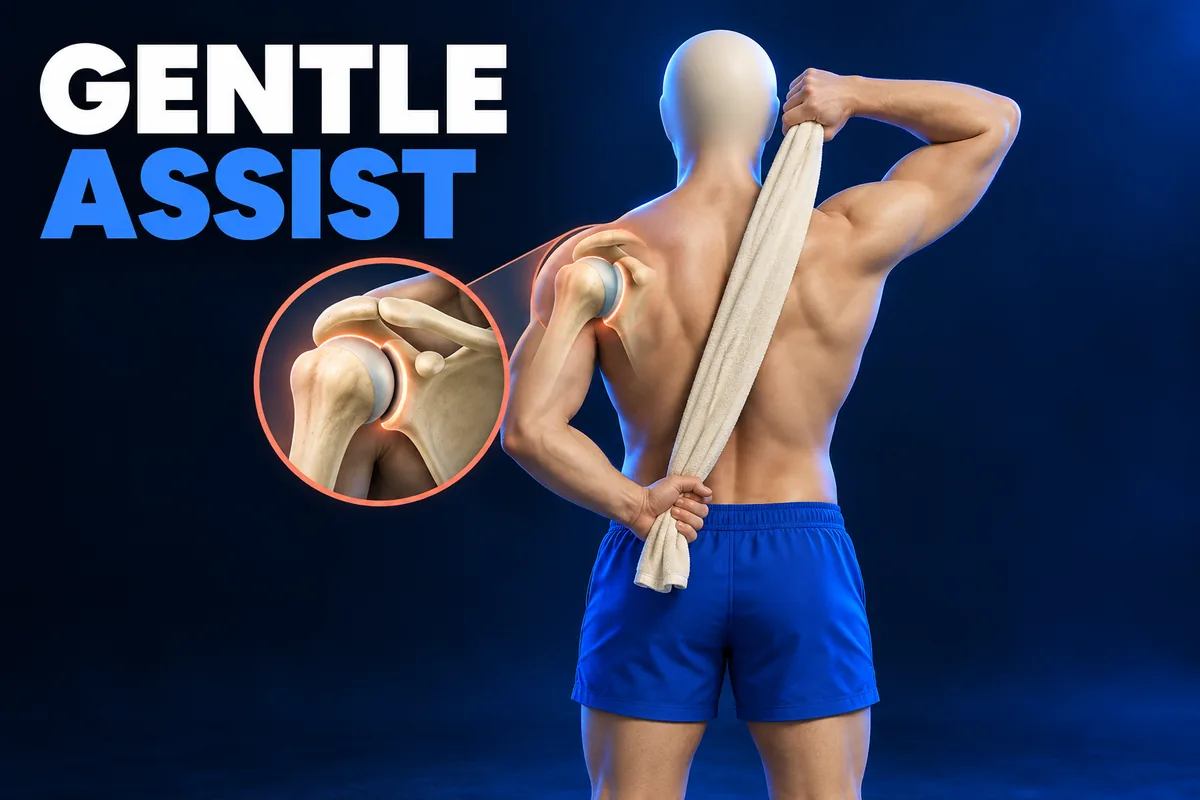
In the source example, one arm sits behind the back and each hand holds an end of the towel. Identify the lower hand that follows and the other hand that assists, using your own taught setup. A towel is not a reason to pull harder. This differs from the horizontal stick task, which moves sideways rather than lifting the following hand.
Let the taught hand assist
The source describes the other arm lifting the following arm with the towel, then lowering it slowly. The following arm does not power that movement in this passive example. Keep the task within your own demonstrated range. Do not turn this into a towel pass over the head, force the lower hand higher or copy an endpoint from a photograph.
Keep your own limits
Follow your clinician’s range, assistance, return, holds and repetitions. This page supplies no universal dose. Stop for pain, catching, numbness or instability. Sudden severe pain or inability to move needs prompt assessment, as NHS shoulder advice explains. The front stick rotation is a different exercise and does not authorize this one.
Record the movement rather than a height score
Note the side, grip, permitted path and response so you can discuss the same movement next time. A higher hand is not a diagnosis or proof of lasting improvement. The beginner mobility guide gives broader context, not personal clearance. These article translations do not establish which languages the Mobility app supports.